Finding the right R8 insulated flex duct helps improve energy efficiency and reduce temperature loss in many residential and light commercial HVAC setups. This guide highlights five top options, suitable for different duct diameters and installation needs. The best buyers are contractors seeking reliable thermal performance, homeowners upgrading an existing system, and builders designing energy-conscious spaces. Each product section explains who it’s best for, why it was chosen, and any practical limitations to consider.
| Product | Diameter | Length | Best For |
|---|---|---|---|
| 6″ x 25 ft R8 Insulated Flex Duct | 6 inches | 25 ft | Small to medium runs with high insulation needs |
| Cuchiilo 8 Inch Flexible HVAC Hose | 8 inches | 25 ft | Medium-to-large diameter runs, robust insulation |
| 6 Inch R8 Insulated Flex Ductwork 25 FT | 6 inches | 25 ft | Residential supply/return lines with aluminum core |
| HVAC Insulated Flex Duct R8, 7-Inch | 7 inches | 25 ft | Versatile ceiling/floor applications, solid thermal performance |
| Cuchiilo 6 Inch 25 Feet Insulated Flexible Duct R8 | 6 inches | 25 ft | Compact runs with strong insulation |
6″ x 25 ft R8 Insulated Flex Duct – Higher Efficiency Than R6

This product uses an R8 insulation rating, designed to minimize heat transfer and improve overall HVAC efficiency. It’s best for smaller runs where higher insulation matters without sacrificing airflow. Suitable for retrofit projects where new insulation is a primary goal and where the duct must fit tight spaces.
Who it’s best for: homeowners upgrading a single room or closet system, or contractors adding a short, well-insulated run in an existing setup.
Why selected: The R8 rating emphasizes energy savings and temperature stability for compact installations. It provides a straightforward option when insulation performance is a priority over diameter flexibility.
Caution: Availability and exact dimensions can vary by batch; verify that the 6″ diameter aligns with existing fittings and grills in your system.
Cuchiilo 8 Inch Flexible HVAC Hose, 25 Feet R8

The Cuchiilo 8″ R8 insulated flex duct uses Owens Corning fiberglass insulation for enhanced thermal efficiency. The larger diameter supports higher airflow in mid- to large-room or equipment applications, making it a solid choice for zones requiring robust performance. Its flexible and reinforced construction reduces installation challenges and limits tearing or puncturing during handling.
Who it’s best for: spaces needing bigger cross-sectional area for airflow, such as centralized heating zones or longer duct runs with less pressure drop.
Why selected: High insulation quality coupled with a durable build makes it a reliable option for energy-conscious projects requiring dependable airflow across a broader diameter.
Caution: Larger diameter means tighter spaces might require careful routing and fittings; verify available space before purchase.
6 Inch R8 Insulated Flex Ductwork 25 FT
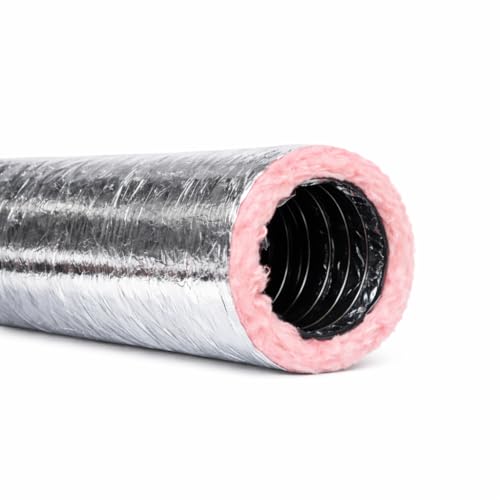
This option features a 25-foot run with an aluminum core wrapped in insulation and an outer jacket for protection, designed for standard residential HVAC systems. Its 6-inch diameter supports typical supply and return air configurations in compact to medium-sized homes. The aluminum core provides rigidity and compatibility with common fittings.
Who it’s best for: homeowners or installers seeking a balanced combination of diameter, insulation, and compatibility with standard residential ducts.
Why selected: It matches typical HVAC layouts for mid-sized rooms while delivering reasonable insulation performance for energy efficiency.
Caution: The listed insulation rating is R6 in this model; for the highest energy efficiency, consider if R8 options are more appropriate for your project.
HVAC Insulated Flex Duct R8, 7-Inch Diameter x 25-Feet
This 7-inch diameter duct offers robust airflow with an R8 insulation rating, making it suitable for longer runs or higher-demand zones where larger cross-sectional area improves velocity and reduce pressure drop. Its flexible design simplifies routing through ceilings and walls.
Who it’s best for: installations requiring higher air volume without sacrificing insulation performance, such as multi-room configurations or basements with extended ductwork.
Why selected: It fills a niche between the common 6″ and larger 8″ sizes, delivering a solid compromise of airflow and insulation for many homes.
Caution: Larger diameters need appropriate register and grill compatibility; confirm existing system compatibility before installation.
Cuchiilo 6 Inch 25 Feet Insulated Flexible Duct R8

The 6″ Cuchiilo duct uses Owens Corning fiberglass insulation and a reinforced, flexible outer jacket to resist tearing and puncturing. Its R8 rating emphasizes energy efficiency in smaller runs, while its flexible design aids installation in tight spaces. This duct is well-suited for closet enclosures, attics, or crawl spaces where rigidity could hinder routing.
Who it’s best for: projects needing compact, high-efficiency airflow in tight spaces, such as closets or small utility rooms.
Why selected: It offers a reliable R8 insulation level in a 6″ format, suitable for limited space scenarios without sacrificing thermal performance.
Caution: Ensure compatibility with existing fittings and the available space around obstacles in the installation area.
Cuchiilo 8 Inch Insulated Duct

This product features an 8-inch insulated duct with glass wool insulation rated at R-4.2, plus a thick aluminum-foil outer structure. It’s designed to handle higher temperature resistance and acoustic insulation due to the dense internal insulation layer. This makes it suitable for areas where noise reduction matters and temperature control is critical.
Who it’s best for: larger rooms or zones needing strong airflow with additional noise reduction and temperature stability.
Why selected: The focus on insulation quality and sound dampening can benefit spaces sensitive to noise and temperature fluctuations, such as home offices or bedrooms near ducts.
Caution: The R-4.2 rating is lower than the R8 options; if maximum energy efficiency is the goal, pair with additional insulation or select an R8 model.
Buying Guide: R8 Insulated Flex Duct Essentials
- R-value matters: Higher R values reduce heat transfer. For most energy-conscious homes, R8 is a solid standard for insulated flex ducts, especially on longer runs or ducts in unconditioned spaces.
- Diameter vs. airflow: Choose diameter based on required airflow and available space. Larger diameters offer more airflow but require more room for routing and registers.
- Core material: Aluminum cores are common and durable; verify compatibility with existing fittings and attachments in your system.
- Insulation type: Fiberglass or glass wool insulation provides good thermal performance and reduced noise. Owens Corning insulation is a recognized option in many products.
- Installation considerations: Flexible ducts are easier to route but should be secured properly to prevent sagging and pressure loss. Check local codes for length limits and support requirements.
- Application scope: Use smaller diameters for tight spaces or localized zones; use larger diameters for higher airflow zones or longer runs where pressure drop is a concern.
FAQ
- What is R8 insulation? R8 insulation reduces heat transfer, improving energy efficiency in HVAC duct runs and maintaining more consistent temperatures.
- What diameter should I choose? Match diameter to your system’s airflow needs and space constraints. Larger diameters move more air but require more room.
- Are aluminum-core ducts better? Aluminum cores are durable and compatible with standard fittings, offering rigidity and reliable performance in many residential applications.
- Do I need specialized tools? Basic duct tape or mastic, fasteners, and a utility knife typically suffice; professional crimping tools are optional for some installations.
- Can I mix R6 and R8 ducts? It’s possible in some systems, but for best energy efficiency, align insulation levels with the most demanding section of the run and ensure proper transitions.
- Is a longer duct always better? Not necessarily; longer runs increase resistance and may require higher airflow or larger diameters to avoid pressure loss.