If you need precise control over 120V electric heating, a 120-volt programmable thermostat helps save energy and maintain comfortable temperatures. This guide highlights five solid choices across line-voltage and radiant-heat designs, suitable for baseboard, radiant floor, and electric heating systems. Each product is described with who it’s best for, its key strengths, and a practical caveat. The quick comparison table below offers at-a-glance guidance to help you pick the right model.
| Product | Best For | Key Benefit | Caution |
|---|---|---|---|
| Lux ELV4 Line Voltage | Budget-friendly 5-2 day schedules | Simple on-screen programming | Not compatible with combined resistive + inductive loads |
| Honeywell RLV4305A1000 | Baseboard heaters and convectors | High accuracy for temperature control | Limited to 5-2 day programming |
| BOWSEN Programmable Thermostat | Underfloor radiant heating | Dual sensing with floor and air sensors | Complex setup with GFCI considerations |
| Mysa Smart Thermostat LITE | Smart home integration | WiFi remote control and voice assistants | Requires app for full scheduling |
| QuietWarmth THERMPRO | Radiant floor heat with built-in safety | 7-day programming with GFCI | Basic interface may be less intuitive for some |
Lux ELV4 Line Voltage Programmable Thermostat

The Lux ELV4 is a straightforward line-voltage thermostat with a 5-2 day program structure and four daily periods. This model is best for buyers seeking a simple, cost-effective solution for electric baseboard or convector heaters. It provides a temporary override feature for quick adjustments without changing the full schedule.
Best for: Homeowners wanting a basic, no-frusshed programming option for 120V heating. Why selected: compact on-screen setup and reliable line-voltage control. Limitation: not compatible with systems that mix resistive heating elements with inductive loads like fans.
Honeywell Home RLV4305A1000 5-2 Day Thermostat

This Honeywell model targets electric baseboards and similar heaters, featuring a highly accurate control (±0.27°F) for stable temperatures and 5-2 day programming. Its TRIAC switching supports quiet operation and consistent temperature control, reducing swings throughout the day.
Best for: Electric baseboards and convectors where precise control matters. Why selected: high accuracy and silent switching. Limitation: may require a dedicated 5-2 schedule format, limiting some custom weekly plans.
Programmable Thermostat for House Radiant Underfloor Heating (BOWSEN)
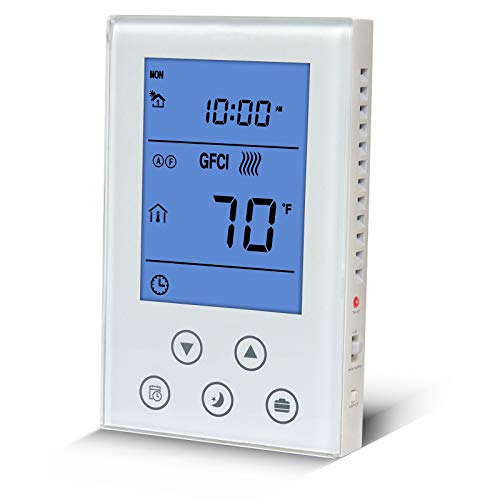
Designed for radiant underfloor systems, this BOWSEN thermostat supports 120V/240V with a dual sensing setup (air and floor) and a built-in GFCI. It aims to maximize comfort while protecting users from shock and electrical faults, with attention to floor resistance and safety during installation.
Best for: Underfloor heating setups that require floor sensing and GFCI protection. Why selected: dual sensing plus integrated safety features. Limitation: testing and understanding GFCI behavior can be challenging during commissioning.
Mysa Smart Thermostat LITE
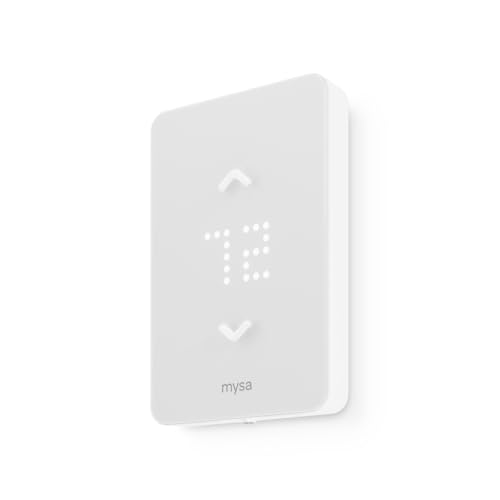
The Mysa LITE brings smart home connectivity to 120–240V baseboard heating. It supports remote control via WiFi, and it integrates with HomeKit, Alexa, and Google Assistant. It is ideal for users who want on-demand control and energy savings via app-based scheduling.
Best for: Tech-forward homes seeking remote scheduling and voice control. Why selected: broad smart-home compatibility and energy-saving potential. Limitation: full scheduling flexibility relies on the app and cloud connectivity.
Honeywell TH114-A-120S Manual Line-Voltage Thermostat

This simple, battery-free model focuses on manual control with a broad 44–86°F range. It’s suited for straightforward, non-programmable needs, making it a reliable choice for basic line-voltage circuitry without a digital schedule.
Best for: Users who prefer manual, no-fuss control. Why selected: battery-free operation and reliable line-voltage performance. Limitation: no programmable scheduling or advanced features.
MAXKOSKO WiFi Smart Thermostat for Electric Floor Heating

The MAXKOSKO thermostat emphasizes smart remote control for floor heating, with 120V/240V compatibility and integration with Alexa and Google Assistant. It is designed to provide precise temperature control for floor heating, with programmable schedules aimed at energy savings and comfort.
Best for: Floors heating systems that benefit from app-based control and voice assistants. Why selected: strong remote management and compatibility with major voice ecosystems. Limitation: benefits depend on cloud connectivity for full scheduling features.
QuietWarmth THERMPRO 7-Day Programmable

The QuietWarmth THERMPRO offers a 7-day programmable schedule with built-in GFCI protection for radiant heat systems. It supports 120V or 240V installations and includes a floor sensor for more accurate room temperature management in radiant floor setups.
Best for: Radiant floor installations needing a full week of programming plus floor-sensor feedback. Why selected: robust safety with GFCI and extended programming. Limitation: the control interface may be less intuitive for immediate, quick adjustments.
Buying Guide: Key Considerations for 120V Programmable Thermostats
What type of heating system do you have? Identify whether your setup is baseboard, radiant floor, or a combination that requires line-voltage control. For radiant floors, sensors (air and floor) improve comfort and prevent overheating.
Do you want smart features? If yes, consider WiFi-enabled models or those that work with HomeKit, Alexa, or Google Assistant for remote control and scheduling. Wired alternatives offer simplicity and reliability without network dependence.
What about safety features? Look for GFCI protection where water or moisture is a risk, especially in floor heating installations. Built-in sensors and clear warnings help avoid miswiring and electrical faults.
How flexible should the schedule be? Five-2 day programs suit many homes, while 7-day schedules provide more granular weekly control. Ensure the device supports the desired programming pattern and override options.
Installation and compatibility: Verify voltage support (120V vs 240V), load capacity (amps or watts), and whether the thermostat can handle mixed loads if your system includes both resistive and inductive elements. Some models are designed specifically for baseboards, while others are optimized for radiant floors.
FAQ
What is a 5-2 day programmable thermostat?
A thermostat with five programmable periods per day for weekdays and two different settings for weekends, allowing daily energy-saving schedules.
Can I use a 120V thermostat with a 240V system?
No. 120V thermostats are designed for 120V circuits only. Use a model rated for 240V if your system requires it.
Do all these thermostats work with smart home assistants?
No. Some offer WiFi and voice assistant support, while others are manual or rely on local control. Check each product’s compatibility list.
What is GFCI and why is it important for underfloor heating?
GFCI detects electrical leakage and cuts power to prevent shocks. It is particularly important in wet or damp environments like bathrooms or kitchens with radiant floor systems.
Is a floor sensor necessary for radiant floor heating?
For many radiant floor systems, a floor sensor improves temperature regulation and comfort by aligning floor temperature with room conditions.
Do these thermostats require a hub?
Some do not require a hub and connect directly to WiFi, while others may use a smart home hub for broader automation. Refer to each product’s integration details.