Answering the demand for clean, solar-powered cooling, this guide highlights top solar split system air conditioners suited to off-grid homes and grid-tied setups. Ideal buyers include: off-grid dwellers seeking daytime cooling on solar power; homeowners needing reliable, energy-efficient cooling with hybrid or inverter-controlled systems; and users who want simple, install-ready kits with comprehensive components. Below is a quick table of the five best options to consider, followed by in-depth product sections and a practical buying guide.
| Product | Best For | Key Benefit |
|---|---|---|
| Photon AC 18,000 BTU Solar Mini Split | Off-grid daytime cooling | True solar-powered operation with hybrid AC/DC capability |
| Nexaro 12,000 BTU Mini Split | Energy efficiency and inverter control | Smart inverter efficiency for energy savings |
| ROVSUN 9,000 BTU Mini Split | Compact spaces | Whisper-quiet operation with strong cooling |
| Albott 12,000 BTU Mini Split | Multi-room comfort | SEER2 18 with independent room control |
| Senville LETO 24,000 BTU | Alexa integration and all-season use | Inverter with heat pump and smart features |
Photon AC 18,000 BTU Solar Mini Split AC
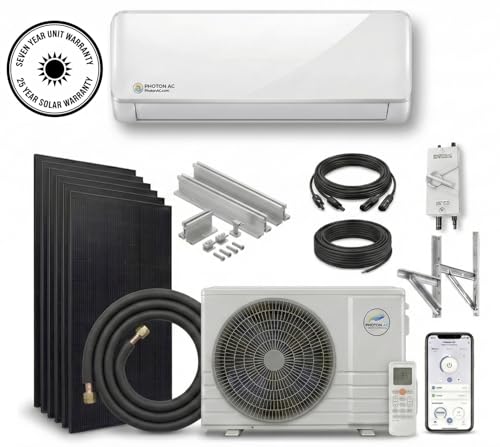
Best for fully solar-powered daytime cooling. This 18,000 BTU system operates primarily on solar power with a hybrid connection to standard home power for continuous comfort. It is designed for true off-grid use during daylight hours and supports a 220V-240V AC connection for cloudy days or nighttime use. The kit includes solar panels, racking, and a plug-and-play wiring harness for straightforward installation. Best for homes that aim to reduce grid dependence while maintaining cooling reliability.
Who this is best for: homeowners seeking a complete solar solution with an emphasis on day-time cooling and off-grid capability. Why selected: it integrates solar panels and mounting hardware in a single package, reducing separate sourcing steps. Caution: the solar panel warranties and long-term production depend on site conditions and sun exposure.
Nexmetal 48V DC Battery Powered Mini Split

Best for off-grid or battery-tied 48V solar setups. This unit runs directly on 48V DC and does not require an inverter for high efficiency. It supports a 9,000 BTU capacity with heating as well, offering stable performance with battery buffering. Best for small living spaces or cabins where true DC operation and minimal conversion losses matter. Caution: DC-only operation may limit compatibility with some existing HVAC wiring configurations.
Albott Mini Split 12,000 BTU with Inverter

Best for multi-room comfort with energy efficiency. This system uses an advanced inverter with SEER2 18, delivering solid airflow and reduced electricity usage. It covers up to 750 sq. ft. and provides all-season comfort with cooling, heating, dehumidifying, and a 24-hour timer. Best for spaces where you want independent room control. Caution: Some installations may require professional wiring for optimal performance.
Albott 24,000 BTU Mini Split
Best for larger spaces and stable multi-zone comfort. The 24,000 BTU system features SEER2 18 and an inverter setup, suitable for up to 1,550 sq. ft. This model supports remote/app control and is designed for year-round use with efficient performance. Choose this if you need robust capacity across bigger living zones. Caution: Higher BTU units require properly sized ducting and electrical capacity.
Senville LETO Series Mini Split 24,000 BTU
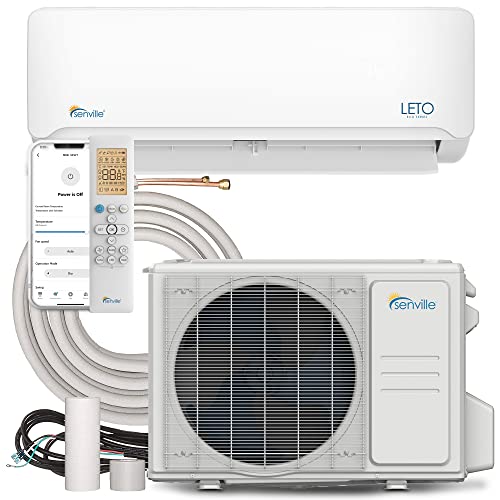
Best for Alexa-enabled control and all-season versatility. The LETO Series provides a 24,000 BTU inverter solution with heat pump operation, suitable for larger rooms and mixed climates. It supports voice control and app integration for convenient daily use. Best for tech-friendly homes that prioritize smart control. Caution: Voice-controls require compatible Wi-Fi setup and may rely on cloud services for routines.
Buying Guide: Key Considerations For Solar Split Systems
- Solar integration vs. grid-tied: Decide whether you need complete solar independence (off-grid) or a hybrid system that can draw from the sun and the grid as needed.
- BTU sizing and space coverage: Match BTU to room size and climate. Oversized or undersized units affect efficiency and comfort.
- Inverter and SEER rating: Higher SEER means better energy efficiency. Inverter-driven compressors adapt to demand for steady cooling/heating.
- DC vs. AC operation: DC-powered mini splits or hybrid solar kits reduce conversion losses. Ensure compatibility with your electrical setup.
- Installation kit contents: Kits that include panels, racking, and pre-charged lines save time and simplify setup. Check warranty coverage for installed components.
- Smart controls: Apps, voice assistants, and remote operation add convenience and energy management capabilities.
- Temperature range and climate suitability: Look for units rated for wide low/high temperatures to ensure performance in extreme conditions.
- Maintenance and warranties: Understand warranty terms for indoor/outdoor units and solar components; confirm routine maintenance requirements.
Frequently Asked Questions
- What is a solar mini split system? A solar mini split uses solar power to run the indoor/outdoor units and may include a solar panel kit or DC operation, enabling daytime cooling with reduced grid use.
- How many BTUs do I need for my space? As a rule, 10 BTU per square foot is a baseline, but climate, insulation, and ceiling height affect the exact requirement. A professional load calculation is recommended.
- Are solar kits easier to install than traditional systems? Solar kits with pre-charged lines, mounting hardware, and plug-and-play wiring can simplify installation, but local codes and electrical work may still require a pro.
- What is SEER and why does it matter? SEER measures cooling efficiency over a season. Higher SEER units use less energy for the same cooling output, reducing operating costs.
- Can I mix solar and standard air conditioners? Hybrid systems can blend solar and grid power, but compatibility depends on the model, inverter setup, and wiring configurations.
- Do these systems require regular maintenance? Yes. Filter cleaning, coil inspections, refrigerant level checks, and outdoor condenser care help maintain efficiency and longevity.