Looking for a wireless home thermostat system that’s easy to install, energy-efficient, and compatible with your smart home? This guide highlights five top options, explains who each is best for, and shows how they compare on common needs like DIY setup, compatibility, and remote control. Ideal buyers include DIY homeowners, renters needing simple installs, and households aiming to save on energy bills through schedules and automation. Below is a quick summary of the selected products to help you decide faster.
| Product | Best For |
|---|---|
| Sensi Smart Thermostat (ST55) | DIY-friendly setups, energy savings, privacy-conscious users |
| Vine Smart Thermostat | Clear touchscreen with nightlight, Alexa/Google Assistant control |
| Google Nest Thermostat | Automatic energy savings, broad ecosystem |
| Honeywell Home RTH9600WF | Remote access, flexible programming, reliability |
| New! Honeywell Home RTH20B | Simple 5-2 day scheduling, straightforward replacement |
Sensi Smart Thermostat, Wi-Fi, ST55

The Sensi ST55 is designed for easy installation and broad HVAC compatibility. It emphasizes privacy protection and energy savings through remote access, flexible scheduling, and usage reports. Best for homeowners who want a straightforward, privacy-conscious option that can work without a common wire in many installations.
- Best for: DIY installers who value privacy and energy insights.
- Why selected: ENERGY STAR certification and simple app-driven setup.
- Caution: Common wire (c-wire) is not required in most applications, but compatibility varies by system.
Suuwer Non-Programmable Thermostat (Blue Backlight)

The Suuwer thermostat is a basic, non-programmable option intended for traditional single-stage systems (1 Heat/1 Cool). It’s best for users who need very simple manual control without smart features. It does not support multistage heating or complex HVAC setups.
- Best for: Homes with conventional single-stage heating and cooling.
- Why selected: Low-complexity solution for straightforward control.
- Caution: Not suitable for multistage or heat pump systems.
Vine Smart Thermostat with Nightlight

The Vine thermostat combines a 4.3-inch touchscreen with a gentle night-light and remote control via the Smart Life app. It supports 2H/2C systems with common wire (C-wire) and works with Alexa and Google Assistant. Best for users who want a large display and hands-free voice control.
- Best for: Homes needing a bright touchscreen interface and voice control.
- Why selected: Visible display and night light enhance usability in dark rooms.
- Caution: Requires a C-wire and compatibility checks before purchase.
Honeywell Home RTH9600WF Smart Color Thermostat
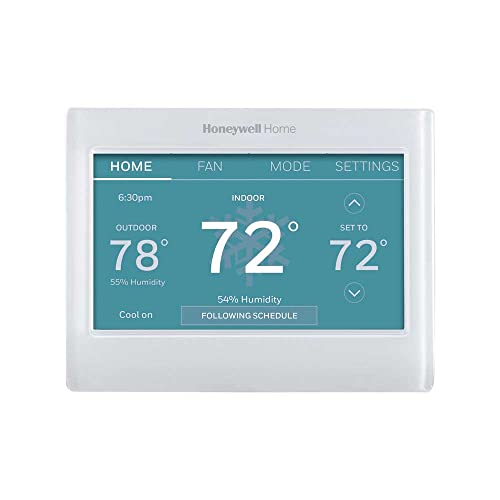
The RTH9600WF is a wireless, color touchscreen thermostat with Energy Star certification and broad compatibility with smart home ecosystems. It supports remote control, flexible programming, and energy-saving tips through its app. Best for users who want robust remote management and integration with smart assistants.
- Best for: Smart home enthusiasts seeking centralized control and energy insights.
- Why selected: ENERGY STAR and compatibility with major assistants.
- Caution: Some features rely on a stable Wi-Fi connection for optimal performance.
New Honeywell Home Programmable Thermostat, 1H/1C

The RTH20B offers a 5-2 day scheduling option and a large display with clear fonts. It’s a straightforward replacement for older Honeywell models and suits users who want a simple, programmable experience without extensive features. Best for upgrading legacy thermostats to a more predictable schedule.
- Best for: Users replacing an older Honeywell or seeking a simple schedule.
- Why selected: Clear display and familiar 5-2 scheduling.
- Caution: Limited advanced features compared to full smart thermostats.
Buying Guide: Key Considerations For a Wireless Home Thermostat System
- Compatibility: Verify your HVAC type (single-stage, multi-stage, heat pump) and confirm C-wire needs. Some models work without a C-wire, but most prefer one for consistent power.
- Wired vs Wireless: All listed options are wireless-enabled with Wi-Fi or app control, but confirm if your current setup supports remote sensors and integrations with your smart home ecosystem (Alexa, Google Assistant, Siri with Apple HomeKit).
- Energy Savings: Look for ENERGY STAR certification and features like scheduling, usage reports, and energy-saving tips. These drive long-term utility reductions.
- Installation: DIY-friendly models include built-in level tools and guided apps. Consider whether you need professional installation for complex systems or multi-stage configurations.
- Display And Usability: Touchscreen size, readability, and night lighting affect day-to-day use, especially in bedrooms or dim rooms.
- Privacy and Data: Some products emphasize privacy protections and do not share personal data with third parties. Review app permissions and data policies.
- Smart Home Ecosystem: If you already use Alexa, Google Assistant, or Apple HomeKit, choose a thermostat with seamless integration to avoid extra hubs or app complexity.
- Future-Proofing: Consider a model with ongoing firmware updates and support for new features, which helps protect your initial investment.
FAQ: Quick Answers For Buyers
- Do these thermostats require a C-wire?
- Can I install these myself?
- Will these work with my existing HVAC system?
- Are ENERGY STAR models worth choosing?
- Can I control these thermostats remotely?
- Do these require ongoing subscription fees?
Many do, but several models can operate without a C-wire in certain configurations. Always check compatibility before purchase.
Most listed models are designed for DIY installation with app-guided setup. Some complex systems may benefit from professional help.
Compatibility varies by system type (gas, electric, heat pump, conventional). Use the manufacturer compatibility tools or QR checks when available.
ENERGY STAR certified thermostats typically offer proven energy-saving features and reliable performance, which can reduce utility costs over time.
Yes. All listed options provide remote control via apps and voice assistants, enabling scheduling and monitoring from anywhere with internet access.
Most do not require subscription fees; some advanced energy programs or rebates may involve third-party participation, not the thermostat itself.