Answer: For effective moisture control, choose through‑the‑wall exhaust fans and high‑capacity dehumidifiers that reduce humidity, odors, and contaminants. This guide highlights the top picks ideal for bathrooms, basements, crawl spaces, and larger living areas. Best for spaces with dampness or persistent odors are compact through‑the‑wall fans, while larger areas benefit from dedicated dehumidification.
The following products are selected for their moisture‑reducing capabilities, installation practicality, and suitability for different spaces. The table below provides a quick overview to help you compare at a glance.
| Product | ||
|---|---|---|
| VENTS US GK 150 MA | Through‑the‑wall exhaust fan | High airflow with moisture removal; wall installation |
| VENTS US GK 125 MA | Through‑the‑wall exhaust fan | Effective odor and humidity control; easy wall install |
| VENTS US GK 150 LD | Through‑the‑wall exhaust fan | Moisture and contaminant removal with backdraft protection |
| Pewoaoa 240 CFM Crawlspace Vent Fan | Crawl space vent fan | Powerful moisture and odor removal in damp spaces |
| hOmeLabs Dehumidifier 50 Pint (up to 7,000 sq ft) | Whole‑space dehumidifier | Large‑area humidity control with smart features |
VENTS US GK 150 MA – 176 CFM Wall Exhaust
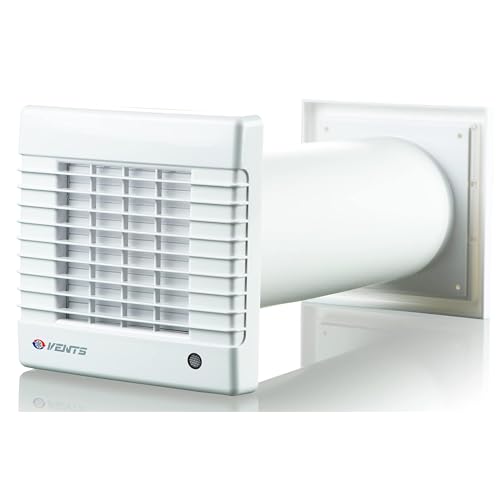
The GK 150 MA is designed to remove moisture and common indoor contaminants in spaces lacking existing ventilation. It installs directly through the wall and includes a PVC duct and vent cover to minimize backdrafts. Best for bathrooms, basements, and garages where moisture and odors are a concern, this model emphasizes effective displacement of humid air while keeping drafts down when off.
Best for: small to medium bathrooms or garages needing a simple, through‑the‑wall exhaust solution. Choose this if you want a dedicated moisture removal unit with integrated backdraft protection.
Caution: Check wall thickness and duct routing to ensure a clean fit; the unit relies on proper wall clearance for venting. It is not a passive vent and requires electrical hookup or hardwiring as noted in the product specs.
VENTS US GK 125 MA – 102 CFM Through‑the‑Wall
The GK 125 MA provides a reliable 102 CFM airflow to help eliminate odors, fumes, and moisture in rooms without existing ventilation. It uses a through‑the‑wall installation with included PVC ducting and vent cover to prevent backdrafts, and it offers flexible power options via a plug or hardwire configuration. This model suits compact bathrooms, laundry rooms, and small basements seeking steady humidity control.
Best for: spaces where moderate moisture is a concern and a wall‑mounted exhaust is preferred. Better for smaller bathrooms or utility rooms than larger, highly damp areas.
Limitation: It’s not a passive vent; electrical setup or plug‑in installation is required, so plan wiring accordingly.
VENTS US GK 150 LD – 109 CFM With No‑Vent Through‑the‑Wall

The GK 150 LD offers 109 CFM for moisture and pollutant removal with a through‑the‑wall design. It includes a vent cover and PVC duct to simplify installation and blocks drafts when off. The GK LD integrates easily into larger bathrooms or damp basements needing robust air exchange to curb humidity and odors.
Best for: medium to larger bathrooms, basements, or rooms where higher airflow is needed to manage humidity. Avoid this if you require extremely quiet operation and the room is very small.
Limitation: The unit’s size and airflow are more suited to moderate damp areas; very small spaces might not need 109 CFM unless moisture levels are high.
Pewoaoa 240 CFM Crawlspace Vent Fan

This high‑capacity crawlspace vent fan delivers 240 CFM to quickly remove damp air, radon, and odors from crawl spaces, basements, and attics. It features smart dual humidity and temperature control, auto‑activation, and a low‑temp protection thermostat to prevent cold air backflow in winter. It’s best for spaces prone to condensation and mold risk, where climate‑based control helps maintain dryness.
Best for: crawl spaces and basements with persistent moisture or radon concerns, requiring climate‑based adjustment. Choose this if you need automatic operation based on humidity and temperature thresholds.
Caution: The dual‑sensor system may require setup to match your specific humidity and temperature targets; ensure proper venting paths and drainage considerations are in place.
hOmeLabs Dehumidifier 7,000 Sq Ft Wi‑Fi 50 Pint

This dehumidifier targets large spaces up to 7,000 sq ft, removing up to 50 pints per day at standard conditions and up to 120 pints at higher temperatures. Wi‑Fi capability enables remote control, and the unit is designed with wheels and a quiet operation profile. This makes it suitable for basements and open‑concept living areas with steady moisture concerns.
Best for: large‑area moisture control where remote monitoring is beneficial. If your space is smaller, a lower‑capacity unit may be more cost‑effective.
Limitation: Energy consumption scales with space; larger rooms may require more advanced scheduling and placement to optimize efficiency.
Buying Guide: Moisture Control For Different Spaces
- What type of space are you treating? Bathrooms and small rooms often benefit from through‑the‑wall exhaust fans for direct moisture removal. Larger areas or crawl spaces may require a dehumidifier or higher‑CFM exhaust to manage humidity effectively.
- How much humidity do you need to remove? For dense moisture or radon concerns, consider units with higher airflow (100+ CFM) or dedicated crawlspace ventilation with humidity control.
- Do you need smart features? Wi‑Fi control and programmable humidity/temperature thresholds help maintain consistent dryness and can reduce energy use.
- Installation considerations: Through‑the‑wall fans require a suitable wall cavity and vent routing. Dehumidifiers require electrical outlets, drainage, and a stable space with adequate clearance for airflow.
- Maintenance and operation: Regular filter cleaning, vent cleaning, and ensuring no backdrafts are essential to maintain efficiency and indoor air quality.
FAQ
- What is the best solution for a damp basement with poor ventilation? A through‑the‑wall exhaust fan combined with a dehumidifier can effectively remove moisture and odors while improving air exchange.
- Can I use a crawlspace vent fan as a general room dehumidifier? Crawlspace fans are designed for crawl spaces; for living spaces, a dedicated dehumidifier or appropriately sized exhaust may be more effective.
- Should I choose a higher CFM fan for moisture control? Higher CFM fans move more air and can reduce humidity faster, but consider room size and noise levels when selecting.
- Is Wi‑Fi control necessary? Not essential, but it helps monitor and adjust humidity remotely, improving convenience and energy efficiency.
- Do these products prevent backdrafts? Most through‑the‑wall models include backdraft‑prevention features; verify the specific model’s venting design during selection.
- What maintenance is required? Clean any dust on grills, inspect vents for obstructions, and ensure drainage paths are clear for dehumidifiers.