Instant airflow, simplified control, and energy-conscious cooling—these remote-controlled attic fans are designed for homeowners who want smarter ventilation. The top picks below are best for different spaces: small-to-medium garages, finished attics, and gear-filled workshops. Each product highlights built-in thermostats, multiple speed options, and wireless remotes to help you avoid climbing into hot attics. The table summarizes key specs to compare at a glance.
| Product | Airflow | Thermostat / Timer | Best For |
|---|---|---|---|
| Ehiair 15″ Attic Fan | 1800 CFM | Auto on/off by temperature; 18-hour timer | Large attic spaces; homes needing strong ventilation |
| Windigaga 15″ Gable Vent Fan | 1800 CFM | Thermostat with 3 speeds; 18-hour timer | People who want precise temperature-based control |
| addlon 12″ Shutter Exhaust Fan | 1250 CFM | 8 speeds; remote with 1-8 hour auto-off | Moderate spaces; quiet operation requested |
| Amico 10″ Shutter Exhaust Fan | 1068 CFM | 8-speed auto; 24-hour timer | Smaller attics or garages needing efficient airflow |
| iLiving 10″ Shutter Exhaust Fan | 820 CFM | Remote with thermostat; humidity control | Attics with humidity concerns; flexible placement |
Ehiair 15″ Attic Fan With Thermostat & Remote

The Ehiair 15-inch gable vent fan delivers up to 1800 CFM through a 70W motor. It exhausts heat, moisture, and odors to improve attic air circulation and HVAC efficiency. The built-in thermostat automatically turns the fan on or off by temperature, with three speed options and an 18-hour timer for tailored operation. A multi-function remote supports speed changes, mode switching, and on/off control from up to 65 feet away. This model is best for larger attic spaces and homes seeking strong, hands-free cooling. Caution: remote use requires line-of-sight or clear signal paths for best range.
Best for: Large attics or homes needing robust airflow with automated temperature-based operation. Avoid if you require ultra-quiet performance at night, as higher speeds can generate more noise.
addlon 12″ Shutter Exhaust Fan With Remote
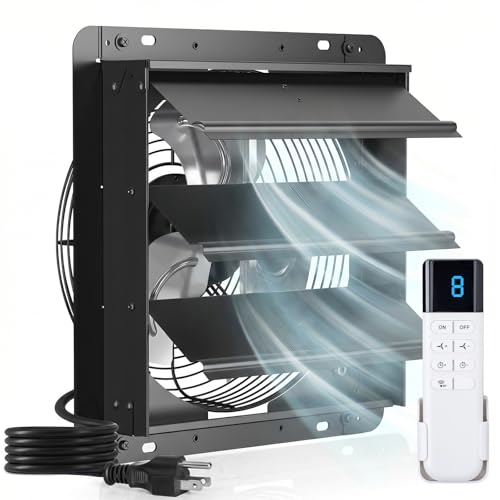
The addlon unit uses a sealed EC motor delivering up to 1250 CFM with eight adjustable speeds. A remote control allows on/off, wind speed selection, and a timed shutoff (1–8 hours), and a wall-mount bracket is included to keep controls handy. The shutter design helps minimize backdrafts when off. This model is better for mid-sized spaces requiring dependable airflow with flexible timing and quiet operation. Caution: ensure mounting thickness and grille fit your vent opening before purchase.
Best for: Rooms that need reliable ventilation with flexible remote control and a moderate airflow target. Choose this if you want eight speeds and easy wall-switching compatibility.
Amico 10″ Shutter Exhaust Fan

Powered by a 13W brushless DC motor, the Amico exhaust fan delivers 1068 CFM and features eight-speed auto adjustments and a generous 24-hour timer. It includes a long-range remote and a 50-foot sensor-friendly setup for automatic adjustments in response to temperature and humidity. The product’s smart controls are designed to maintain a cooler attic with efficient energy use. This option is well-suited for smaller to mid-sized spaces where precise auto ventilation is desired. Caution: data does not specify noise levels; consider placement to minimize noise impact.
Best for: Small-to-medium attic or garage spaces needing robust, programmable cooling with humidity-aware operation. Choose this if you want a broader control range and a long-range remote.
iLiving 10″ Shutter Exhaust Fan

The iLiving unit provides 820 CFM with a wall-mounted design and a wireless smart remote for thermostat and humidity control. It’s described as multipurpose, suitable for attics, garages, sheds, and other spaces. The shutter design reduces backdrafts while enabling quiet, continuous operation. The product emphasizes corrosion resistance and maintenance-friendly motors. This option is best for budget-conscious buyers who still want smart control and remote access. Caution: lower airflow means it’s less ideal for very large or heat-heavy attics.
Best for: Attics or small spaces where budget-friendly, automated cooling is key. Choose this if you value a compact footprint and remote control convenience without high airflow demands.
Buying Guide
- How much airflow do you need? Measure attic volume (length × width × height) and aim for sufficient CFM to move air within 5–10 air exchanges per hour. Larger spaces benefit from higher CFM and thermostat-based automatic control.
- Automation and sensing? Look for thermostats that turn the fan on and off at preset temperatures and timers that fit your daily routine. Humidity sensors help in damp spaces to prevent mold growth.
- Remote and installation considerations? Ensure a reliable remote range (typical 30–65 feet) and confirm that the unit can be mounted at your vent location (gable or shutter styles). Wall brackets can improve accessibility of controls.
- Noise and energy use? Brushless DC motors tend to run quieter and more efficiently. If noise is a concern, check decibel specifications and install away from bedrooms when possible.
- Maintenance and durability? Choose corrosion-resistant housings and motors, especially in humid climates. A simple filter-cleaning routine will help maintain airflow over time.
Frequently Asked Questions
- What is a thermostat-controlled attic fan? It uses a built-in thermostat to automatically turn the fan on or off based on ambient temperature, reducing energy use.
- Do remote-controlled attic fans save on energy bills? Yes, by running only when needed and reducing attic heat, they can lower cooling loads in the home.
- Can these fans be installed in existing attics? Most models are designed for gable or shutter openings; confirm vent dimensions and mounting requirements before purchase.
- Is louder airflow a concern with these fans? Some higher-CFM units produce more noise at high speeds; choose speed settings and placement to balance airflow with comfort.
- Do these fans require professional installation? Some installations are DIY-friendly, but larger units or complex venting may benefit from a professional.
- What maintenance is required? Regular cleaning of blades and vents, plus checking seals, helps maintain efficiency and longevity.