Answering the need for precise, remote temperature monitoring, this guide covers top picks for refrigeration environments. Whether you’re safeguarding groceries, wine, or lab samples, these sensors help you stay within safe ranges with alerts, logs, and remote access. The best choices vary by connectivity (LoRa vs Wi‑Fi), alert styles, and whether you want a single unit or a multi-pack. The leading options below are selected for reliability, clear data reporting, and practical use in home kitchens, commercial setups, and storage areas with limited Wi‑Fi reach. A quick buyer table follows to compare core details.
| Product | Type | Best For | Connectivity |
|---|---|---|---|
| YoLink Smart Freezer Thermometer (3-Pack) | LoRa thermometer | Homes and small businesses needing long-range, Wi‑Fi‑free sensing | LoRa |
| GoveeLife WiFi Refrigerator Thermometer (2-Pack) | Wi‑Fi thermometer with gateway | Users who want remote access and audible alarms | Wi‑Fi |
| Replacement for Samsung DA32-10104N Sensor | OEM-style replacement | Exact fit for compatible Samsung fridges | Wired integration (sensor component) |
| AcuRite Digital Fridge/Freezer Thermometer | Digital display with alarms | Simple, budget-friendly monitoring | Standalone wireless display |
| SensorPush HT.w Smart Sensor | Bluetooth with optional gateway | Long-term data logging and multi-language app | Bluetooth (gateway for remote access) |
YoLink Smart Freezer Thermometer 3-Pack

Best for locations beyond standard Wi‑Fi reach. This YoLink set uses LoRa-based wireless technology to monitor temperatures in refrigerators, freezers, greenhouses, and even pet cages. It can monitor up to 1/4 mile in open air and sends updates to the YoLink app. It supports customizable alerts via text, email, or push notifications, with a hub included in the package. For buyers who want a Wi‑Fi‑free network, this is a strong option with long-range coverage and low power consumption.
Best for: households or small facilities needing robust range without Wi‑Fi crowds. Limitations: SMS alerts are limited per month, and a hub is required for full functionality. This 3-pack is ideal when multiple zones must be watched from a single platform.
GoveeLife WiFi Refrigerator Thermometer Sensor (2-Pack)

Best for users needing real-time remote monitoring and audible alerts. This two-pack provides 24/7 remote monitoring, instant app notifications, email alerts, and a built-in 80dB alarm. The 2.7 mm NTC probe yields precise readings from -40°F to 158°F. While its main strength is Wi‑Fi connectivity for remote access, the device also includes a robust alert system. Choose this if you want easy setup and strong alarm features for busy households or small restaurants.
Caution: The alarm’s loudness is a key feature, but in quiet environments, it may be disruptive. Ensure the monitoring gateway and app are configured to minimize false alarms.
Samsung DA32-10104N Temperature Sensor Replacement

Best for exact OEM replacement in Samsung refrigerators. This sensor is designed to drop into compatible models and restore original factory functionality without wiring harness modifications. It fits a wide range of Samsung configurations and high-demand models, ensuring precise resistance readings for stable temperature monitoring. Choose this if you need a guaranteed fit and direct compatibility with Samsung units.
Limitation: This is an OEM replacement sensor and is model-specific. Verify compatibility with your exact refrigerator model before purchasing.
AcuRite Digital Fridge & Freezer Thermometer (00515M)

Best for straightforward, budget-friendly monitoring with a simple display and alarm features. This package includes separate fridge and freezer thermometers that transmit to a digital display, with a magnetic back for easy mounting. Customizable temperature alarms help detect door-open events or failed appliances. It is a practical pick for kitchens or small eateries where straightforward monitoring is sufficient.
Better for: users who want an inexpensive, easy-to-use pair without extensive network setup. Limitation: No dedicated mobile app without extra gateway, so remote access may require additional equipment.
MOCREO WiFi Thermometer Freezer Alarm

Best for users who want multi‑channel alerts with remote access. This system provides 24/7 remote monitoring via Wi‑Fi and supports 2 remote wireless temperature sensors. It offers app push notifications, email alerts, and 90dB audible alerts with a hub. A key benefit is offline alerts during power outages. Choose this if you need continuous monitoring with multiple notification options across locations like freezers, hot tubs, or pools.
Limitation: Requires 2.4 GHz Wi‑Fi and hub infrastructure; may be overkill for single‑sensor use cases.
SensorPush HT.w Smart Temperature & Humidity Sensor
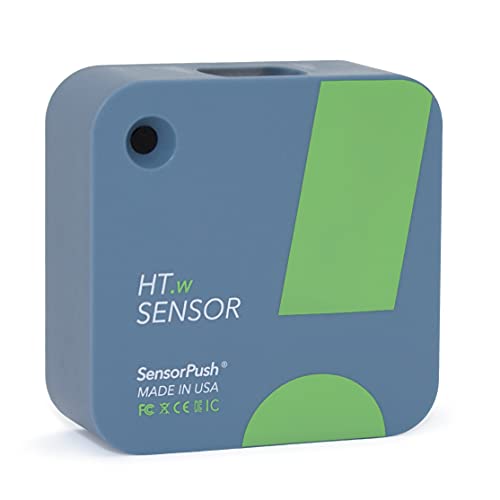
Best for long-term data collection and multi‑language app support. SensorPush records temperature, humidity, heat index, dew point, and VPD with onboard data logging for up to 45 days and unlimited in‑app storage. It can be extended to remote access via a G1 WiFi Gateway (sold separately). This option suits users needing detailed environmental data and historical analysis for fridges, freezers, or storage rooms. The pairing flexibility makes it suitable for more complex setups.
Limitation: Bluetooth-based by default; remote access requires a gateway and additional setup.
Buying Guide: Key Considerations For Refrigeration Temperature Sensors
- Connectivity: Do you prefer LoRa (long range, no Wi‑Fi) or Wi‑Fi (direct remote access)? LoRa is ideal where Wi‑Fi is unreliable or unavailable; Wi‑Fi offers simpler remote monitoring without a separate hub.
- Alerts And Notifications: What alert types are needed? SMS, text, email, push notifications, or audible alarms? Consider how quickly you need to respond and where you will be located when alerts occur.
- Range and Placement: Do you need coverage across multiple rooms or floors? Long-range sensors help in large homes, garages, or warehouses. Check battery life and maintenance needs for each model.
- Data Logging And History: Is long-term data storage important? Some sensors log data locally while others require a gateway for cloud storage and remote access.
- Ease Of Use: How important is quick setup and intuitive dashboards? Simple interfaces reduce onboarding time and errors in day-to-day monitoring.
- Compatibility And Replacements: If you already own a system, confirm compatibility with existing hubs, gateways, or appliances. OEM replacements ensure fit and electrical compatibility.
Practical Buying Tips
- Choose a kit that covers all needed zones with a single app or hub to simplify monitoring.
- For kitchens and grocery storage, ensure the temperature sensors support rapid updates and reliable alerts during door openings or power fluctuations.
- Consider a combination: LoRa sensors for hard-to-reach locations and Wi‑Fi sensors for easy, central monitoring.
Frequently Asked Questions
- What is the difference between LoRa and Wi‑Fi temperature sensors?
– LoRa devices use a dedicated long-range wireless protocol requiring a hub, often with extended range and low power. Wi‑Fi devices connect directly to your home network for remote access without a separate hub. - Do these sensors provide real-time alerts?
– Yes, many offer instant notifications via app, text, or email, and some include audible alarms for immediate local alerts. - Can I monitor multiple fridges or freezers with one system?
– Yes, most multi-pack options and hubs support monitoring several zones; check the number of sensors supported by the hub or gateway. - Is data history important for compliance or analysis?
– If yes, prefer sensors with onboard logging or cloud storage with export options to analyze trends over time. - Are OEM replacements better for compatibility?
– OEM replacements guarantee fit and electrical compatibility for specific models, reducing installation issues. - Do I need a gateway or hub for remote access?
– Some systems work via Wi‑Fi directly; others require a gateway to enable remote monitoring and data storage.