Answer: For buyers seeking efficient, versatile 8 inch flexible ducts, look for products with high insulation, durable construction, and easy installation. The top picks below cover a range of R-values, materials, and designs to suit residential and light commercial HVAC setups. Best for: homeowners upgrading an attic or crawlspace duct, contractors working on retrofit projects, and mobile home installations where space and efficiency matter.
Summary table of selected products
| Product | Diameter | R-Value | Core / Construction | Best For |
|---|---|---|---|---|
| Cuchiilo 8 Inch Flexible HVAC Hose | 8 inches | R8 | Fiberglass insulation, flexible reinforced duct | Energy-efficient, retrofit installs |
| 8 Inch R8 Insulated Flex Ductwork 25 FT | 8 inches | R8 | Aluminum core with insulation and jacket | Residential cooling and heating runs |
| HVAC Insulated-Flex R-8-8″ Duct | 8 inches | R8 | Aluminum inner core with insulation | Budget-friendly R8 option |
| Cuchiilo 8 Inch Insulated Duct (R-4.2) | 8 inches | R4.2 | Aluminum foil, fiberglass insulation | Compact spaces where moderate insulation suffices |
| VEVOR 8 Inch Insulated Flexible Duct (R-6.0) | 8 inches | R6 | Fiberglass insulation with aluminum foil layer | Quiet operation and energy efficiency |
Cuchiilo 8 Inch Flexible HVAC Hose, 25 Feet R8

Best for: homeowners prioritizing high thermal efficiency and robust insulation. This duct uses Owens Corning fiberglass insulation to minimize heat gain and loss, supporting energy savings in year-round comfort. The flexible design aids installation around obstacles in attics or crawl spaces. Caution: ensure proper sealing at joints to maximize insulation performance.
8 Inch R8 Insulated Flex Ductwork 25 FT
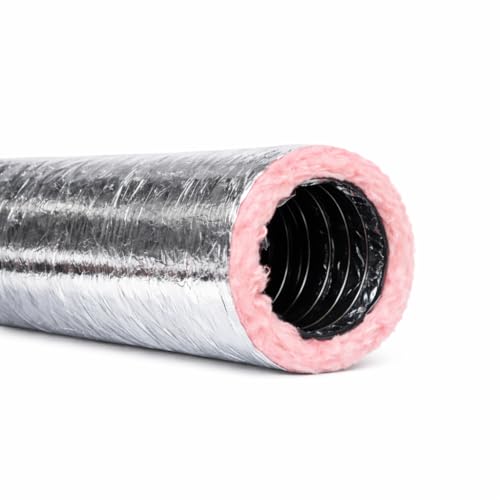
Best for: projects needing a durable aluminum-core duct with solid insulation for year-round comfort. The thicker insulation layered with an aluminum inner core balances thermal performance and easy handling in standard residential HVAC runs. Limitation: the product description notes R6 in some similar lines; verify the exact insulation rating before ordering for a strict R8 requirement.
HVAC Insulated-Flex R-8-8″ Duct

Best for: users seeking a straightforward R8 insulated duct with an emphasis on bendability and cost effectiveness. The flexible construction supports easier routing around corners, which is useful in retrofit applications. Caution: data notes focus on insulation and flexibility; confirm the exact exterior jacket material for high-traffic areas.
Cuchiilo 8 Inch Insulated Duct, 8″ 25′ (R6.0)

Best for: installations where a balance between thermal resistance and cost is desired. This option uses R6 insulation and a robust aluminum core, suitable for spaces where R8 is not strictly required but energy efficiency remains a priority. Limitation: R6 provides less insulation than R8, so potential heat transfer may be higher in extreme conditions.
VEVOR 8 Inch Insulated Flexible Duct R-6.0

Best for: buyers prioritizing a three-layer construction with solid noise reduction and thermal performance at a reasonable price. The R-6 rating is suitable for most typical residential HVAC runs, offering better insulation than uninsulated ducts while staying budget-friendly. Caution: verify compatibility with existing fittings and clamps in your system.
Buying Guide
What to consider when choosing an 8 inch R8 flex duct
- Insulation value (R-value): Higher R-values reduce heat transfer. For extreme climates, prioritize R8 or higher where feasible.
- Core material: Aluminum cores are common for durability; some models pair metal with fiberglass insulation for improved performance.
- Flexibility and durability: Look for reinforced constructions that resist tearing and maintain shape during bends.
- Size and compatibility: Confirm inner diameter, jacket type, and available clamps or fasteners to fit your HVAC system.
- Noise reduction: Some designs include insulation meant to dampen operational sounds, which helps in living spaces or bedrooms near ducts.
- Installation length: Longer runs reduce pressure drops but require careful support to prevent sagging.
What matters for different setups
- Residential upgrades: Prioritize higher R-values and easier routing around corners in attics and basements.
- Retrofitting mobile homes: Look for flexible, compact ducts that can navigate tight spaces with durable jackets.
- Energy-conscious homes: Choose ducts with robust insulation and airtight seals to minimize energy waste.
Maintenance and installation tips
- Seal joints with appropriate duct mastic or foil tape rated for HVAC use to avoid leaks that undermine insulation.
- Avoid kinks and sharp bends that can restrict airflow; use pre-formed elbows when needed.
- Inspect insulation for dents or tears during installation and replace damaged sections to preserve efficiency.
Frequently asked questions
- What does R8 insulation mean for an 8 inch duct?
R8 indicates a higher level of thermal resistance, helping to slow heat transfer and improve overall efficiency. - Can I mix 8 inch ducts with different R-values in the same system?
Yes, but performance may vary across sections. For best efficiency, align ducts with similar insulation levels where possible. - Is aluminum core better than fiberglass-insulated options?
Aluminum cores offer durability and rigidity, while fiberglass insulation improves thermal resistance. The best choice depends on budget and installation needs. - What installation challenges should I anticipate with 8 inch ducts?
Space constraints, bends, and securing ducts to prevent sagging are common concerns in attics and crawl spaces. - How do I know which R-value is right for my climate?
Colder climates generally benefit from higher R-values, while milder climates may perform well with R6 to R8 depending on the duct location. - Do these ducts require special clamps or connectors?
Most listings include or suggest compatible clamps; ensure you have proper fittings for a secure seal.