Find dependable temperature actuated water valve options designed to prevent scalding, regulate hot water output, and improve overall plumbing safety. This guide highlights five top products suited for residential and commercial use, from booster mixing valves to recirculation systems. Readers will discover which valve type best fits their needs—whether you’re upgrading an existing heater, adding anti-scorch protection, or optimizing hot water delivery for faster responses.
| Product | Best For | Key Benefit |
|---|---|---|
| Cash Acme 24644 | Home or small commercial systems | Push-to-connect mixing valve with gauge for tempered output |
| Johnson Controls V47AB-2C | Tank-type gas water heaters | Built-in temperature control with ECO safety shutoff |
| Micnce Hot Water Recirculating Valve | Homes with recirc systems or under-sink loops | Adjustable 68–140°F with bypass compatibility |
| Fyeer 3-Way Thermostatic Mixing Valve | Bathrooms and showers | Brass body with adjustable outlet temp 68–122°F |
| 110-326 Gas Water Heater Control Valve | Natural gas tank heaters | Thermostat control with ECO shutoff at 160°F |
Note: Each product is selected for its clear temperature control features, compatibility with common pipe materials, and practical installation considerations. Use the table to quickly compare suitability, then read product sections for detailed conditions, best-use scenarios, and potential limitations.
Cash Acme 24644: Tank Booster with Thermostatic Mixing Valve
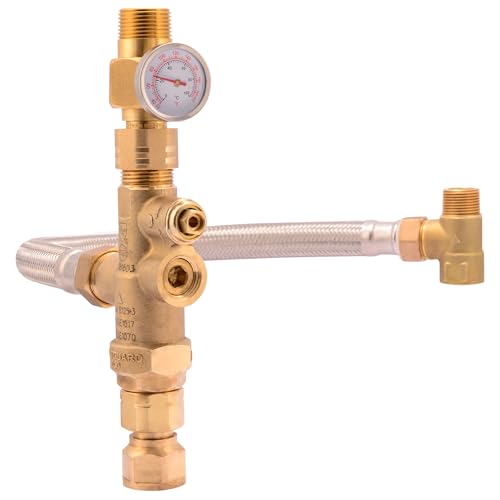
The 24644 consolidates a temperature actuated mixing valve and gauge into a single booster for hot water systems. Best for buyers seeking tempered water at a controlled temperature, with adjustable output up to 140°F (60°C). It works with gas, electric, tankless, and power-vent heaters and connects easily to PEX, PE-RT, CPVC, and copper without soldering. This makes it suitable for homes or small commercial setups needing anti-scald protection and simplified installation.
Best for: households or small facilities prioritizing safety and straightforward PEX-based installation. Limitations: ensure compatibility with existing supply temperatures and that the 140°F maximum matches local code requirements.
110-326 Gas Water Heater Control Valve

Designed for tank-type natural gas water heaters, this valve provides mechanical temperature control and gas flow regulation. It includes a built-in ECO that automatically shuts off gas when water exceeds 160°F (71°C), helping prevent overheating. It is essential for installations requiring a robust, automatic safety feature and reliable temperature regulation within 30°C–75°C (86°F–167°F).
Best for: gas-fired water heater replacements needing integrated safety controls. Caution: verify compatibility with your heater’s inlet pressure and appliance specifications before installation.
Atmama Thermostatic Mixing Valve
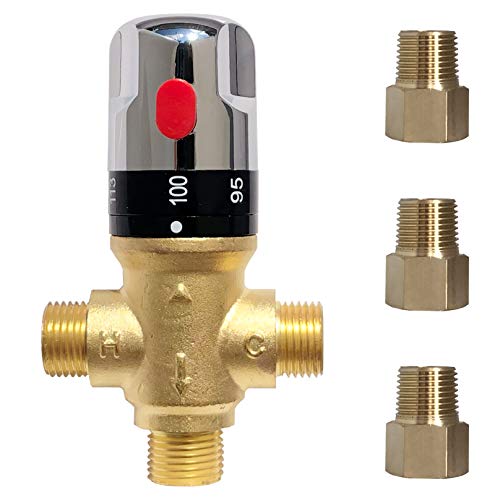
Offering 1/2 NPT male connections, this solid brass valve targets temperature control with an outlet range of 68°F–122°F. Its non-plastic construction contributes to durability in hot water applications, making it a stable choice for showers and faucets where consistent temperature matters.
Best for: projects requiring reliable brass construction with a defined temperature band. Limitation: colder inlet water must be balanced with hot water to achieve desired outlet temperatures.
Fyeer 3-Way Thermostatic Mixing Valve
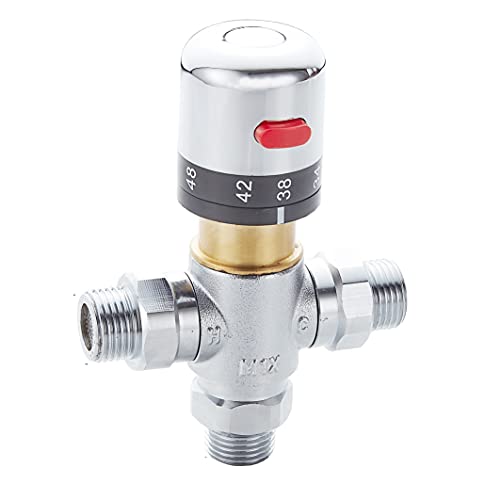
This 3-way valve connects hot and cold inlets to a mixed outlet and provides a dial-driven temperature setting. It features a premium brass body and a temperature range suited for bathroom fixtures, with a safety limit around 38°C. The valve includes check valves in both inlets to prevent backflow.
Best for: installations needing a compact thermostatic mixer for showers or faucets. Choose this if you require a robust brass body and straightforward temperature adjustment. Caution: ensure the flow rates match your fixtures’ demands to avoid throttling or temperature drift.
Cash Acme 3/4 Inch NCLX-5L Relief Valve
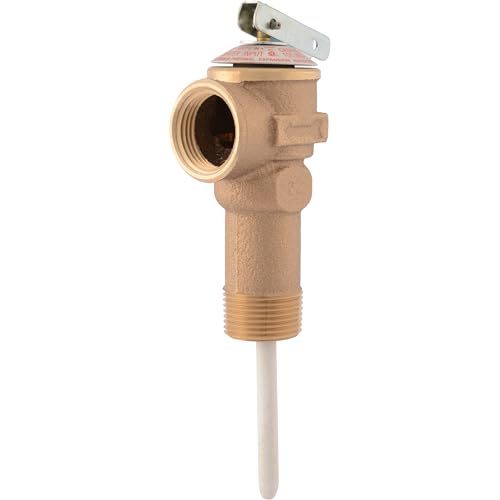
The NCLX series offers temperature and pressure relief with an inert coating to resist mineral deposits and corrosion. This valve protects water heaters and storage tanks by relieving excess pressure and temperature. It’s built with a bronze body and stainless steel internal parts for durability.
Best for: systems needing dual protection against overheating and overpressure. Limitation: primarily a safety valve rather than a user-adjustable temperature control device; proper installation is critical for effectiveness.
Buying Guide
Which valve type should I choose?
Thermostatic mixing valves are ideal when the goal is safe, tempered water at fixtures. Temperature actuated valves with gauges help monitor output and ensure consistent performance. Recirculation valves are useful when instant hot water at distant fixtures is a priority.
What installation considerations matter?
Check compatibility with pipe materials (PEX, CPVC, copper), available connections (NPT vs. straight thread), and whether soldering or special tools are required. Look for push-to-connect or easy-install features to simplify retrofits.
How do safety features affect selection?
Facilities with strict codes may require ECO shutoffs or built-in temperature limits. For gas heaters, ensure the valve’s thermal cutoffs align with heater ratings and local regulations.
Maintenance and longevity
Brass or bronze bodies generally offer durability in hot water environments. Valves with simple, replaceable components tend to be easier to service and extend overall system life.
Sizing and compatibility
Confirm inlet/outlet sizes and pressure ranges. Some valves have limited temperature ranges; match these to your water temperature goals and heater output to avoid insufficient protection or temperature drift.
FAQ
- What is a temperature actuated valve? A valve that automatically adjusts water temperature by mixing hot and cold streams to a preset output.
- Do these valves require soldering? Some models use push-to-connect or compression fittings; others may require soldering or adapters. Check product installation guides.
- Can I use these on any water heater? Most are designed for specific heater types (gas, electric, tank-type). Verify compatibility with your heater model.
- What temperature should I set for safe shower water? Common anti-scald settings range from 120°F (49°C) to 140°F (60°C), depending on local codes and safety needs.
- Is a relief valve necessary? A temperature/pressure relief valve provides safety against overpressure. Some setups require an additional relief valve alongside mixing valves.
- How do I know if I need a recirculation valve? If hot water takes long to reach distant fixtures, a recirculation valve can deliver faster hot water and reduce water waste.