Looking for energy efficient portable fans that deliver a strong breeze without high power use? This guide highlights five compact, low-noise options ideal for bedrooms, desks, and small living spaces. Each pick is evaluated for who it’s best for, why it’s a smart energy choice, and practical trade-offs. Use the summary table to compare core benefits at a glance.
| Product | Best For | Why It Stands Out |
|---|---|---|
| LEVOIT Tower Fan for Bedroom | Quiet sleepers and home offices | Low noise, DC motor, 12H timer, portable with handle |
| Gaiatop USB Desk Fan | Travelers and students | Ultra compact, USB powered, 3 speeds, very light |
| Lasko High Velocity Portable | Workspaces needing strong airflow | High CFM, 270° pivot, two outlets |
| shinic 10″ Tabletop Box Fan | Small desks and dorms | Compact, 2 speeds, energy efficient |
| Deyhoc Portable Handheld Turbo Fan | Outdoor and on-the-go cooling | 1-199 speed range, long battery life, USB-C |
LEVOIT Tower Fan For Bedroom

Best for: quiet work areas and bedrooms where uninterrupted rest is a priority. The fan uses a DC motor and VortexAir Technology to deliver a focused breeze with lower noise. It operates quietly across all speeds (20–43dB) and offers a timer option for energy-efficient cooling. The design includes a carrying handle for easy room-to-room movement.
Why chosen: energy efficiency and quiet operation align with a calm environment. The 12-hour timer helps reduce unnecessary runtime, and the compact tower form takes up minimal space.
Caution: if you need expansive, all-around airflow in a large room, consider combining with a separate circulating fan for complete coverage.
Gaiatop USB Desk Fan
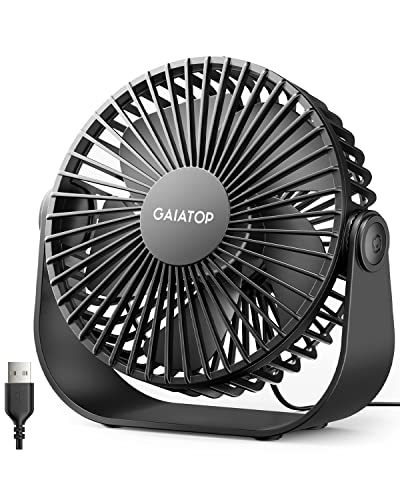
Best for: students, travelers, and small workstations needing a compact breeze. This 5.5-inch desk fan offers three speeds and a quiet operation, with a lightweight 6.5-ounce build and a 4.9-foot cord for flexible placement. USB powered makes it energy-efficient for devices with limited power draw.
Why chosen: its small footprint and portability make it ideal for on-the-go cooling without a wall outlet or heavy energy use. The quiet motor supports focused tasks without distraction.
Caution: at the highest setting, airflow is strong but limited by the compact size; ideal for personal cooling rather than room-wide circulation.
Lasko High Velocity Portable Utility Fan

Best for: garages, workshops, and desks needing robust airflow. This 12″ tall unit can move up to 289 CFM across three speeds and features a 270-degree pivot to target airflow precisely. It also includes two built-in outlets for convenience with tools or devices.
Why chosen: strong airflow with practical directing capability and outlets adds value in utility spaces. It’s a good match when high-velocity cooling is needed without occupying a lot of floor space.
Caution: energy use rises with higher speeds; plan usage around peak cooling needs to maximize efficiency.
shinic 10″ Tabletop Box Fan

Best for: small desks, dorm rooms, and tight spaces needing simple, energy-efficient airflow. This 9-inch blade fan offers two speeds with a compact, lightweight design suitable for easy relocation and quiet use.
Why chosen: minimal footprint and straightforward operation make it a practical budget pick for limited spaces. The energy efficient design helps keep running costs down for all-day use.
Limitation: airflow is moderate; not suitable for cooling large rooms or high-heat conditions.
Deyhoc Portable Handheld Turbo Fan
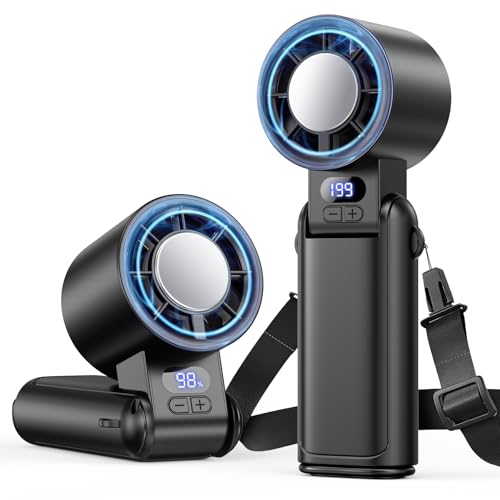
Best for: outdoor activities, travel, and quick personal cooling. This handheld fan offers a 1–199 stepless speed range for precise breeze control, plus a long-life 3600mAh battery and USB-C fast charging. A built-in LED display shows remaining power.
Why chosen: versatility in a pocket-sized format makes it ideal for on-the-go cooling with energy consideration through adjustable speeds and rechargeable power. Suitable for users who value hands-free options with a USB-C charge.
Caution: performance varies with speed; higher settings drain the battery faster, so plan for shorter bursts when battery is low.
Buying Guide
What constitutes energy efficiency in portable fans?
Look for DC motors (as opposed to AC), which typically use less power for a given airflow. Fans with multiple speed settings and timer functions help minimize running time and energy use when full power isn’t needed.
How to choose based on room type?
Small desks or dorm rooms: pick compact, USB-powered or battery-powered models for flexibility. Bedrooms and offices: prioritize low noise levels and timer features. Larger spaces: consider fans with higher CFM and adjustable directing options to cover more area.
What are the important trade-offs?
Smaller fans save space and energy but may offer less overall airflow. Higher-power or high-velocity models shift more air but consume more energy. Balance your needs by room size, noise tolerance, and how often you’ll run the fan.
Maintenance and longevity considerations
Choose models with simple cleaning access and durable housings. DC motors generally have longer life and quieter operation. Clear labeling of airflow direction and speed helps in routine adjustments for energy efficiency.
What about safety and portability?
Portable options with carrying handles and compact frames are safer for frequent movement. Check for stable bases to prevent tipping, especially in busy rooms or on desks.
Quick reference: key purchase considerations
- Noise level: prioritize models with low dB figures for bedrooms and study areas.
- Airflow control: prefer at least three speeds and a tilt or pivot function for targeted cooling.
- Power source: USB or battery-powered options offer energy savings and portability.
- Size and weight: ensure the device fits your space and is easy to relocate.
- Additional features: timers, remote control, and display-off options help minimize energy use.
FAQ
- What is the most energy-efficient type of portable fan?
DC motor fans typically use less energy than AC motor models for similar airflow. - Do portable fans with timers save energy?
Yes. Timers help ensure the fan runs only as long as needed, reducing wasteful runtime. - Is a larger fan always more energy efficient?
Not necessarily. Larger fans can move more air at lower speeds, but total energy depends on motor efficiency and usage. - Should I prioritize noise or airflow?
For bedrooms or focused work, prioritize low noise; for hot spaces, higher airflow may be necessary. - Can USB-powered desk fans replace room fans?
They are best for personal cooling at a desk or in small spaces; for whole-room circulation, larger or multiple units may be needed.