Answering the need for precise control over electric heating, these 240-volt programmable thermostats are designed for line-voltage systems like baseboard heaters, convectors, and radiant panels. This guide highlights five reliable options, suitable for different home setups and user preferences. Whether you want simple non-programmable control or advanced scheduling with smart features, there’s a model that fits. The selections favor reliability, energy savings, and clear, install-friendly designs for American households.
Quick comparison of selected models
- Honeywell TL8230A1003 — Best for straightforward 7-day programming and quiet operation.
- Lux ELV4 — Best for simple screening and 4 daily periods with a line-voltage only design.
- Honeywell TL7235A1003 — Best for easy on/off indication and clear temperature control.
- Honeywell RLV4305A1000 — Best for precise temperature with silent TRIAC switching.
- Honeywell Aube TH115-A-240D-B — Best for advanced 240V control with secure standby and power indicators.
Honeywell TL8230A1003 Electric Heat Digital 7 Day Programmable Thermostat
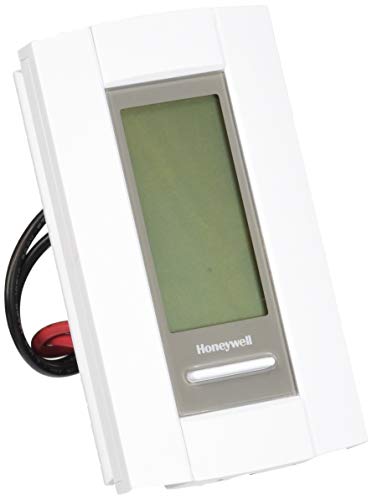
The TL8230A1003 offers seven-day programming to align heating with daily routines. It aims for energy savings by maintaining preset schedules, with electronic temperature control that improves precision to about ±1 F. Its quiet operation reduces the clicking commonly associated with older thermostats. Best for homeowners who want a reliable, easy-to-program solution without smart features.
Who it’s best for: traditional users who prefer fixed schedules and quiet performance. Why selected: strong energy-saving basics and clear, consistent control. Cautions: lacks smart connectivity; adjustments require manual programming.
Lux ELV4 Line Voltage Programmable 5-2 Day Thermostat

The Lux ELV4 provides line-voltage control with four daily programming periods, enabling a flexible schedule while remaining simple to operate. It is UL approved and includes a temporary override function for quick adjustments. Best for homes that want a straightforward, energy-conscious option without smart features. Caution: not compatible with heating systems that mix electric elements with blower loads.
Honeywell TL7235A1003 Line Volt Pro Non-Programmable Digital Thermostat

This non-programmable model focuses on immediate readability and dependable control. It includes an on-demand backlight for visibility in varied lighting, soundproof operation to reduce noise, and a heating indicator showing when heat is on. Best for buyers who want simple, reliable on/off control without scheduling. Caution: no programmable scheduling means less energy optimization over time.
Honeywell RLV4305A1000 5-2 Day Programmable Thermostat for Electric Baseboard Heaters

The RLV4305A1000 is a 5-2 day programmable thermostat tailored for electric baseboards, convectors, and fan-forced heaters. It claims high accuracy (±0.27 F) for baseboards and convectors, with TRIAC switching to achieve 100 percent silent operation. Best for homeowners who want precise temperature control and quiet performance. Caution: performance can depend on installation and load type, especially for mixed-heating setups.
Honeywell Home Aube TH115-A-240D-B Programmable Electronic Thermostat

The TH115-A-240D-B is a programmable electronic thermostat designed for 240V systems with a 15A rating. It emphasizes advanced temperature control to minimize swings and includes a standby switch for seasonal shutdown. Best for users who want structured programming, security features, and a clear power indicator. Caution: installation may require attention to 240V wiring norms and local electrical codes.
Buying Guide: 240V Programmable Thermostat Essentials
- What is line-voltage vs. low-voltage control?
Line-voltage (240V) thermostats directly switch electric baseboards, convectors, or radiant coils. They do not require a low-voltage transformer or a C-wire, which simplifies installation in many baseboard heater setups. - Do you need scheduling or smart features?
If you want precise daily or 7-day scheduling, choose a programmable model like the TL8230A1003 or RLV4305A1000. For voice control and app-based management, consider smart options compatible with HomeKit, Alexa, or Google Home like the meross model listed. - How important is silence and noise suppression?
Some models include soundproofing or silent switching (TRIAC) to reduce clicking sounds. This can improve comfort in bedrooms or living spaces. - How precise should the temperature control be?
Higher accuracy (for example, ±0.27°F) helps reduce temperature swings and improve comfort, particularly with baseboard or convector systems. - What are installation considerations?
Verify voltage ratings, amperage, and wiring requirements for your baseboard or electric heating system. Some models require consistent line-voltage wiring and may need a professional install.
FAQ
- Can a 240V thermostat control both baseboard heaters and convectors?
Yes, many 240V thermostats are designed for baseboard heaters and similar line-voltage loads, but verify compatibility with your specific equipment. - Do 240V programmable thermostats require Wi-Fi?
Some do and offer smart features, while others are manual programmable only. Choose based on your preference for connectivity. - Is energy savings guaranteed with programmable 240V thermostats?
Programmable schedules help reduce energy use by aligning heating with occupancy, but savings depend on how well schedules match actual needs. - Do I need professional installation for these thermostats?
Many 240V models involve high-voltage wiring. If you’re not comfortable with electrical work, a licensed electrician is advised. - What should I consider when replacing an older thermostat?
Check wiring compatibility, the presence of a compatible mounting plate, and whether your system supports line-voltage control without a C-wire. - Are there models with override or temporary hold features?
Several options offer temporary overrides to adjust schedules for a day or a specific period, useful for changes in routine.
In summary, this selection targets common 240V applications: simple 7-day programming, straightforward daily schedules, precise temperature control, silent operation, and optional smart capabilities. Each model is chosen for clarity of function, ease of installation, and suitability for electric-baseboard and line-voltage heating systems.