Looking for a 240V window air conditioner that balances power, energy efficiency, and features? This guide highlights five top 240V window AC units suitable for American homes, spanning large spaces to compact rooms. Each option is evaluated for who benefits most, why it stands out, and potential limitations. Read on to compare cooling capacity, supplemental heat, dehumidification, and smart controls to find the right match for your space and climate.
| Product | Cooling Capacity | Best For |
|---|---|---|
| Keystone 23,200 BTU Window AC | Up to 1,500 sq. ft. | Large living areas needing year-round comfort |
| LG 24,500 BTU Window AC | Up to 1,560 sq. ft. | Quiet operation in open-plan spaces |
| LG 12,200 BTU Window AC | Up to 570 sq. ft. | Smaller rooms with supplemental heat |
| Midea 24,000 BTU Smart Inverter Window AC | Up to 1,500 sq. ft. | Smart control lovers and energy efficiency seekers |
| Frigidaire 14,000 BTU Wall/Window AC | Up to 700 sq. ft. | Rooms needing air filtering and easy remote control |
Keystone 23,200 BTU Window AC with Supplemental Heat

This 23,200 BTU cooling unit delivers robust performance for large spaces up to 1,500 square feet, with 16,000 BTU supplemental heating and built-in dehumidification and fan circulation. Best for homeowners seeking a single, year-round solution for large rooms or open-plan layouts. The Smart Remote provides room-based temperature readings and sends updates every three minutes for accurate cooling. Caution: Supplemental heating is not designed as the primary heat source and is most effective within outdoor temperatures of 23–76 degrees.
LG 24,500 BTU Window AC for Large Rooms

With 24,500 BTU and a 1,560 sq. ft. cooling range, this LG unit emphasizes quiet operation and easy control. Three cooling and fan speeds plus Auto Cool streamline comfort, while an electronic control with remote simplifies adjustments. Auto Restart ensures continuous cooling after power interruptions. Best for: spacious living areas where quiet operation matters and quick temperature restoration is a priority. Limitation: Large units can require precise installation and window support.
LG 12,200 BTU Window AC With Supplemental Heat

This LG unit provides 12,200 BTU cooling with supplemental heat, suitable for smaller rooms up to about 570 square feet. It operates with low noise (as low as 50 dB in low mode) and offers multiple fan speeds. It’s ideal for bedrooms or compact offices where quiet operation and additional warmth in cooler seasons are valued. Caution: The smaller capacity may not handle very hot days in larger spaces without hesitation.
Midea 24,000 BTU Smart Inverter Window AC

Offering 24,000 BTU for spaces up to 1,500 sq. ft., this Midea model emphasizes smart control, energy efficiency, and inverter technology. Features include app control (SmartHome), voice control via Alexa and Google Assistant, and multiple modes (Auto, Cool, Dry, Fan) with four scheduling options. Best for: tech-forward homes that want remote management, energy savings, and flexible operation. Limitation: Inverter-driven units can have a higher upfront cost and require reliable Wi-Fi for full smart features.
Frigidaire 14,000 BTU 230V Window/Wall AC
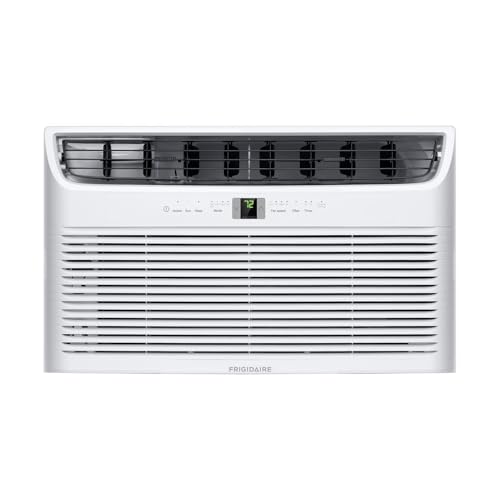
This Frigidaire unit provides 14,000 BTU cooling for rooms up to 700 sq. ft., with a built-in dehumidifier, energy-efficient operation, and a remote control for convenient adjustments from the couch. A notable feature is the air ionizer to reduce airborne particles, improving air quality. Best for: mid-size rooms where air quality and flexible placement matter. Caution: It is listed as a wall/window unit, so installation may vary by window configuration.
Buying Guide: How to Choose a 240V Window AC
What room size should you target? Start with the square footage: choose a higher BTU rating for larger areas and consider the ceiling height and insulation. For large, open spaces, units with 24,000–29,000 BTU can cover up to about 1,500 sq. ft., while smaller rooms perform well with 12,000–14,000 BTU models.
Do you want supplemental heating? If you live in a seasonal climate, a unit with supplemental heat adds warmth during cooler days but isn’t a replacement for a dedicated heater. Confirm outdoor temperature ranges where the supplemental heat remains effective.
Smart features matter. Apps, voice control, and remote sensors can improve usability in busy homes. Look for units with reliable app support, compatibility with Alexa/Google Assistant, and intuitive remotes. Consider energy efficiency and inverter technology for ongoing cost savings.
Noise and placement. If the unit sits in a living area or bedroom, noise level is important. Compare dB ratings and choose a model with multiple fan speeds and a quiet mode. Window compatibility and installation weight influence mounting safety and stability.
Energy considerations. Energy Star-rated units typically offer longer-term savings. Inverter-type compressors adjust cooling output more precisely, reducing electrical draw during partial-load conditions. Clean and maintain filters regularly to sustain efficiency.
Frequently Asked Questions
- What is the meaning of 240V in window AC units? It refers to the operating voltage; these units require a 240V electrical circuit, suitable for homes with standard 120V in some rooms and higher-load outlets in others.
- Which BTU is best for a 1,000–1,500 sq. ft. space? Look for 23,000–30,000 BTU units for spaces up to 1,500 sq. ft. with good insulation and ceiling height, especially in hot climates.
- Can these units provide sufficient heating? Some models have supplemental heating, a secondary heat source, but they are not a substitute for central heating in winter.
- Are smart 240V window ACs worth it? Yes, if you want remote control, scheduling, and energy management across devices, provided you have reliable Wi-Fi.
- What maintenance helps efficiency? Regular filter cleaning, clearing debris around the outdoor section, and ensuring proper sealing around the installation reduce energy use and improve performance.
- Is professional installation required for 240V models? Installation typically involves electrical work and secure mounting. Check local codes and consider professional installation if you lack experience.