When shopping for a 48V RV air conditioner, the goal is efficient cooling and heating that works reliably off standard shore power. The top options below are chosen for compatibility with mobile DC electrical systems, quiet operation, and practical installation in vans, campers, and trailers. This guide highlights who each unit is best for, plus why it was selected and any noteworthy limitations. Whether you need a compact rooftop unit, a hidden underbody design, or a full-featured heating and cooling system, learn which model fits your mobile lifestyle.
| Product | Best For |
|---|---|
| OUTEQUIP 11,000 BTU Roof AC | Small space van conversions needing rooftop cooling and auxiliary heating |
| Gidrox 12,000 BTU DC AC with Heat Pump | Users wanting year-round climate with battery-friendly operation |
| NEKPOKKA Hidden Underbody 13,000 BTU | Space-saving, stealthy undercarriage installation |
| NEKPOKKA Hidden Underbody 13,000 BTU (Model 530) | Budget-conscious installation with energy-aware design |
| CHHMAELOVE Universal Roof AC 48V | All-in-one roof unit with remote control and inverter-driven cooling |
The following sections provide concise, objective details for each model. Each entry notes who it’s best for, why it’s selected, and a practical caveat to consider when planning your build.
OUTEQUIP 48V 11,000 BTU Rooftop AC

Best for compact van conversions that require a dedicated rooftop cooling option with 11,000 BTU cooling and a 4,500 BTU PTC heater. It runs on 48V DC, avoiding heavy inverters and enabling rapid cooling with added warmth for mild weather. The built-in heater is not meant as a primary source in extreme cold, so plan for supplemental heating if you operate in freezing conditions. Control is available via app, remote, or indoor touch panel, allowing you to optimize power use and airflow from multiple locations. This model is ideal for Class B motorhomes and other mobile DC setups where space and power management matter.
Best for: small to mid-size van conversions that prioritize DC power compatibility and flexible control. Limitations: heater efficiency is limited in very cold weather; consider an alternative heat source for extreme cold.
Gidrox 12,000 BTU 48V DC RV AC With Heat Pump

This unit combines year-round climate control with a 12,000 BTU cooling capacity and 11,000 BTU heating via heat pump. It is powered directly from an RV battery with minimal inverter needs, offering energy-conscious operation. Sleep mode keeps power use low, and the 40dB scent-free operation in quiet modes helps maintain a restful environment. Three operating modes—Turbo, ECO, and Sleep—allow precise tuning for different camping scenarios. Best for users who want strong cooling and heating without a heavy inverter or frequent generator use.
Best for: campers seeking reliable, battery-friendly performance with quiet operation. Limitations: high initial BTU demand may require adequate insulation and battery capacity for all-night use in hot climates.
NEKPOKKA Hidden Underbody 13,000 BTU (Model 680)
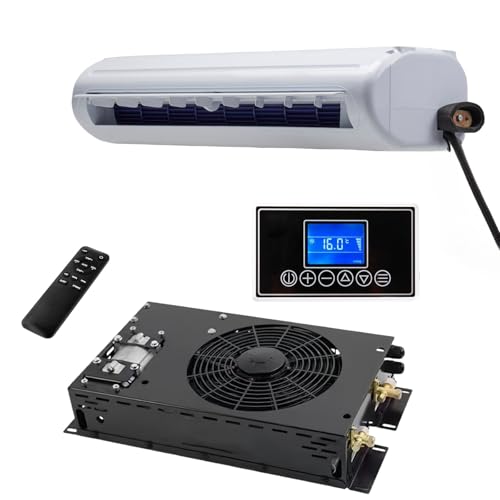
This underbody unit emphasizes a hidden design with a sturdy metal shell and space-saving installation options. It targets trailers, campers, trucks, and vans where exterior visibility needs to be minimized and interior space preserved. Specifications indicate 48V operation with a substantial 13,000 BTU capacity and a controllable evaporator system designed to adjust compressor output by temperature, supporting energy efficiency. Best for: owners prioritizing exterior aesthetics and room-saving installation. Limitation: installation requires precise mounting below or under the vehicle, which may affect clearance in some builds.
NEKPOKKA Hidden Underbody 13,000 BTU (Model 530)

This model shares the underlying NEKPOKKA underbody concept with a similar 13,000 BTU capacity and 48V operation. It emphasizes energy efficiency through an LCD-style evaporator and compressor power adjustments tied to evaporator outlet temperature. It’s well-suited for setups seeking a balance of space savings and effective climate control. Best for: space-constrained builds where a hidden outdoor unit saves room. Limitation: some installers may require additional cable runs or junctions for the control panel placement.
CHHMAELOVE Universal Roof 48V RV AC

This universal roof unit offers high-efficiency cooling and heating across 12V/24V/48V installations, with remote control and an all-in-one design for RVs, boats, and trucks. The host unit dimensions accommodate standard skylight openings, simplifying installation for non-custom builds. It’s best for users who want an all-in-one roof solution that can adapt to a range of power configurations. Limitation: may require careful matching with existing din and wiring harnesses in older RVs.
RecPro RV 48V Non-Ducted Low Profile With Heat Pump (13.5K BTU)

RecPro’s system focuses on efficient heating and cooling in one device, a key benefit for light to mid-size RVs seeking integrated climate control. A touch screen plenum display provides granular temperature adjustments, and a washable return air filter supports easier maintenance. It is best for buyers who want precise indoor climate control with simple maintenance. Limitation: non-ducted design may require careful airflow planning in larger floorplans.
RecPro RV 48V Non-Ducted Low Profile With Heat Pump (9.5K BTU)

This RecPro model mirrors the heating/cooling efficiency in a smaller 9.5K BTU package, suitable for compact RVs or trailers where space and power are at a premium. A touch screen plenum display aids control, and the unit includes a washable filter for simple upkeep. Best for: smaller rigs needing reliable 48V climate control with easy maintenance. Limitation: lower BTU rating may be insufficient in very hot climates or larger interiors.
Buying Guide: 48V RV Air Conditioners
- Power source compatibility: Verify your RV’s battery bank and inverter setup. 48V DC units save weight and reduce inverter losses, but you need sufficient battery capacity for extended use.
- Cooling vs. heating needs: If you expect cold nights, prioritize heat pump capability or plan for auxiliary heating in extreme weather.
- Installation type: Roof units tend to be easier for large spaces; underbody designs save space but require careful mounting and weatherproofing.
- Noise and air distribution: Look for units with low dB ratings and adjustable fans to maintain comfort without excess background noise.
- Control options: App, remote, and wall panel controls provide flexibility for power management, especially when solar charging is used.
- Maintenance: Consider units with washable filters and accessible service panels to simplify ongoing upkeep.
- Future scalability: If plans include a larger RV or more solar capacity, choose a unit that can operate efficiently at higher BTUs or be upgraded later.
Frequently Asked Questions
- Do 48V RV air conditioners require a special electrical system? Yes. They run on 48V DC and typically benefit from a battery bank designed for DC operation, with careful wiring to handle surge loads.
- Can I use a 48V AC unit with a standard 12V RV system? Most 48V units will not operate correctly on 12V without a properly sized converter or inverter system; ensure your setup matches the unit’s voltage requirements.
- Is a hidden underbody unit more energy-efficient than a rooftop unit? Efficiency depends on installation, insulation, and airflow. Underbody units save space but may have different airflow characteristics than rooftops.
- What should I consider for heating in cold climates? A unit with a heat pump provides efficient heating, but in very cold climates, you may need supplemental heating sources.
- How important is noise level? Lower dB ratings improve comfort during sleep and daytime activities, especially when the system runs for extended periods.
- What maintenance steps are essential? Regularly clean or replace filters, inspect seals around installation points, and check electrical connections for corrosion or wear.