The top 5 insulated 5-inch flexible ducts are chosen for reliability, thermal efficiency, and ease of installation in home heating and cooling projects. This guide targets buyers seeking durable, energy-saving ducts for HVAC ran, venting, or ductwork expansions. Each product is best for a specific scenario, from high-temperature resilience to quiet operation. The summary table below helps compare essentials at a glance.
| Product | Brand | Length | Insulation / R Value | Best For |
|---|---|---|---|---|
| Cuchiilo 5 Inch Insulated Flexible Duct | Cuchiilo | 25 ft | Glass wool insulation, R-4.2 | |
| VEVOR 5 Inch Insulated Flexible Duct | VEVOR | 25 ft | Glass fiber insulation, R-4.2 | |
| Hon&Guan 5 Inch Duct | Hon&Guan | 16 ft | PET inner, aluminum middle, PVC outer; three-layer | |
| TEAIERXY 5 Inch Dryer Vent Hose | TEAIERXY | 5 ft | Aluminum foil + PET + steel wire + PVC | |
| HVAC Insulated Flex Ductwork | Generic | 25 ft | Aluminum inner core with thick insulation |
Cuchiilo 5 Inch Insulated Flexible Duct

Best for high-temperature environments and sound attenuation. This duct uses thickened aluminum foil with a glass fiber insulation layer and an elastic spiral steel core. The insulation is designed to withstand wide temperature ranges, reducing heat transfer and minimizing noise. Best for HVAC runs where both heat resistance and quiet performance are valued.
Who it’s for: ideal for homeowners installing in attics or crawlspaces where heat and noise are concerns. Why selected: combines robust insulation with an effective noise barrier. Caution: glass wool insulation can be slightly more rigid than lighter foams, impacting flexibility in tight corners.
VEVOR 5 Inch Insulated Flexible Duct

Best for balanced insulation and durability in moderate installations. It features a three-layer construction with aluminum foil, PET film, and fiberglass grid, delivering R-4.2 and quiet operation. It suits residential HVAC runs where steady airflow and reliability matter.
Who it’s for: homeowners seeking reliable insulation and low noise. Why selected: strong outer protection plus internal insulation helps reduce energy waste. Caution: 25-foot length may require careful routing to avoid kinks or sharp bends.
Hon&Guan 5 Inch Duct

Best for tight installations with extendable length. This duct uses a three-layer structure: PET inner, aluminum foil middle, and PVC outer with a steel wire for flexibility. The temperature range covers typical indoor HVAC conditions, making it a versatile option for limited spaces.
Who it’s for: installers needing a compact, extendable duct for small to mid-sized runs. Why selected: sturdy construction and adjustable length help fit awkward layouts. Caution: 16 feet may not cover longer runs without splicing or additional segments.
TEAIERXY 5 Inch Dryer Vent Hose

Best for quick, cut-to-length installations where a flexible, insulated vent hose is needed. This 5-inch hose features aluminum foil, PET, steel wire, and PVC for a robust, stretchable design. It provides 360° flexibility and is easy to install with included clamps. Best for temporary or short runs in laundry spaces or laundry rooms.
Who it’s for: handy homeowners performing simple venting tasks. Why selected: straightforward installation and flexibility. Caution: its shorter length may necessitate more joints for longer runs.
HVAC Insulated Flex Ductwork
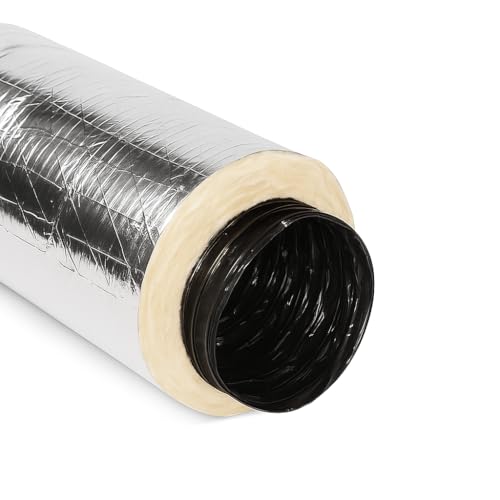
Best for standard residential heating and cooling installs requiring a durable aluminum inner core with thick insulation. The 5″ diameter is compatible with common fittings, and the insulation minimizes energy loss while maintaining airflow. A practical choice for typical home HVAC expansions.
Who it’s for: homeowners or contractors performing routine HVAC ducting. Why selected: straightforward, versatile option for everyday residential use. Caution: check local code compatibility for insulation rating and installation practices.
Buying Guide: Key Considerations for 5-Inch Insulated Flexible Ducts
- Insulation type and R value: Higher R values reduce heat transfer and noise. Glass fiber and aluminum-backed insulation are common in 5-inch ducts.
- Construction layers: Three-layer designs (inner core, insulation, outer jacket) offer durability and flexibility. A steel wire helix improves bend resistance.
- Length and routing: Measure run length carefully. Longer ducts may require more joints; ensure the routing avoids kinks and sharp bends.
- Temperature range: If installed in attics or crawlspaces, confirm the duct withstands temperature extremes.
- Installation hardware: Clamps, adapters, and cut-to-length capability impact ease of use in tight spaces.
- Noise considerations: Insulation and the duct’s internal structure influence sound attenuation—look for products advertising sound reduction if quiet operation is important.
- Compatibility: Ensure the duct diameter, fittings, and clips match your HVAC equipment and existing ductwork.
Frequently Asked Questions
- What is an insulated flexible duct used for?
– It carries heated or cooled air in HVAC systems while reducing energy loss and noise. - What does R-4.2 mean for insulation?
– It indicates thermal resistance; higher numbers imply better insulation and lower heat transfer. - Can I use dryer vent ducts for HVAC air?
– Not typically; dryer vent ducts are designed for exhaust and may not meet HVAC safety and insulation requirements. - How do I determine the right length?
– Measure the run distance and consider potential bends; plan for extra length to avoid tension and kinks. - Is it better to choose a three-layer duct?
– Three-layer designs generally offer better durability, insulation, and resistance to punctures than single-layer options. - Do I need clamps for installation?
– Yes, many ducts include clamps or require them to secure the connections and prevent leaks.