Best 90 degree rectangular duct products help redirect airflow efficiently in tight spots like behind walls, under floors, or above ceilings. This guide highlights top options to fit 4-inch round to rectangular transitions, 10 x 4 or 10 x 3-1/4 openings, and 90° elbows. Suitable buyers include homeowners tackling DIY HVAC upgrades, contractors installing compact ducts, and builders seeking durable, corrosion-resistant fittings. Read on for concise product comparisons, buyer tips, and a practical buying guide with a quick reference table.
| Product | Best For | Key Benefit |
|---|---|---|
| Flutesan 4 x 10 x 4 Inch End Boot | Residential and light commercial | 90° transition from round 4″ to 10″×4″ rectangular |
| Lambro Dryer Vent Tite Fit 18″–30″ | Tight dryer spaces | Extends vent path in compact areas |
| Flutesan 3-1/4 x 10 x 4 Inch End Boot | Smaller rectangular openings | 90° duct direction with 10″×3-1/4″ opening |
| Imperial Gv0605 Duct Angle Boot | Floor register transitions | 3-1/4″×10″×4″ galvanized boot |
| Lambro 3006 Tite Fit 90° Rectangular Aluminum Duct | Aluminum lightweight paths | Durable, strong for 90° turns |
Flutesan 4 x 10 x 4 Inch End Boot

Best for: Homeowners upgrading a 4″ round duct to a 10″×4″ rectangular register. This galvanized end boot uses 30 gauge steel for strength and corrosion resistance, suited for long-term residential use and light commercial applications. The 90° angle aids air redirection in tight spaces such as behind walls or under floors. A practical choice where straight runs are limited. Caution: 30 gauge metal is lighter than heavier gauges; handle with care during installation to avoid deformation.
Lambro Dryer Vent Tite Fit 18″ to 30″

Best for: Tight-space dryer venting projects where the vent path must compress or extend between 18″ and 30″. The 26 gauge aluminum construction keeps weight modest while maintaining durability. This option is better for shorter, compact runs in laundry areas. Choose this if you need a flexible extension in a limited space. Caution: Aluminum gauge is relatively thin; avoid sharp bends that may promote kinks or airflow resistance.
Flutesan 3-1/4 x 10 x 4 Inch End Boot
Best for: Smaller rectangular openings, particularly when a 10″×3-1/4″ intake is required. This 90° end boot connects a 4″ round duct to a 10″×3-1/4″ rectangle, with 30 gauge galvanized steel for durability. It’s a solid choice for compact retrofit projects or room-by-room duct work. Caution: As with similar 30 gauge components, handle during installation to prevent corner dents that could affect fit.
Imperial Gv0605 Duct Angle Boot
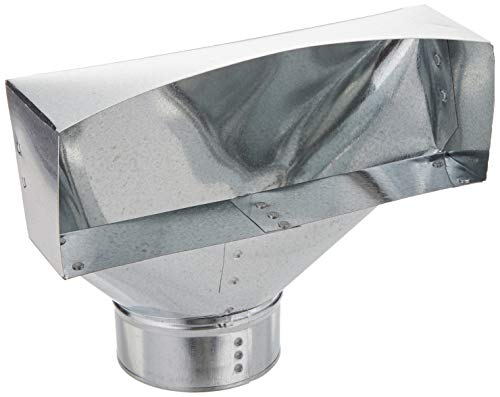
Best for: Floor register outlets requiring a clean right-angle transition from round duct or insulated flexible duct. This 3-1/4″×10″×4″ galvanized boot provides solid support for mid-size rectangular registers. It’s particularly suitable where a durable, straightforward 90° elbow is needed. Caution: No size customization; ensure opening matches your duct diameter before ordering.
Lambro 3006 Tite Fit 90° Rectangular Aluminum Duct

Best for: Lightweight, rigid 90° turns in rectangular aluminum ducts. This product is manufactured in the United States and aims to provide durable, versatile 90-degree elbow performance for a range of HVAC layouts. Best for projects prioritizing lighter materials and ease of installation. Caution: Aluminum, while light, can be less rigid than steel in very long runs; verify long-term support in high-vibration areas.
Buying Guide
What to consider when choosing a 90° rectangular duct component:
- Material and gauge: Heavier gauges (like 30 gauge galvanized steel) offer durability for long-term use; lighter aluminum segments save weight but may be less rigid.
- Opening size: Confirm the exact rectangle size (10″×4″ vs 10″×3-1/4″) to ensure a proper seal and airflow.
- Connection compatibility: Ensure the boot or elbow matches the duct diameter (commonly 4″ round) and the target rectangular opening.
- Application environment: Galvanized steel is suited for moisture resistance; aluminum is lighter for quick installations but may require more support.
- Space constraints: 90° turns are ideal for tight runs behind walls, under floors, and above ceilings; verify available clearance before installation.
- Installation considerations: Some parts are designed for specific register types; check compatibility with existing ducts and registers in your system.
Quick Practical Tips
- Measure both the round duct and the rectangular opening precisely before ordering.
- Plan the path to minimize sharp bends that increase airflow resistance.
- Use appropriate sealant or tape rated for HVAC ductwork to prevent air leakage at joints.
- Keep the chosen material within the system’s exposure environment to avoid corrosion or warping.
FAQ
- Q: What is a 90-degree rectangular duct boot used for? A: It redirects airflow from a round duct into a rectangular register opening at a right angle, useful in tight spaces.
- Q: Which material is best for durability? A: Galvanized steel (30 gauge) provides strong, corrosion-resistant performance for residential and light commercial use.
- Q: Can I retrofit an existing duct with these fittings? A: Yes, provided the opening sizes and duct diameters match the product specifications.
- Q: Are these components suitable for kitchen exhaust or bathroom vents? A: They can be used in varied HVAC paths, but verify compatibility with the specific vent requirements and local codes.
- Q: Do these parts come in other sizes? A: The listed options focus on common 4″ round to 10″ rectangular openings; other sizes may be available from the manufacturer.
- Q: How do I choose between steel and aluminum for these boots? A: Steel offers higher rigidity and durability; aluminum is lighter and easier to handle for quick installs.