Answering the needs of DIY automotive enthusiasts and shop-fixers, this guide highlights top AC gas refill kits for R134a systems. These kits are best for homeowners, hobbyists, and automotive techs who want reliable tools to top off or recharge air conditioning without specialized equipment. Below, you’ll find five carefully chosen kits, each with its strengths, ideal use cases, and practical cautions. A quick buying table summarizes key details to help you compare at a glance.
| Product | Best For | Key Benefit | Limitations |
|---|---|---|---|
| ZeroR AC Recharge Kit R134a Replacement – 24-Inch | DIYers with long reach | Long hose for hard-to-reach ports | Requires SSV compatible tool |
| A/C Pro Gauge Kit – 24 In Hose | Beginners who want clear readings | Extra large gauge for accuracy | Gauge-only system, not a universal kit |
| ZeroR AC Recharge Kit – 14-Inch | Compact setups | Smaller hose length for tight spaces | Same SSV requirement as longer version |
| Aupoko R134A Charge Hose Kit | System with self-sealing cans | Integrated 90-degree shut-off, easy to use | Primarily compatible with self-sealing cans |
| BFXM R134A Charge Hose Kit | Durable, high-pressure use | Brass and rubber construction with gauge | More components; heavier setup |
ZeroR AC Recharge Kit R134a Replacement – 24-Inch
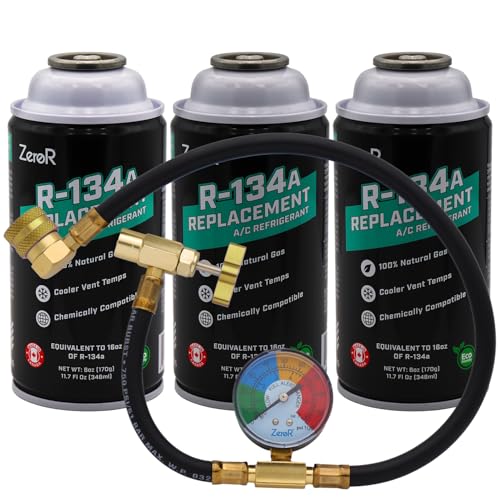
The ZeroR 24-Inch kit uses an eco-friendly R134a replacement with a 24-inch charging hose. It ships with three cans of the hydrocarbon blend and uses a self-sealing valve (SSV) compatible system. Best for home projects that require long reach to service ports that are tucked behind components. The kit emphasizes a natural refrigerant blend designed to be ozone-friendly and non-global warming. Best for DIYers who prioritize safety and minimal environmental impact. Caution: ensure your can opener is compatible with SSV cans to avoid slow or incomplete transfer.
Who it’s best for: DIY homeowners or automotive hobbyists who regularly service vehicles with hard-to-reach compressors or consoles. Why selected: long hose facilitates easier charging in cramped engine bays, and the SSV setup helps preserve unused gas for future use.
Limitations: Requires SSV compatible tools; pierce-style tools can cause slow or incomplete gas release. Follow local regulations for handling hydrocarbon blends.
InterDynamics Car Air Conditioner Gauge and Hose

This kit features an A/C Pro Auto AC Recharge Gauge and 24-inch hose, designed for cars and light trucks. It includes an extra-large gauge for easier charge readings and precise control during the recharge process. It’s a good fit for buyers who want straightforward, readable measurement during charging. Best for users who value clarity and accuracy over added hose length. Caution: designed primarily as a gauge-and-hose dispenser; it may be less convenient for ports that are difficult to reach without additional extensions.
Who it’s best for: Beginners or intermediate DIYers who need a simple, readable gauge system. Why selected: the large gauge helps users avoid overcharging, a common risk for new technicians.
Limitations: Not a full service kit; lacks some tubing or seals that some multi-can kits provide. Ensure compatible cans with your vehicle’s service needs.
ZeroR AC Recharge Kit – 14-Inch

The 14-inch version from ZeroR offers a more compact option with the same 6-ounce SSV cans. It’s designed for tight engine bays where a longer hose would be cumbersome. Best for compact vehicles or portable service setups. The self-sealing can mechanism remains a key feature for preserving gas between uses. Caution: shorter hose reduces reach to some ports; plan placement accordingly.
Who it’s best for: Technicians or DIYers who frequently work in smaller engines or crowded bays. Why selected: portability and easier storage make it ideal for limited-space scenarios.
Limitations: Short hose length may limit access to distant ports; verify port accessibility before purchase.
R134A Charge Hose Kit with Gauge – Aupoko

The Aupoko kit provides a 1/2″ self-sealing can tap and a 90-degree push-and-lock coupler with an auto shut-off feature. It includes a pressure gauge for easy charge monitoring and claims compatibility with R134A cans that have a 1/2” thread. Best for users who value a reliable self-sealing can tap and a straightforward gauge readout. Caution: designed for self-sealing cans; can be less effective with puncture-style cans, which may require different hardware.
Who it’s best for: DIYers who work with self-sealing R134A cans and want a robust gauge-enabled flow. Why selected: the 90-degree coupler and auto shut-off help simplify handling during charging.
Limitations: Not ideal for puncture-style cans; compatibility hinges on can type. Confirm can style before buying.
BFXM R134A Refrigerant Charge Hose Kit

The BFXM kit combines a brass and rubber hose with a 1/2″ female can opener, a 15.4″ refill hose, and a 13mm R134A low-pressure quick-connect. It includes a 1.97″ gauge and a 100 psi maximum rating, suitable for higher-pressure refrigerant charging. Best for users who want a sturdy, high-strength hose assembly for demanding tasks. Caution: relatively heavy-duty build means the kit is bulkier than compact options; ensure your workspace can accommodate it.
Who it’s best for: Professionals or serious DIYers who perform regular, higher-demand refrigerant work. Why selected: durable construction and integrated gauge system support more accurate charges under varying conditions.
Buying Guide
What should I look for in an AC gas refill kit?
Key factors include hose length, can compatibility (SSV and standard cans), presence of a gauge, and overall build quality. Longer hoses help reach tight engine bays; gauges reduce the risk of overcharging. Confirm that the kit supports the refrigerant your vehicle uses and the type of can (SSV vs. puncture).
How important is can compatibility?
Self-sealing (SSV) cans preserve gas between uses and reduce the risk of leaks. If your cans are puncture-style, some kits may not work as designed. Always verify can type before purchase to avoid incompatibility and slow charging.
Should I choose a kit with a gauge?
Yes for most users. A gauge provides real-time feedback on low- and high-side pressures, helping to avoid overcharging and undercharging. If you prefer a simpler setup, a basic hose without gauge is lighter, but less precise.
What about eco-friendly refrigerants?
Some ZeroR products advertise hydrocarbon-based blends that aim to be ozone-friendly. If environmental impact matters to you, select a kit with a clearly stated eco-friendly refrigerant and follow local regulations for handling and disposal.
How do I use these kits safely?
Work in a well-ventilated area, wear eye protection, and follow manufacturer instructions. Check vehicle-specific refrigerant requirements and avoid mixing different refrigerants. Use the proper can opener for self-sealing cans, and never puncture cans unless the kit explicitly supports it.
What limitations should I expect?
Limitations vary by kit: hose length, cane compatibility, gauge readability, and can type support. Some kits emphasize portability at the expense of reach, while heavier-duty kits provide durability but require more workspace. Always align the kit with your typical vehicle dimensions and service needs.
FAQs
- Q: Can I use these kits with any car AC system?
A: They are designed for R134a systems; verify can type compatibility and port fittings before use. - Q: Do these kits work with home air conditioning units?
A: Some kits claim flexibility for home systems; check product specifics for R134A compatibility and allowed pressures. - Q: Is a longer hose always better?
A: Not always; longer hoses help reach tight spaces, but can add bulk. Choose based on your typical engine bay layout. - Q: Are eco-friendly refrigerants safe?
A: Eco-friendly blends reduce ozone impact but must be used according to guidelines and local regulations. - Q: Do these kits include all necessary cans?
A: Some kits include cans; others are accessory-only. Confirm included components and gauge availability before purchasing. - Q: How do I avoid overcharging?
A: Use the gauge readings, follow a vehicle’s service specifications, and charge gradually while monitoring pressures.