Answer: These condensate pumps are designed to automatically remove moisture produced by HVAC systems, dehumidifiers, and related equipment. They are best for homeowners, renters, and small commercial spaces needing reliable, automatic condensate removal with safety and overflow features. This guide focuses on five models that balance reliability, ease of use, and value for typical American homes. Each product section highlights who it’s best for and why, plus a practical caution to consider before purchase.
| Product | Best For | Why It Stands Out |
|---|---|---|
| Little Giant VCMA-15ULST 115V | Residential HVAC units | Overflow switch, compact footprint |
| RectorSeal Mighty Pump 97795 | Non-electrical drain line cleaning | Hand-operated, vine alternative to electrical pumps |
| Little Giant VCMA-20ULS | Medium-capacity residential systems | Higher flow, reliable build |
| MSKOTOAS Automatic Small Sump Pump | Quiet, compact setups | Auto on/off with dual sensors |
| AQUASTRONG 1/38 HP | Versatile 115V/230V installations | Safety switch option, 20 ft lift |
Little Giant VCMA-15ULST Condensate Pump With Overflow Detection

Best for small to mid-sized HVAC units that require automatic condensate removal and a compact footprint. The vertical switch helps minimize space while enabling automatic operation. It features a 1/50 HP motor, is thermally protected, and includes a 20-foot tubing setup suitable for typical home installations. Suitable for boilers, furnaces, air conditioners, and dehumidifiers.
Who it’s for: homeowners looking for an affordable, space-saving solution with an overflow-detection option for safety. Why selected: balanced power, compact design, and compliance with safety standards make it a dependable choice for standard residential systems.
Caution: Ensure vertical installation on a stable surface and verify tubing compatibility with your drain line to prevent leaks.
RectorSeal Mighty Pump 97795 Hand Operated Condensate Pump

Best for users who prefer a non-electrical option for clearing slime, mold, and dirt from condensate lines or overflow pans. This hand-operated PVC pump provides high volume, low-pressure drainage and is straightforward to use for maintenance tasks or emergency line clearing.
Who it’s for: DIYers and technicians needing a simple, manual approach to drain line cleaning without electricity. Why selected: its robust PVC construction and easy operation make it effective for clearing blockages in condensate drains.
Caution: Manual operation requires physical effort and may not be suitable for continuous automatic drainage tasks.
Little Giant VCMA-20ULS Condensate Pump

Better for larger residential systems or setups requiring higher condensate removal capacity. It features a 1/30 HP motor, a 6-foot cord, and a robust design with a vertical switch for automatic control. It’s built to handle water temperatures up to 140° F and is CSA certified.
Best for: households with more frequent condensate production or slightly larger HVAC setups. Why selected: higher flow rate and a longer cord provide more installation flexibility in various spaces.
Caution: If you have very tight spaces or a short cord, verify reach and clearance before purchase.
Automatic Small Sump Pump With Water Sensor (MSKOTOAS)

Best for compact, quiet installations with automatic water sensing. This pump uses dual water sensors to start and stop automatically, reducing manual intervention. It’s designed for dehumidifiers, air conditioners, and hydroponic setups requiring unobtrusive operation.
Who it’s for: space-conscious homeowners needing silent performance and automatic on/off control. Why selected: dual-sensor operation helps prevent overflow and dry running, while maintaining low noise.
Caution: Check the maximum lift and flow rate to ensure compatibility with your drainage height and volume needs.
AQUASTRONG 1/38 HP Condensate Pump
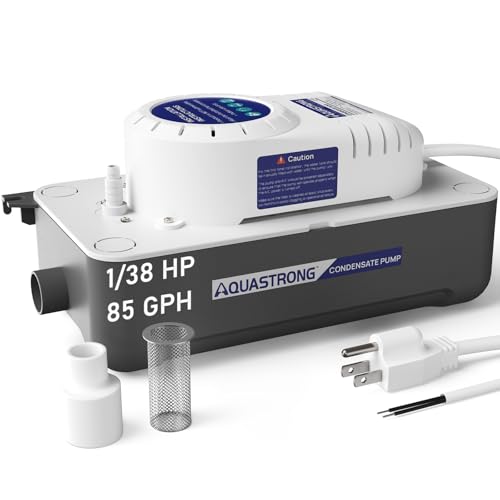
Best for installations requiring a versatile option with safety features and a 20-foot lift. The 1/38 HP motor provides reliable condensate removal and supports both 115V and 230V configurations. It includes a hi-level safety switch for automatic shutoff to prevent overflow.
Who it’s for: users seeking a pump with enhanced safety features and longer vertical reach. Why selected: flexibility with voltage options and a built-in safety mechanism make it suitable for varied HVAC setups.
Caution: Ensure correct wiring for voltage compatibility and follow safety switch connections according to installation guidelines.
Buying Guide
Key considerations for choosing an AC condensate pump:
- Flow rate and lift: Match the GPH rating and vertical lift to your drainage height and condensate volume. Higher GPH suits busier systems, while modest lifts fit tight spaces.
- Power and safety: Look for thermally protected motors and overflow or safety switches that shut off equipment if a reservoir overfills.
- Installation space: Consider footprint, cord length, and whether a vertical/mountable unit fits your closet, attic, or utility room.
- Materials and durability: ABS tanks and stainless steel shafts extend life in humid environments; ensure water temperature tolerance aligns with your system.
- Manual vs automatic: Some models are manual or hand-operated; automatic models with dual sensors reduce maintenance and risk of overflow.
- Voltage compatibility: Confirm whether the unit supports 115V (common in US homes) or 230V configurations for different installations.
- Safety and maintenance: A built-in alarm or indicator lights helps you monitor operation. Plan for routine inspections of tubing connections and reservoir cleanliness.
Frequently Asked Questions
- What is a condensate pump used for? — It removes condensate produced by HVAC equipment, dehumidifiers, and related systems to prevent overflow and water damage.
- Do these pumps require a safety switch? — Some models include an overflow detection switch; others may rely on manual monitoring. A safety switch helps prevent tank overflow.
- Can I install a condensate pump in tight spaces? — Yes, many models are compact and designed for tight spaces, but always check the footprint before purchase.
- What maintenance is needed? — Periodic checks of tubing, reservoir cleanliness, and sensor function help ensure reliable operation.
- What voltage should I choose? — Most residential setups use 115V. Some models offer 230V or dual-voltage options for flexibility.
- Which pump should I choose for a small bathroom AC unit? — A compact unit with automatic operation and an overflow switch is typically best for small spaces and ease of use.