Looking for a reliable LCDI or GFCI replacement power cord for air conditioners? This guide highlights five top Amazon choices that help protect your AC unit and home. Each option is best for specific needs, from safety-focused LCDI cords to auto-reset GFCI plugs. Ideal buyers include renters needing quick replacements, homeowners seeking enhanced safety, and users with portable or window AC units needing standard 15A outlets.
| Product | Best For | Key Benefit |
|---|---|---|
| ELEGRP 0651515LY L15515 14AWG LCDI Power Cord | Safety-conscious buyers with portable or window ACs | LCDI protection, fast trip |
| OAONAN GFCI Replacement Plug Assembly | Easy DIY safety upgrade for outlets | Auto-reset GFCI, surge protection |
| ANEKEN GFCI Plug Replacement | Budget-friendly safety for power tools and ACs | ETL listed, auto-reset |
| ELEGRP 0651513LY LCDI Cord 16AWG | Compact LCDI option for tighter spaces | LCDI protection, suitable for various AC loads |
| ELEGRP L22620 12AWG 6-20P LCDI Cord | Higher-power needs or 240V setups | Higher current capability, 20A |
ELEGRP 0651515LY LCDI A/C Power Cord

The ELEGRP 0651515LY is a 14 AWG LCDI power cord designed for air conditioners, including portable and window units. It uses a leakage current detection interrupter with a shielded conduit to reduce fire risk from aging cords. The unit trips within 0.5 seconds if leakage exceeds 5 mA, interrupting power to the device. Best for buyers prioritizing rapid fault response and compatibility with standard 120V AC loads up to 1800W.
Who it’s best for: Renters or homeowners who want a straightforward, UL-certified LCDI replacement for common window or portable ACs. Why selected: strong leakage protection paired with a practical 7.5-foot length. Limitation: primarily rated for 120V, 15A loads; not ideal for higher voltage setups.
OAONAN GFCI Replacement Plug Assembly

The OAONAN GFCI Replacement Plug Assembly brings quick, user-friendly safety with auto-reset. It combines surge and lightning protection with rapid disconnection (within 0.03 seconds) upon leakage or ground faults. It is suitable for air conditioners and other devices requiring robust GFCI protection and is designed for simple, tool-free installation.
Who it’s best for: Homeowners seeking an auto-reset GFCI upgrade for an existing outlet feeding an AC or hot tub. Why selected: fast automatic protection and straightforward wiring. Limitation: installation assumes basic wiring familiarity; check local codes before upgrading multiple outlets.
ANEKEN GFCI Plug Replacement Auto Reset

The ANEKEN GFCI plug replacement offers a simple 3-prong, 15A GFCI solution with auto-reset. It includes a rugged build and clear three-wire connection points (live, earth, null). The device interrupts power in 0.03 seconds when leakage occurs, adding strong safety for ACs, hot tubs, pressure washers, and hair dryers.
Who it’s best for: Budget-conscious buyers needing reliable GFCI protection without complex installation. Why selected: durable construction, straightforward wiring, and quick reset. Limitation: may require enclosure or box compatibility checks for some installations.
ELEGRP 0651513LY LCDI A/C Power Cord
This 16 AWG LCDI cord from ELEGRP mirrors the LCDI protection approach, optimized for air conditioner loads. It features a shielded cord with NEMA WD6 plug and a guarded load side. It is suitable for indoor use on portable, window, and PTAC units, wiring to a standard 120V AC circuit.
Who it’s best for: Buyers needing a compact, lighter 16 AWG option for smaller AC loads. Why selected: consistent LCDI safety approach with straightforward 7.5-foot length. Limitation: lower current rating than thicker gauges; not for high-power needs.
ELEGRP L22620 LCDI Cord 12AWG 6-20P
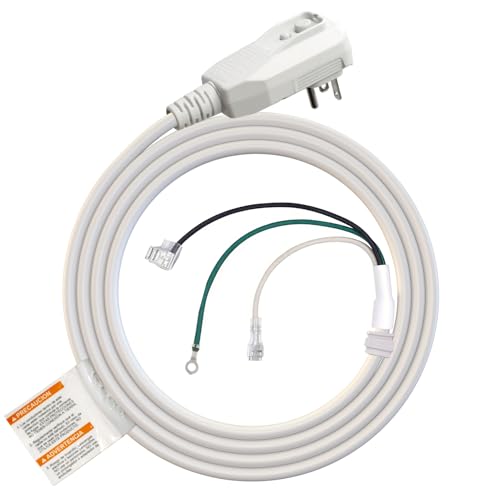
The ELEGRP L22620 provides a higher-power option with 12 AWG conductors, designed for 240V, 20A setups (NEMA 6-20P). It uses LCDI protection to guard against leakage current and related hazards and is suited for higher-demand AC units or multi-zone applications requiring greater amperage.
Who it’s best for: Users with higher load needs or 240V configurations seeking stronger LCDI protection. Why selected: higher current capability paired with familiar LCDI protection. Limitation: not suitable for standard 120V outlets without appropriate receptacles or adapters.
Buying Guide
What should you consider when choosing an air conditioner power plug?
- Protection type: LCDI vs GFCI. LCDI focuses on leakage current and fire hazard prevention; GFCI focuses on shock prevention during leakage to ground. Choose based on the primary safety concern in your environment.
- Conductor gauge: 14 AWG vs 16 AWG vs 12 AWG. Heavier gauges handle higher currents and longer runs with less heat. Match gauge to your AC’s power needs and cord length.
- Current rating and voltage: Ensure the plug supports the unit’s voltage and current draw (e.g., 120V/15A for most window/portable ACs; 20A or higher for some higher-power setups).
- Plug and outlet compatibility: Check if your receptacle is compatible with NEMA 5-15P or 6-20P configurations. Outdoor or wet locations may require weatherproof enclosures.
- Ease of installation: DIY-friendly GFCI replacements offer quick upgrades, but some setups may need basic electrical knowledge. Verify local code requirements before installation.
FAQ
- What does LCDI stand for and why is it important for air conditioners?
– LCDI stands for Leakage Current Detection Interrupter. It detects insulation leakage and interrupts power to reduce fire hazards from aging cords, especially in high-load ACs. - Can I use a GFCI plug for my window AC?
– Yes, a GFCI plug provides ground-fault protection and can improve safety when outlets lack GFCI protection. Ensure compatibility with your circuit. - Is a thicker cord always better for an air conditioner?
– Not always. Thicker cords (lower AWG number) handle higher current with less heat, but the essential factor is matching gauge to the unit’s current draw and length of the run. - Do LCDI cords require professional installation?
– Many LCDI replacements are DIY-friendly, especially for terminal-exposed cords. Always follow local electrical codes and safety practices. - What should I do if the cord trips frequently?
– Check for leakage, damaged insulation, or overloading. If persistent, replace with a cord rated for your unit’s amperage and consider consulting an electrician. - Are these cords UL Certified?
– Several options in this guide advertise UL recognition or certification, indicating compliance with safety standards.