Answering your need for portable comfort, these air conditioning options are tailored for camping tents, RVs, and other outdoor shelters. This guide highlights five compact units that balance cooling power with portability, energy use, and noise. Best for solo campers, couples, or small groups, each option fits different budgets and environments. The top picks emphasize personal cooling, multi-mode operation, and ease of setup in outdoor spaces.
Summary of recommended products
- Evapolar evaChill Mini AC — best for personal cooling in hot, dry climates.
- Ylkf Portable Air Conditioner — best for desk or bedside cooling with quiet operation.
- Outohome 5200 BTU Portable AC — best for larger small spaces or tents that need faster cooling.
- Disaenvir Tent AC 110V — best for compact tents needing simple three-mode control.
- Cybertake S2 Pro Portable AC — best for flexible power options and heating plus cooling.
Evapolar evaCHILL Portable Personal AC

Best for: Individuals in hot, dry climates who want direct personal cooling without filling a tent with a bulky unit. This mini AC uses evaporative cooling to lower the air around you by a few degrees and adds humidity. It is especially suitable for tents, desks, or cars where space is limited. It consumes only 10W and can work with other cooling systems to reduce overall energy use.
Reason for selection: It provides hands-free, personal cooling with a simple one-button control and adjustable fan speeds. Its evaporative technology makes it energy-efficient for short trips or as a companion to a larger unit.
Caution: Most effective when relative humidity remains under 70%. Not designed to cool an entire room or large tent.
Ylkf Portable Evaporative AC 1200ML

Best for: Desk, bedside, or small tent configurations where compact cooling and misting are helpful for comfort during sleep or downtime. The unit includes a 1200mL water tank and an ice-cooling option for stronger chill.
Reason for selection: Combines a sizable water reservoir with multiple cooling modes and a timer for sleep use. Ultra-quiet operation supports study or rest in shared camping spaces.
Limitation: Performance depends on ambient humidity and may require regular water replenishment during extended use.
Outohome 5200 BTU Portable Camping AC

Best for: Campers needing stronger cooling power in a compact enclosure, suitable for tents or small cabins where faster temperature reduction matters.
Reason for selection: It delivers a robust 5200 BTU and offers 4 modes including Cooling, Dehumidifying, Sleep, and Fan. Its energy efficiency and portability make it a versatile option for outdoor use.
Limitation: Noise level in non-sleep modes may be noticeable; choose Sleep mode for quieter nights.
Disaenvir Tent Air Conditioner 110V

Best for: Campers who need a compact, plug-in unit with a straightforward three-mode setup for tents, RVs, or small campers.
Reason for selection: Three preset modes—Cool, Dehumidify, and Fan—offer simple, reliable climate control. Safety lock and a sleeping mode improve overnight use and energy efficiency.
Limitation: Requires 110V power; not ideal for off-grid or battery-only setups without an inverter.
Cybertake S2 Pro Portable AC
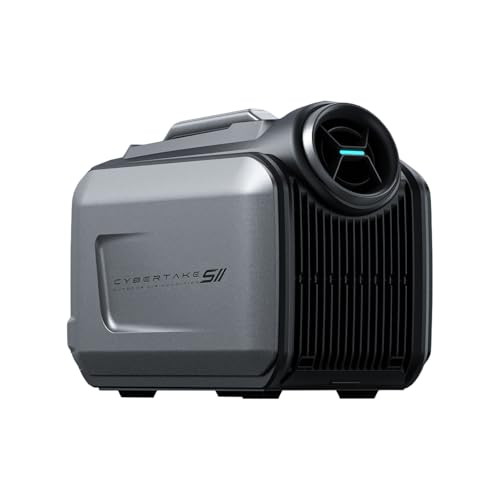
Best for: campers seeking flexible power sources and heating as well as cooling, suitable for varying conditions and longer trips where AC power or vehicle power is available.
Reason for selection: Supports multiple power options (AC, DC, vehicle), powerful cooling (5100 BTU) and heating (6100 BTU), plus four modes and a timer. This versatility makes it a good all-season option for tents, RVs, or cabins.
Caution: Remote control is sold separately, so plan for basic manual operation if you won’t have remote access.
Buying Guide: Key Purchase Considerations
- Power source and portability: Decide whether you need battery-free operation, 12V/24V vehicle power, or standard AC power. Portable units are best for short trips or limited spaces, while multi-power options work for longer excursions.
- Cooling capacity and space: Measured in BTU or ambient temperature drop. For tents, aim for units in the 3500–5200 BTU range for small to mid-sized spaces; personal cooling units are better for individual comfort.
- Modes and controls: Look for cooling, dehumidifying, and fan modes. A sleep or quiet mode helps at night. Timers enable automatic shutoff to conserve power.
- Noise level: Outdoor camping can be disrupted by loud units. Prioritize models advertised as quiet or with sleep/fan modes for lower noise.
- Humidity and location: Evaporative or swamp coolers work best in dry climates and with good airflow. In humid environments, a dehumidify mode can improve comfort but may be less effective than a true refrigerated unit.
- Size, weight, and setup: Consider how heavy the unit is and whether it requires a specific tent layout or electrical outlet. Compact designs with handles are easier to move between camping spots.
- Maintenance: Units with water tanks need regular refilling and cleaning. Evaporative solutions can require care to avoid mineral buildup.
Frequently Asked Questions
- What type of camping air conditioner is best for tents?
Personal evaporative coolers are best for dry environments and space-limited setups, while compact refrigerated units suit tents requiring faster cooling in variable climates. - Can these units run on portable power banks or solar panels?
Some models support DC power or vehicle power, but most rely on AC power or car/ RV power. Check the power options listed for each unit. - Will an evaporative cooler reduce humidity inside the tent?
Evaporative cooling adds humidity locally around the unit and can improve comfort in dry air, but it may not reduce humidity overall in the tent. - How loud are camping air conditioners at night?
Look for devices with a dedicated Sleep or Quiet mode; many units operate under 50dB in comfort-focused modes, but performance varies by model. - Are these units safe to use in tents overnight?
Safety features like overheat protection and proper venting are important. Always follow manufacturer guidelines for use in enclosed spaces. - Do I need a dedicated generator or inverter for camping AC units?
If your campsite lacks shore power, a lightweight inverter or portable generator can provide the necessary power, depending on the unit’s energy draw.