If you need to verify airflow and detect leaks, a dedicated air flow smoke test kit is the fastest, most reliable option. This guide highlights five purpose-built products that are well-suited for HVAC, automotive, and ducting inspections. The best picks balance visibility, ease of use, and portability for professional technicians and informed DIYers alike.
Buyer types:
– HVAC professionals.
– Automotive technicians performing EVAP or intake checks.
– DIYers testing ductwork and cabinet seals.
– Inspectors needing clear, visual indicators of airflow.
Below is a quick summary of the five top products and who they’re best for.
| Product | Best For | Key Benefit | Limitations |
|---|---|---|---|
| Allegro-2050 Fit Testing Kit | Small to mid-size HVAC checks | Compact kit with multiple components | May require regular stock of smoke tubes |
| Regin S104 Emitter Pack | Leak detection over larger areas | Dense, viewable cloud for rapid localization | Each pellet labeled for limited coverage per pack |
| Cirrus Wind Indicator | Hands-on airflow visualization | Portability and LED indicators for quick reads | Best used for visual hints, not quantitative measures |
| Arctic Hayes Smoke Pen Kit | Duct testing and gas spillage checks | Simple, safe one-handed operation | Limited to pen-style emission scenarios |
| Solary Automotive Smoke Machine | Comprehensive automotive EVAP and vacuum tests | Built-in air pump, multi-function testing | Bulkier setup, higher cost |
Allegro-2050 Fit Testing Kit Overview

The Allegro kit includes a vinyl pouch, a hand-operated air bulb (2.4 oz), a breaker tool, six smoke tubes per box, poly tubing, Stannic Chloride in a glass container, and an average of 3-5 tests per tube. Best for technicians performing localized fit testing and smaller space checks. This kit is a practical option for service calls where portability matters. A noted limitation is the finite number of tubes per box, so plan for repeat tests in larger spaces.
Regin S104 Emitters: Dense, Viewable Cloud

Regin S104 emitters create a dense, viewable cloud and are designed for leak detection and qualitative airflow testing. Each pack includes five pellets; each pellet provides approximately 1200 cubic feet of coverage over 180 seconds. They have a two-year shelf life if stored cool and dry. This option is well-suited for larger testing zones or when a visible plume improves prompt leak localization. A potential drawback is the fixed coverage per pellet, which requires careful calculation for bigger spaces.
Cirrus Wind Indicator: Portable Draft Detector
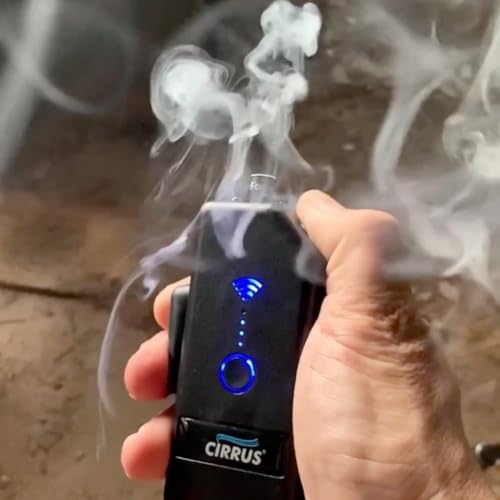
Cirrus offers a handheld airflow visualization system with white and red LEDs for draft indication. It is praised as a rapid, residue-free method to observe airflow patterns in HVAC systems, with the added convenience of portable power bank capability. This choice is ideal for quick site checks and technician-led visual confirmation. It may not quantify exact airflow rates, which some users may require for precise diagnostics.
Arctic Hayes Smoke Pen Kit

This 1 x Pen Kit uses a smoke pen to generate a continuous white smoke for leak testing, airflow studies, and ASD smoke testing. It is especially suitable for testing air-tightness, ducting, and cabinet integrity, as well as CO spillage checks after fitting or re-fitting. The safety focus and simplicity make it a solid pick for smaller projects. A limitation is that the test results depend on proper pen operation and technique, which may require training for consistent results.
Solary Smoke Machine: 12V EVAP Diagnostic Tool

Solary’s 12V automotive smoke machine features a built-in air pump, a wide testing range (EVAP, vacuum leaks, turbo and EGR paths, intake and exhaust lines), and uses automotive-grade leak detection fluid. It’s designed for heavier diagnostic work and on-vehicle testing, offering quick smoke within about 10 seconds of startup. Best to choose this when you need robust, multi-scenario testing capability; avoid if you require a compact, single-function device due to its larger footprint.
Buying Guide: Key Purchase Considerations
What should you evaluate when choosing an air flow smoke test tool set?
- Scope of testing: For small spaces, a pen-style or visual indicator may suffice. For larger HVAC or automotive zones, emitters or a full smoke machine may be necessary.
- Visibility and interpretation: Dense plumes are easier to locate leaks quickly. Consider whether you need real-time visual feedback or quantitative readings.
- Portability: If you service multiple sites, weight and compactness matter. All-in-one kits reduce setup time but may be heavier.
- Operating environment: Some products are better suited for ductwork, others for engines or cabinets. Temperature and humidity can affect smoke performance.
- Safety and handling: Look for non-toxic, non-corrosive smoke sources and clear instructions for use in occupied spaces.
- Costs and consumables: Some kits require ongoing purchase of tubes, pellets, or fluid. Plan for long-term use.
FAQ
- What is an air flow smoke test best used for?
It helps visualize air movement and identify leak points in HVAC ducts, automotive EVAP and intake systems, and ducted enclosures. - Do I need a separate smoke fluid?
Some machines include fluids; others require you to purchase them separately. Check compatibility with your device. - Is a visual indicator enough for professional use?
For quick checks and site surveys, yes. For precise diagnostics, consider a dense-emission emitter or machine with higher visibility. - Can a handheld pen replace a full smoke machine?
It can for small-scale tests, but for comprehensive automotive or large-duct tests, a machine is usually more efficient. - What safety precautions are important?
Use in well-ventilated spaces, follow all product instructions, and avoid ignition sources near flammable environments. - How do I choose between a pen kit and an EVAP-focused machine?
Consider space size, required test types (EVAP vs. general airflow), and whether you need ongoing, multi-scenario capabilities.