Answering the needs of homeowners and facility managers seeking in-duct air purification, this guide highlights UV-C light solutions designed for HVAC systems. These products target mold, bacteria, and other contaminants directly inside ducts or coils. The top picks are best for improving indoor air quality in homes, offices, and commercial spaces with central cooling or heating systems. Each option is evaluated for installation ease, safety, and effectiveness within standard HVAC configurations.
| Product | Best For | Key Benefit |
|---|---|---|
| REKO Lighting R2000 | In-duct purification on residential or small commercial systems | European-made UV-C bulbs for duct installation |
| TURBRO 72W UV Sanitizer Lamp | Duct exterior placement with quick install | High-output 72W UV-C with airflow sensor |
| Mammoth BioShieldUV 18W | In-duct continuous operation in homes | Fire-safe certification and low ozone output |
| REKOLIGHTING R600 14″ UV Light | Duct coils and coil cleaning focus | Magnetic bracket for easy mounting |
| Fresh-Aire APCO | Whole-system air purification with activated carbon | Integrated deodorization and disinfection |
Buying considerations covered here include installation complexity, ozone by-product, compatibility with common HVAC voltages, and the best fit for residential versus commercial ducts. Use the quick-reference sections below to compare each option against your system needs.
REKO Lighting R2000 In-Duct UV System
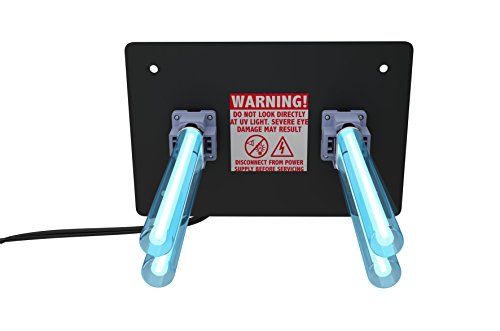
The REKO Lighting R2000 is designed for HVAC duct installation with UV-C bulbs made in Europe. Best for: homeowners seeking a direct, in-duct UV solution linked to the air handler and ductwork. Why chosen: compact, purpose-built for duct placement, and designed to deliver 253.7 nm UV-C to reduce microbial load inside the system. Caution: check clearances for duct access and ensure the bulbs are replaced per manufacturer recommendations.
TURBRO 72W UV Sanitizer Lamp

Best for: spaces needing strong UV-C output with an external duct application. This lamp uses 253.7 nm UV-C for rapid disinfection and is ozone-free. Selected for: its high wattage (72W), which offers robust germicidal performance, and its compliance with ETL, EPA, CARB standards. Caution: a brief odor can occur during initial startup, which is common with some UV installations.
BioShieldUV 18W 24V UV Light (Mammoth)

Best for: continuous, low-ozone in-duct disinfection in homes or small offices. Chosen for its fire-safe certification and documented low ozone output. Advantage: designed to operate inside ductwork year after year with a certified safety profile. Limitation: may require compatible ballast or mounting hardware for some systems.
REKOLIGHTING R600 14″ UV Light

Best for: coil-focused HVAC purification and easier coil maintenance. It uses a 14″ ozone-free 253.7 nm lamp designed for in-duct coil targeting. Selected for: magnetic mounting and compatibility with typical 24Vac HVAC wiring. Caution: may require a dedicated transformer for optimal performance in some setups.
Fresh-Aire APCO UV Air Purifier

Best for: whole-system air purification with deodorization and virus-related concerns in mind. APCO combines UV-C disinfection with activated carbon filtration to target odors and microbes within ducts and air handlers. Selected for: a holistic approach to air quality, beyond UV disinfection alone. Limitation: system design must integrate with existing ductwork and filters for maximum effectiveness.
Buying Guide: Key Purchase Considerations
- UV-C Wattage and Output: Higher wattage typically yields stronger disinfection but may require more power and careful mounting. Compare 18–72W options to match duct size and airflow.
- Ozone Emission and Safety: Look for ozone-free or validated ozone-limited solutions (CARB/EPA-compliant). Low ozone is safer for occupied spaces.
- Installation Complexity: Some units mount inside ducts, others install on duct exteriors or near air handlers. Choose based on access, wiring, and required hardware.
- Maintenance and Replacement: UV bulbs have a finite lifespan. Check replacement intervals, availability, and ballast compatibility.
- System Compatibility: Verify compatibility with your HVAC voltage (usually 120V in the US) and whether a dedicated transformer or ballast is needed.
- Coverage Area: Assess the duct size and the system’s airflow to ensure the UV installation provides effective exposure across the entire air path.
- Health and Safety Considerations: Ensure proper shielding and placement to prevent direct exposure to occupants while maintaining duct disinfection efficacy.
Frequently Asked Questions
- What is UV-C light for HVAC systems best used for?
It reduces microbial growth on coil surfaces and inside ducts, improving air quality and system efficiency when properly installed. - Are UV lights in HVAC systems safe for homes?
Yes, when installed according to manufacturer instructions and safety standards; many products are designed to be ozone-free and fixture-mounted. - Do these units require professional installation?
Some models are DIY-friendly with straightforward mounting and wiring, while others may benefit from professional installation for wiring and safety compliance. - How often should UV bulbs be replaced?
Replacement intervals vary by model; most bulbs are rated for 9–24 months under typical use, depending on run-hours and design. - Will UV-C lights cause ozone in my home?
Properly rated ozone-free or low-ozone units should not produce harmful ozone levels in occupied spaces when used as intended. - Can these UV lamps be used with any HVAC system?
Compatibility depends on duct size, mounting space, and electrical requirements; check product specs for duct and voltage compatibility.