If you’re evaluating air-to-air plate heat exchangers, you’re looking for compact, efficient heat transfer to improve heating or cooling performance in HVAC or outdoor wood-furnace setups. This guide highlights five top options that balance material quality, heat transfer capability, and operating range. Best for homeowners upgrading a wood-furnace system, contractors installing energy-efficient heat exchange networks, and DIY enthusiasts seeking reliable performance.
| Product | Best For | Size / Capacity | Key Advantage |
|---|---|---|---|
| VEVOR Heat Exchanger Water to Air, 16″ x 16″ | Residential retrofits | 16×16, 3-row 3/8″ copper tubes | Leak-resistant copper brazed construction |
| VEVOR Heat Exchanger Water to Air, 18″ x 20″ | Mid-sized systems | 18×20, 3-row 3/8″ copper tubes | Higher surface area for better transfer |
| VEVOR Heat Exchanger Water to Air, 20″ x 20″ | Large installations | 20×20, 3-row 3/8″ copper tubes | Largest among listed, strong capacity |
| AB Water to Air Heat Exchanger 18×20 | Energy-focused renovations | 18×20, 1″ copper ports | Premium copper/aluminum construction, epoxy fins |
| Heat Exchanger Brazed Plate Heat Exchanger Air-To-Air (7p) | Compact spaces | Plate-based, compact form | Stability and durability in small footprints |
VEVOR 16×16 Water-To-Air Heat Exchanger

Best for small to medium residential heating or cooling tasks, this unit uses copper brazed edges and contact points for a durable, leak-resistant design. With epoxy-coated fins, it offers corrosion resistance that helps maintain heat transfer efficiency in variable temperatures. Operating range up to 356°F (180°C) allows compatibility with many outdoor-furnace setups.
Why chosen: It provides a solid balance of size and performance for homeowners upgrading an existing system without taking up excessive space. The 3-row, 3/8″ copper tubes maximize contact area for effective heat transfer. Caution: The unit’s capacity is best suited for modest heat loads; very large spaces may require larger or additional exchangers.
VEVOR 18×20 Water-To-Air Heat Exchanger

Best for mid-sized heating or cooling installations, this unit increases surface area with an 18×20 footprint and the same 3-row, 3/8″ copper tubes layout. Epoxy-coated fins contribute durability and reduced scaling, while high heat-transfer potential remains suitable for outdoor wood-furnace environments.
Why chosen: The larger footprint yields higher BTU transfer and better efficiency in moderate-to-large rooms. Caution: The added size means more installation room is required; ensure adequate clearance for airflow and service access.
VEVOR 20×20 Water-To-Air Heat Exchanger

Best for larger or more demanding heat-transfer needs, this 20×20 unit delivers substantial surface area and 3-row 3/8″ copper tubes. The design includes epoxy-coated fins and copper brazed joints, providing robust performance under high pressure and temperature. Suitable for forced-air heating and large outdoor wood-furnace systems.
Why chosen: It offers strong capacity for sizable homes or workshops while maintaining durable construction. Caution: Heavier and may require more substantial mounting support or brackets during installation.
AB Water-to-Air Heat Exchanger 18×20

Best for energy-conscious renovations and retrofits, this 18×20 exchanger emphasizes energy efficiency. It features 1″ copper ports for faster fluid transfer and 12 aluminum fins with 3 rows of 3/8″ tubes. The fins are epoxy-coated to improve hardness and wear resistance, extending service life in demanding environments.
Why chosen: The 1″ ports support higher flow and integration with renewable energy sources, such as solar or heat pumps. Caution: The higher port size may require compatible piping adaptations in some installations.
Heat Exchanger Brazed Plate Heat Exchanger Air-To-Air (7p)
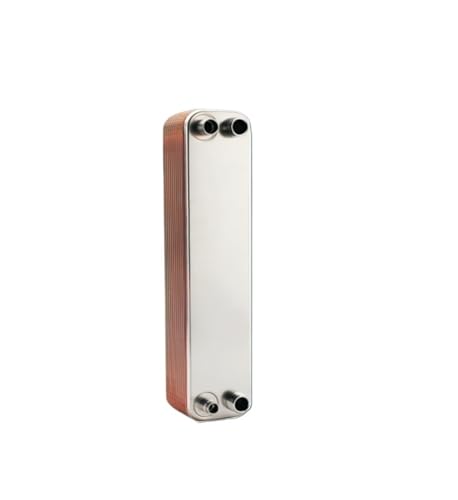
This compact plate-style exchanger is designed for tight installations where space is at a premium. It emphasizes stability and a long service life, making it a suitable choice for small mechanical rooms or retrofit projects where floor space is limited.
Why chosen: Choose this if you need a durable, space-saving option without sacrificing core heat-transfer efficiency. Limitation: Plate exchangers can have higher pressure drop in some configurations; verify system compatibility with your circulator and piping layout.
Buying Guide: Key Considerations For Air-To-Air Plate Heat Exchangers
- What is the system load and target BTU? Match exchanger size to heating or cooling requirements to avoid oversized or undersized equipment.
- Which ports and connections are compatible? Copper port size (1″ vs 3/8″) affects flow and plumbing compatibility with your boiler or solar source.
- Material durability matters. Copper brazed joints, epoxy-coated fins, and stainless steel frames improve longevity in outdoor and high-temperature environments.
- Maintenance and cleaning needs. Plate or tube designs vary in ease of cleaning; plan for access and routine inspection to prevent fouling.
- Operating temperature range. Ensure the unit supports your peak outdoor temperatures and indoor operating requirements without degradation.
- Installation footprint and airflow. Larger exchangers require adequate clearance for airflow and service access; compact models save space but may have lower capacity.
- Compatibility with renewable sources. Some exchangers are designed to integrate with boilers, solar collectors, or heat pumps for energy efficiency.
FAQ
- Q: What is an air-to-air plate heat exchanger best used for?
A: It transfers heat between air streams; ideal for HVAC air handling, outdoor wood furnace retrofits, and improving heat exchange efficiency in forced-air systems. - Q: Do these units require professional installation?
A: Installation complexity varies with size and piping. For new or retrofit projects, consult an HVAC professional to ensure proper mounting and venting. - Q: What maintenance does an air-to-air exchanger need?
A: Routine inspection of fins, tubes, and seals; cleaning to remove dust or deposits; and checking for leaks or corrosion, especially in outdoor or humid environments. - Q: Can I use renewable energy sources with these exchangers?
A: Yes, several models are designed to work with boilers, solar panels, and heat pumps to improve energy efficiency and reduce operating costs. - Q: What should I consider when choosing a size?
A: Consider room size, climate, desired comfort levels, existing heating equipment, and airflow requirements. Larger spaces usually benefit from bigger exchangers. - Q: Are there safety considerations for high-temperature operation?
A: Yes. Ensure components are rated for the maximum temperatures your system will reach and that all connections are secure to prevent leaks and pressure issues.