Answering the top buyer question: which combination air conditioner and heater unit fits your space and budget best? This guide highlights five versatile, North American‑friendly options designed to cool and/or heat rooms efficiently. Each pick targets different spaces and use cases—from large living rooms to compact apartments—so you can choose the best fit for your needs. The summary below helps you compare key capabilities at a glance.
| Product | Best For | Approx. Room Size | Key Benefit |
|---|---|---|---|
| Midea Inverter Window AC With Heat | Large rooms up to 550 sq ft | Up to 550 sq ft | Energy Star, inverter efficiency, smart control |
| Bonnlo 12,000 BTU Window AC With Heat | Bedrooms and living rooms up to 550 sq ft | Up to 550 sq ft | Wi‑Fi, voice control, easy installation |
| Whirlpool 14,000 BTU Through‑the‑Wall AC | Open living spaces up to 700 sq ft | Up to 700 sq ft | Supplemental heat, flexible airflow |
| ROVSUN 11,000 BTU Window AC With Heater | Year‑round comfort in medium rooms | Up to 350 sq ft | Wi‑Fi compatibility, quiet operation |
| YITAHOME 12,000 BTU Mini Split AC/Heat | Bedrooms, living rooms, or garages | Up to 750 sq ft | 7‑in‑1 modes, high efficiency inverter |
Midea Inverter Window AC With Heat

Best for large rooms up to 550 square feet, this Midea unit combines cooling, dehumidification, and supplemental heating with inverter efficiency. It supports digital LED control, five modes, three fan speeds, a 24‑hour timer, and an energy saver. Wi‑Fi allows control via the Midea SmartHome app or voice assistants. Consider this option if you want a single, compact solution for year‑round comfort in a sizable living area.
Who this is for: buyers seeking a powerful window unit with built‑in heat for a main living area or a large bedroom. It suits renters or homeowners who want smartphone‑based control and energy savings. Caution: heat pump may be unusable when outdoor temps fall below 41°F.
Bonnlo 12000BTU Window AC With Heat
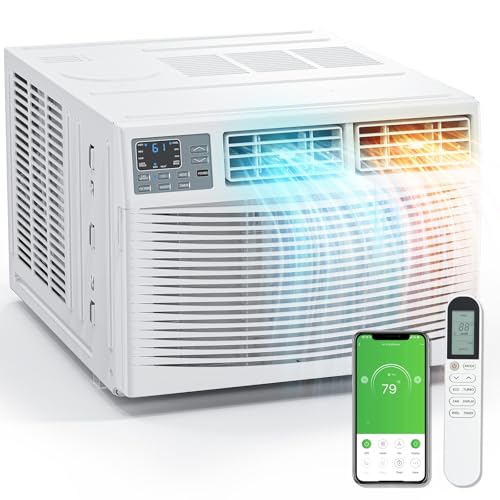
This Bonnlo unit covers up to 550 sq ft and offers dual heating and cooling with smart Wi‑Fi and voice control via Alexa or Google Assistant. It’s designed for quick installation and convenient year‑round operation, making it a solid pick for apartments or small homes where a window unit is preferred. Caution: ensure your window size and 230V supply meet installation requirements.
Best for: users who want a smart, easy‑to‑install window solution with reliable all‑season performance in mid‑sized rooms. Limitation: installation specifics may vary by window size and wall clearance.
ROVSUN 11000 BTU Inverter Window AC With Heater

Designed for spaces up to 350 sq ft, this unit emphasizes energy efficiency through inverter technology and offers both cooling and heating, plus app and voice control. It is a strong choice for a medium‑sized room where smart, remote operation is valued. Caution: do not operate cooling in freezing conditions or heat mode below certain low temperatures as recommended by the manufacturer.
Best for: homeowners seeking a compact, quiet, inverter‑driven window unit with modern connectivity for mid‑sized spaces. Better for: those who prioritize energy savings and remote control over sheer cooling capacity.
YITAHOME 12,000 BTU Mini Split AC/Heat

This ductless mini split supports up to 750 sq ft with 12,000 BTU cooling and a 50‑foot airflow reach. It offers seven modes, including “HEALTH” with PM2.5 removal and negative ions, and is designed for quiet operation with Alexa compatibility. Best for rooms where a discreet, wall‑mounted solution is preferred and where long‑term efficiency matters. Caution: installation requires a dedicated outdoor unit and proper wall penetration planning.
Buying Guide
What space and climate are you addressing?
Choose larger capacity units (12,000 BTU and above) for rooms up to 700 sq ft. For smaller to mid‑sized spaces, 11,000 BTU to 12,000 BTU units provide flexibility in cooling and heating. If you need a windowless or wall‑mounted setup, consider mini split options for cleaner aesthetics and easier zoning.
Do you prefer window units or ductless systems?
Window units are typically easier to install and less invasive but can limit window use and may be louder. Ductless mini splits save space and offer quieter operation, but they require professional installation. Inverter models generally deliver better energy efficiency than traditional fixed‑speed units.
How important is smart control?
Smart features—Wi‑Fi, voice control, and app scheduling—enhance convenience and potential energy savings. If you want automation and remote control, prioritize models advertised as Wi‑Fi enabled with compatibility for Alexa or Google Assistant.
What are the limitations you should expect?
Several units have outdoor temperature limitations for heating or cooling. Heat pumps may stop operating effectively at low temperatures, and some window units require compatible window dimensions or electrical setups. Review installation requirements and local climate considerations before purchasing.
Energy efficiency and operating costs
Inverter technology often yields lower energy usage, with CEER ratings and Energy Star certification as helpful indicators. Compare BTU ratings against CEER and efficiency to estimate long‑term energy costs. A unit with smart eco modes can further reduce consumption when full power isn’t necessary.
Installation and maintenance considerations
Flat‑rate installation kits or included installation hardware reduce setup complexity for window units. For mini splits, professional installation is usually required. Regular filter cleaning and prompt defrost controls help maintain peak performance and extend the unit’s life.
Decision summary
- Best overall for energy efficiency: Midea Inverter Window AC With Heat
- Best smart features and easy installation: Bonnlo 12,000 BTU Window AC With Heat
- Best for large open spaces with flexible airflow: Whirlpool 14,000 BTU Through‑the‑Wall
- Best for compact installations with modern controls: ROVSUN 11,000 BTU Window AC With Heater
- Best multi‑room flexibility: YITAHOME 12,000 BTU Mini Split AC/Heat
Frequently Asked Questions
- What’s the difference between window units and mini splits for heating and cooling? Window units are generally easier to install but can be louder and less flexible for multi‑room setups. Mini splits offer better zoning, quieter operation, and higher efficiency when installed properly.
- Can these units be used as a primary heat source? Some models provide supplemental heating, not primary heat for extreme cold. Always check the unit’s heating range and local climate expectations before depending on it for main heating.
- Do these units require professional installation? Window units typically install yourself with basic tools. Mini splits usually require professional installation and refrigerant connections.
- Will smart controls save money on energy bills? Smart controls can contribute to energy savings by enabling scheduling and remote adjustments, especially when you set temperatures closer to outdoor conditions or use eco modes.
- Are there safety considerations for multi‑season use? Ensure electrical compatibility (voltage, circuit capacity), proper clearances, and adherence to installation guidelines to prevent overheating or electrical issues.
- Which unit is best for renters? Window units and portable options are often easier to relocate. If a fixed system is preferred, a retrofit mini split may offer better long‑term value with less window obstruction.