Answering the common buyer question, these attic fans are chosen for tile roofs, ease of installation, energy efficiency, and reliable ventilation. The top picks below are suited for homeowners with cement tile, S-tile, or M-tile roofs, and provide options from standard powered vents to solar-powered models. This guide helps determine who benefits most from each option and why.
The table below compares five relevant products to help you decide quickly which model fits your roof type, climate, and energy goals.
| Product | Best For | Key Benefit |
|---|---|---|
| QuietCool Roof Mount Attic Fan Secondary Flashing | Tile-roof homes seeking easy retrofits | Tile-ready secondary flashing for 3:12–8:12 pitches |
| VEVOR 42W Solar Attic Fan | Sun-rich locations needing solar-powered cooling | Up to 2800 CFM with smart controls |
| Master Flow GAF 1500 CFM Powered Roof Mount | Large attics up to 2800 sq ft | High airflow with thermostat control |
| BINGLUX 55W Solar Attic Fan | Hybrid solar with AC backup | Smart thermostat and 1300 CFM cooling |
| VEVOR 35W Solar Attic Fan | Weatherproof, large or metal/masonry roofs | Auto-temp control up to 2400 CFM |
QuietCool Roof Mount Attic Fan Secondary Flashing
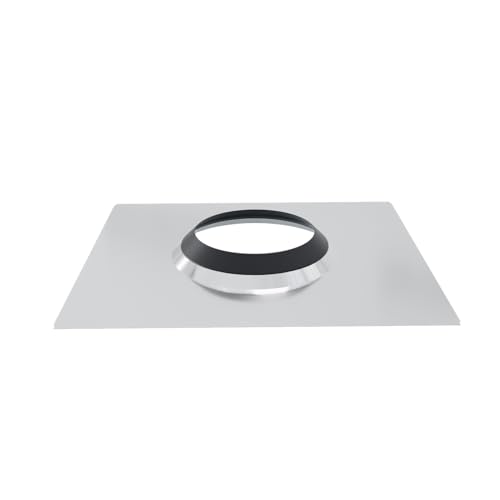
This option is ideal for tile roofs and installations where a roof mount must align with tile styles. It is compatible with QuietCool AFR SMT and AFR PRO models, and it enables hassle-free installation on cement tile, S-tile, or M-tile roofs. It is best for homeowners with tile roofs looking to add or upgrade a QuietCool system without altering the roof significantly. A potential limitation is that it is a flashing accessory rather than a complete fan unit, so the base AFR model must be purchased separately.
VEVOR 42W Solar Attic Fan

Best for sunny climates where grid power is limited or costly, this solar attic fan delivers up to 2800 CFM with a brushless DC motor and a MPPT regulator to optimize solar intake. It includes smart temperature and humidity control, which helps maintain comfortable attic conditions year-round. The built-in smoke detection and automatic cut-off add safety. It can switch to electric operation at dusk or when needed, offering 24/7 ventilation. A caveat is that performance can vary with cloud cover or shading on the roof.
Master Flow GAF 1500 CFM Powered Roof Mount

Designed for larger attic spaces, this powered roof mount pushes up to 1500 CFM, suitable for attics up to 2800 square feet, and includes a thermostat/humidistat option for energy-efficient cooling. Its galvanized steel construction offers durability in varied climates. It’s best for homes where continuous, robust ventilation is needed and thermostat control helps prevent over-ventilation. A limitation is that installation may be more involved on non-flat or non-standard roof profiles.
BINGLUX 55W Solar Attic Fan with Thermostat

Best for a solar-powered solution with smart control, this 12″ fan uses a 55W solar panel to deliver up to 1300 CFM. The built-in thermostat starts the fan when temperatures rise and auto shuts off when cool, saving energy. It features a hybrid capability that can switch to AC power when solar is insufficient, ensuring continuous attic venting. Choose this if you want energy-saving operation that still works on cloudy days; avoid if you need higher CFM for very large or extremely hot attic spaces.
VEVOR 35W Solar Attic Fan

This model suits metal or masonry roofs needing weatherproof operation with automatic temperature control. It offers up to 2400 CFM, driven by a 35W MPPT regulator for efficient solar intake. It’s best for homeowners seeking a cost-effective solar option with auto-start at higher attic temperatures. The limitation is that its lower CFM relative to some larger models may not meet very hot, large attic needs in all climates.
Buying Guide
What to consider when selecting an attic fan for tile roofs and solar options:
- Roof type and flashing compatibility: Tile roofs require flashing that accommodates tile profiles and weatherproofing. Accessory flashing like QuietCool’s model helps with tile roof installations.
- Power source: Choose between wired (powered) fans and solar-powered vents. Solar fans save energy but depend on sun exposure; hybrid options provide flexibility for variable weather.
- Airflow (CFM) and attic size: Match CFM to attic square footage. Higher CFMs are better for larger or hotter spaces, but may use more energy if not solar-assisted.
- Control features: Thermostats, humidistats, and remote or app control improve efficiency and ease of use. Some units include smart controls that optimize operation automatically.
- Durability and weatherproofing: Look for UV-resistant coatings and weatherproof housings, especially for outdoor exposure on roof tops.
- Safety and sensors: Smoke detection or shut-off features add safety, particularly in attic spaces with potential fire hazards.
- Maintenance: Units with built-in screens or easy-clean components reduce maintenance needs and prolong life.
What to compare across models
- Tile roof compatibility and flashing options
- CFM rating vs. attic size and climate
- Electrical vs. solar power consistency
- Thermostat/humidistat integration and auto-control
- Durability, warranty considerations (where stated), and ease of installation
Frequently Asked Questions
- What is a good CFM for a typical attic? — A common target is 1 CFM per square foot of attic space, adjusted for climate and roof type.
- Do tile roofs require special flashing? — Yes. Tile-specific flashing helps prevent leaks and ensures a secure installation.
- Can solar attic fans replace electric fans entirely? — In sunny climates, solar fans can meet most cooling needs, with hybrid options available for cloudy days.
- Is thermostat control worth it? — Thermostats optimize energy use by turning the fan on only when needed, improving comfort and lowering energy bills.
- What maintenance is typical for attic fans? — Periodic cleaning of vents, checking seals, and inspecting electrical components help maintain performance.
- Will a higher CFM always be better? — Not always; larger spaces may require higher CFM, but oversizing can waste energy if the attic is well-ventilated or cooled by other means.