Answering the common buyer question, these condenser pads provide stable, level support for outdoor mini-split condensers and outdoor AC units. They are best for homeowners installing new outdoor condensers, renters who need a portable, anti-vibration base, and contractors seeking reliable, weather-resistant pads. The top picks below focus on load capacity, ground protection, vibration dampening, and drainage to prevent moisture buildup under the unit.
Summary of selected products:
| Product | Best For | Key Benefit | Approx. Weight Capacity |
|---|---|---|---|
| Cestluck Mini Split Air Conditioner Pad (18″ W x 38″ L) | Heavy outdoor condensers on soft ground | Anti-slip, anti-vibration, all-weather material | Up to 660 lbs |
| Cestluck Mini Split Pad for AC Condenser (34.6 x 18.1 x 2″) | Wider footprint, uneven surfaces | Raised drainage and robust bottom | Up to 770 lbs |
| Cambridge Mini Split Black Condenser Pad (18″ x 38″) | Quiet operation and vibration dampening | Textured surface, solid wall construction | High load bearing (exact lbs not listed) |
| Toutgood Mini Split Wall Mounting Bracket | Outdoor mounting with secure bracket | Corrosion-resistant, adjustable crossbar | Up to 400 lbs |
| JEACENT Mini Split Wall Mounting Bracket | Universal outdoor mounting | Galvanized steel, leveling accuracy | Up to 270 lbs |
Cestluck Mini Split Air Conditioner Pad 18″ x 38″

Best for: Outdoor condensers on soft soil or grass where sinking is a concern. This pad supports up to 660 pounds and is designed to reduce movement and vibrations. The anti-slip surface helps keep the unit level even on uneven ground. Choose this if you want a compact, reliable pad that performs well in varied weather conditions.
Why selected: The 18″ by 38″ footprint provides solid coverage for standard mini-split condensers and the heavy-duty, UV-stabilized polypropylene resists cracking and deformation in sun and rain. The texture and ribbing aid in stability and vibration reduction.
Caution: On very soft soil, ensure proper leveling before operation to prevent shifting over time. The pad is not a substitute for proper drainage planning in flood-prone areas.
Cestluck Mini Split Pad for AC Condenser (34.6 x 18.1 x 2″)
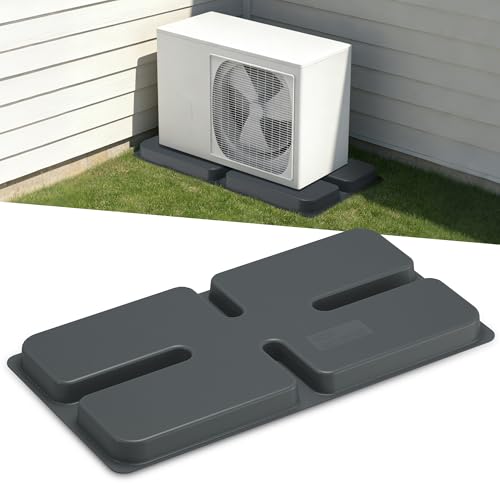
Best for: Larger condenser footprints and uneven ground where extra width helps with stability. Supports up to 770 pounds and adds a 2-inch raised height for drainage and air circulation. Select this if you need a broader base to prevent tilting on soft soils.
Why selected: The reinforced ribbed bottom and high-traction surface work together to minimize vibration, helping to lower noise and wear from long-term compressor operation. The design accommodates drainage and flood protection via elevation.
Caution: Ensure the surface beneath is reasonably flat to maximize the pad’s contact area and performance.
Cambridge Mini Split Black Condenser Pad/Base (18″ x 38″)

Best for: Quiet operation and vibration dampening on residential setups where noise reduction is a priority. The pad damps vibrations and reduces shifting, improving overall comfort.
Why selected: Cambridge pads provide a solid, lightweight option with a textured surface to prevent slipping. The design aims to minimize cracks and chips while allowing for easy one-person installation and potential drilling for added security.
Caution: While weight capacity is strong, verify your condenser’s full weight and footprint to ensure perfect alignment with the pad dimensions.
Toutgood Mini Split Wall Mounting Bracket

Best for: Outdoor mounting where a robust, corrosion-resistant support is needed. This heavy-duty wall bracket supports 400 pounds and helps keep condensers off the ground to improve airflow and reduce moisture exposure.
Why selected: A reliable crossbar design with galvanized treatment and powder coating improves longevity in outdoor environments. The adjustable crossbar simplifies leveling for accurate installation.
Caution: Ensure compatibility with your condenser’s mounting hole pattern and spacing before purchase.
JEACENT Mini Split Wall Mounting Bracket
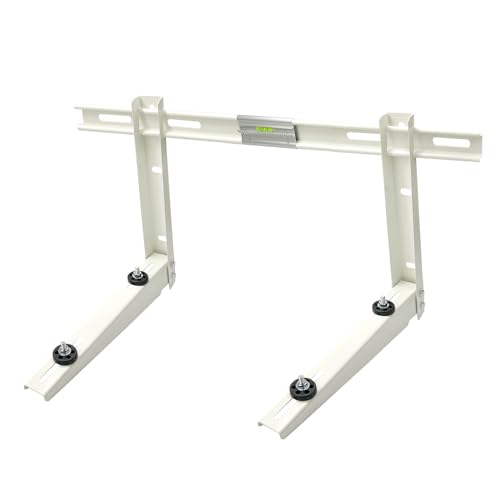
Best for: Universal outdoor mounting with a focus on precise leveling and vibration damping. Suitable for a wide range of outdoor ductless systems.
Why selected: The galvanized steel construction and epoxy painting offer corrosion resistance, while the design emphasizes accurate alignment to maintain airflow and performance.
Caution: Check the mounting hole pattern compatibility with your condenser model to avoid installation issues.
Buying Guide: Condenser Pads And Related Accessories
- What should I look for in a condenser pad? Consider load capacity, ground stability, drainage, anti-vibration features, and weather resistance.
- Which pad size is right for my condenser? Match the pad footprint to the condenser base dimensions, with extra width if the unit sits on uneven ground.
- Raised height considerations: A slight elevation (about 2 inches) can improve drainage and airflow, limiting moisture buildup under the unit.
- Materials: UV-stabilized polypropylene and reinforced ribbing improve weather resistance and longevity on outdoor installations.
- Ground conditions: On grass or soil, ensure a level installation. For soft soil, larger pads with broader bases reduce sinking risk.
- Mounting brackets vs. pads: Brackets secure the condenser to a wall or structure, while pads protect the base and dampen vibrations. In some setups, both are used together.
FAQ
- Can a condenser pad improve efficiency? Yes. A stable, level base reduces vibrations and energy loss due to misalignment, helping the system operate more smoothly.
- Do I need a raised pad? Raised pads aid drainage and prevent moisture contact, which can reduce rust and corrosion on the condenser base.
- What if my ground is uneven? Look for pads with a wider footprint or use mounting brackets to stabilize the unit on a wall or platform.
- Are these pads universal for all mini-split condensers? Most are designed to fit common mini-split and outdoor condenser dimensions, but always confirm the footprint and weight rating for your model.
- Do I need both a pad and a bracket? It depends on the installation. Pads provide a stable base, while brackets secure the unit to a wall or structure; some setups benefit from using both.
- How do I maintain these pads? Regularly inspect for cracks, chipping, or settling. Clean debris that could obstruct drainage paths.