Answering the central need for cool, comfortable living on the road, these 12V rooftop air conditioners are designed for camper vans, RVs, and small motorhomes. The top picks below are best for off-grid travelers, weekend warriors, and full-timers who require steady cooling without heavy generator use. Each unit is evaluated for off-grid readiness, noise level, energy use, and ease of installation.
| Product | Best For | Key Benefit | Ideal Power Setup |
|---|---|---|---|
| OutEquip 12V Rooftop AC with Heater | Full-off-grid campers | 8–10 hour runtime on standard banks | 12V battery bank, minimal inverter |
| Gidrox 10000 BTU 12V DC RV AC | Quiet, battery-backed cooling | 40dB Sleep mode, 3 cooling modes | 400Ah+ battery with inverter options |
| BougeRV 12V Refrigerator/AC combo | Multi-use campers needing both cooling and fridge | Low power, 23 Qt fridge integration | 12/24V DC with AC compatibility |
| ICECOSMOS Ultra-Slim Roof AC | Ultra-compact van builds | Low-profile, 360° airflow | 12V DC operation, ECO modes |
| Jrswin 12V 12000 BTU RV AC | Spacious vans requiring strong cooling | High BTU, ultra-quiet 45 dB | Solid 12V system, compact install |
OutEquip 12V Rooftop Air Conditioner with Heater

Features include a 10,000 BTU cooling capacity and hot-water-ready heating. Best for off-grid campers who need quick cooling within 15 minutes and extended runtime on a 12V system. The UV-resistant housing, zinc-coated condenser, and EPDM gasket support outdoor durability. This unit is suited for those prioritizing rapid cooling and robust sealing in sunny, exposed locations.
Best for: full-off-grid travelers and heavy-use vans where long runtimes from a specific battery bank matter. Caution: installation and compatibility with existing roof structures should be verified before purchase.
Gidrox 10000 BTU 12V DC RV Air Conditioner

Powered directly from the RV battery, this model emphasizes low energy use with an average nighttime draw around 350W. It features three modes (Turbo, ECO, Sleep) and a library-quiet 40dB Sleep mode, making it ideal for light sleepers in hot climates. It requires a solid battery setup for all-night operation.
Best for: campers seeking quiet, battery-friendly cooling with flexible modes. Caution: heavy cooling capacity benefits are best realized with substantial battery capacity to sustain all-night operation.
BougeRV 12V Car Fridge & 12V DC Cooler
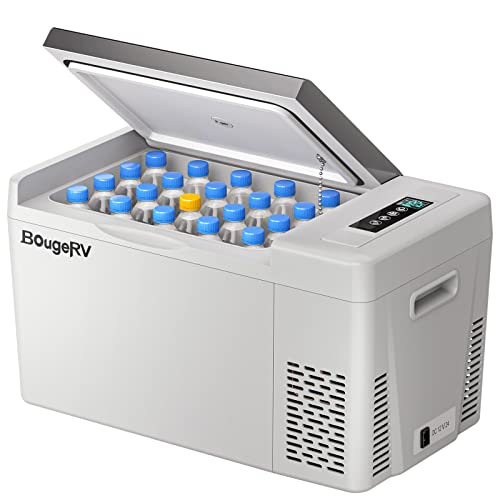
This option combines a 12V refrigerator with compact cooling performance, suitable for campers who want a dual-purpose unit. It cools quickly to 32℉ and supports low power consumption in ECO mode. It’s a practical choice when you need cold food storage plus climate control in a small space.
Best for: campers who want a built-in cooling solution for perishables alongside living space cooling. Caution: primarily a refrigerator; heating capability is not the focus, so separate AC might be needed for high ambient heat in some setups.
ICECOSMOS Ultra-Slim Rooftop 12V DC Inverter AC

Targeted at ultra-compact van builds, this unit uses an enhanced airflow design and 12V eco-mode to extend battery life beyond 12 hours on suitable packs. It emphasizes silent operation at just 39dB in Eco Mode and supports 360° airflow for even cooling in small spaces. It avoids heavy inverter use by relying on direct 12V operation.
Best for: small vans and motorhomes where space and battery efficiency are priorities. Caution: the 12V-only operation requires careful battery sizing and may limit peak cooling during very hot days without sufficient power reserves.
Jrswin 12V 12000 BTU RV Air Conditioner

With 12,000 BTU of cooling capacity, this unit targets larger vans and trailers. It offers ultra-quiet operation at about 45 dB and is designed for both driving and parked use. It includes multi-layer circuit protection to guard against surges and vibration, supporting stable operation in rough road conditions.
Best for: larger campers needing robust cooling while maintaining quiet operation. Caution: higher BTU often means higher power draw; ensure battery and electrical systems can support peak usage.
Buying Guide: Key Considerations For Cooling A Camper Van
- Power source and battery capacity: Determine how long you’ll run cooling on 12V battery banks. Larger banks (400Ah–600Ah) extend runtime, especially in ECO or Sleep modes.
- BTU rating and space: Match BTU to your van’s square footage. Oversized units cool faster but may cost more energy; undersized units struggle in high heat.
- Noise and comfort: Look for low dB ratings in Eco or Sleep modes for restful nights, particularly if you’ll sleep near the unit.
- Durability and weather sealing: UV-resistant housings, robust condensers, and gasket sealing improve performance in sun and rain.
- Off-grid capability vs. shore power: Decide if you need pure 12V operation, or if a small inverter is acceptable for extended runs.
- Compatibility with other appliances: If you plan to use a fridge or other 12V devices, consider overall power draw and battery management.
- Installation space: Ultra-slim or low-profile models save roof space and simplify installation in compact vans.
Frequently Asked Questions
- What is the main benefit of 12V RV air conditioners for campers?
They run directly from the vehicle’s battery, reducing the need for a generator and enabling off-grid cooling for extended periods. - How many hours of cooling can a 12V AC unit provide on a typical battery bank?
Runtime depends on battery capacity and mode; some units claim heat-down to ECO or Sleep modes can stretch to 6–10+ hours with large banks. - Is a separate inverter required for all 12V systems?
Not necessarily. Some units operate directly on 12V, but others may require an inverter to access higher AC power. - What should I check before buying?
Verify BTU for space, battery capacity, roof compatibility, noise level, and whether the unit supports off-grid operation in your climate. - Can these units heat as well as cool?
Some models offer heating features; review the product specs to confirm if heating is included and compatible with your needs.
Buying decisions should center on off-grid reliability, comfort in high heat, and the practicality of your vehicle’s electrical system. The products above provide a range of cooling power, noise levels, and battery compatibility to fit different camper configurations and travel styles.