Answering the need for reliable, adjustable airflow in ducts, these best duct fan speed controllers are designed to fine‑tune inline and exhaust fans. They’re ideal for small grow rooms, workshops, attics, and home ventilation where varying speeds save energy and control noise. The top picks below are grouped by compatibility, ease of use, and safety features to help you decide who each product is best for.
| Product | Best For | Key Benefit |
|---|---|---|
| CDMALL AC Motor Speed Controller (B0FMXNQY6J) | Brushed AC motor users needing precise voltage readouts | Real‑time LED voltage display with overload protection |
| BN-LINK Variable Fan Speed Controller (B07VMNVB8D) | Simple, plug‑and‑play speed control | Three fixed speeds with a grounded outlet for safety |
| VIVOSUN Variable Speed Controller (B07FSGNR4F) | Inline duct fans needing adjustable speeds | Three speeds with automatic motor protection |
| CavalliFun AC Motor Speed Controller (B0CKFK68X9) | Resistive loads with robust protection | Independent overload/shock protection with LED readout |
| DIGITEN Variable Speed Controller (B08MPTN7JL) | Easy plug‑and‑play installation for inline fans | Simple controls to save energy and reduce noise |
CDMALL AC Motor Speed Controller for Brushed Motors
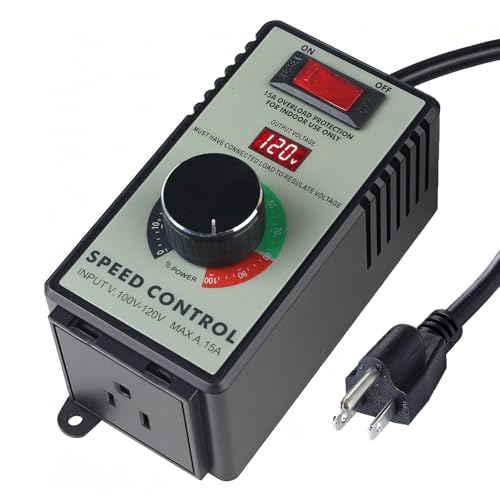
Best for users with brushed AC motors who want precise voltage control and overload protection. This controller reduces voltage to slow brushed devices such as inline duct fans, exhaust fans, ceiling fans, routers, and heaters. A built‑in real‑time LED voltage display shows output from 0 to 120V as you turn the dial, making it easy to dial in the exact speed or brightness. An electronic overload cutoff protects equipment without needing fuse replacements. The recommended working current is within 10A for extended use. Wired for 120V operation, with a 6 ft or shorter cord typical in duct runs. Choose this if you need accurate, real‑time voltage feedback and a resettable overload safeguard, and your device is a brushed AC motor rather than brushless or DC.
Best for: Hobbyists and small workshops using brushed AC motors that require visible voltage readout and reliable overload protection.
Caution: Not compatible with brushless or DC motors or devices with circuit boards. Verify motor type before purchasing.
BN-LINK Variable Fan Speed Controller

Best for straightforward, plug‑in speed control in a safe, grounded design. This controller offers three fixed speeds controlled by a single knob, making it simple to use with inline or exhaust fans, high‑velocity inline fans, or small blowers. The grounded outlet reduces the risk of shock and simplifies wiring. It’s a practical option when you want quick speed adjustment without extra display readouts. If you need a basic, dependable regulator for a non‑sensitive setup, this is a solid pick.
Best for: Home or workshop setups needing a user‑friendly three‑speed regulator with safety grounding.
Caution: Three speeds are fixed; if you need continuous variable control, consider a model with a dial control rather than a knob switch.
VIVOSUN Variable Speed Controller for Inline Duct Fans

Best for inline duct fans needing versatile control and built‑in safety. The unit provides three speeds via a single control knob, allowing higher efficiency and better ventilation customization. It helps reduce energy use by avoiding full‑speed operation when not required, while the grounded plug enhances safety for inline fans. A key advantage is its simple, compact design that fits in tight spaces near the ductwork. This is a strong choice when you want a balance of simplicity and adjustable airflow for ventilation or exhaust systems.
Best for: Inline duct or vent fans in residential or small commercial settings where ease of use and energy savings matter.
Caution: If you require precise, continuous speed tuning rather than three fixed speeds, opt for a model with stepless adjustment.
CavalliFun AC Motor Speed Controller

Best for resistive loads and environments where robust protection is desirable. This controller supports resistive loads like fans, heaters, and lamps, with protection features including surge and spike protection and RC absorption. It uses an overload protection mechanism that can shut off in case of excessive current, helping prevent damage to connected devices. The shell is flame‑retardant and designed for safety in high‑temperature settings. The unit is suitable for users requiring dependable protection alongside adjustable speed for AC resistive devices. Choose this if your application emphasizes safety features and stable operation under load.
Best for: Users with resistive loads who want strong safety protections and a durable build.
Caution: Not intended for DC motors or devices with delicate electronics or circuit boards.
DIGITEN Variable Speed Controller for Duct Fans
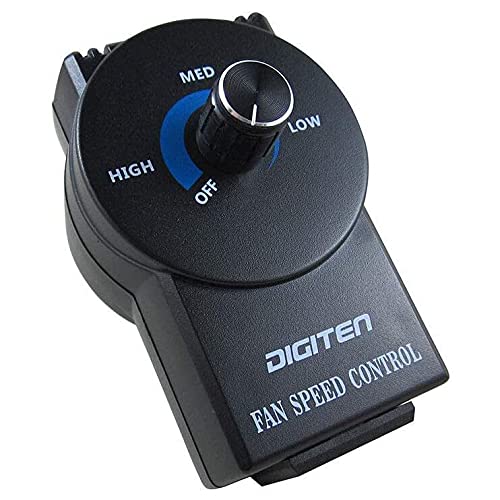
Best for easy plug‑and‑play installation with inline duct fans. This controller offers straightforward, precise speed adjustment for inline duct fans, making it a practical option for quick setups. The plug‑and‑play design minimizes wiring complexity, and the controller is intended to help users save energy and control noise by matching fan speed to actual needs. For users seeking a simple, reliable controller without advanced features, this model fits well.
Best for: DIY enthusiasts or installers who want a straightforward, easy‑to‑install speed regulator for inline duct fans.
Caution: Designed for inline duct fans; verify compatibility with your specific model before purchasing.
Buying Guide: How to Choose the Right Duct Fan Speed Controller
- Confirm whether your device is a brushed AC motor, a brushless DC motor, or a device with electronics. Many controllers state compatibility only with AC brushed motors.
- control type: Decide between stepless dial control for continuous adjustment and fixed three‑speed knobs for simplicity.
- current and wattage: Check the controller’s rated current (amps) and load wattage. Exceeding limits can trigger protection or fail to deliver the desired speed.
- protection features: Look for overload, short‑circuit, surge, and RC absorption protections, especially in environments with heat or high power usage.
- signal readout: LED voltage displays help you verify exact output when precise speed or brightness is required.
- installation length and wiring: A longer power cord offers flexibility in hard‑to‑reach spaces. Grounded outlets and safe plug designs reduce risk in workshop or attic installations.
- noise and energy savings: Reducing full‑speed running can lower noise and energy use without sacrificing necessary airflow.
Frequently Asked Questions
- Can I use a duct fan speed controller with a brushless motor? Most controllers labeled for brushed AC motors are not compatible with brushless or DC motors. Check the device manual before purchasing.
- What happens if I exceed the controller’s current rating? Exceeding the rating can trigger overload protection and cut power to protect the equipment. It may also reduce controller lifespan.
- Do I need a display readout? LED voltage displays help dial in exact speeds, which is useful for precise ventilation or temperature control setups.
- Is a grounded plug safer? Grounded plugs reduce shock risk, especially when wiring near humidity or in tight spaces.
- Should I choose fixed speeds or a stepless dial? Fixed speeds are simpler; stepless dials offer finer adjustment for tailoring airflow to needs and noise levels.
- Are these controllers compatible with all inline duct fans? Compatibility depends on motor type, voltage, and load. Always verify device specifications against the controller’s capabilities.