Find the right duct take-off fittings to improve airflow, reduce leaks, and simplify connections in your HVAC install. This guide highlights five well-suited options for common duct sizes, explaining who each product is best for and why. Ideal buyers include DIY homeowners tackling retrofit jobs, professional installers seeking durable galvanized fittings, and system designers needing reliable connections for various duct diameters.
Overview of chosen products:
| Product | Size/Compatibility | Best For | Why It’s Recommended |
|---|---|---|---|
| HVAC Premium Stick-on Take-Off 6″ (Galvanized) | 6″ Duct | Small to mid-size retrofits | Durable galvanized steel, crimped ends for secure connections |
| HVAC Premium Stick-on Take-Off 8″ (Galvanized) | 8″ Duct | Medium ducts | High-quality steel, rust prevention, easy fitting |
| Vent Systems 6″ to 6″ Saddle Branch | 6″ Duct main to 6″ branch | Uniform branch connections | Versatile saddle design, good airflow |
| HVAC Premium Round Take Off 8″ (Side On) | 8″ Duct (compatible with 10″ duct in some designs) | Square-to-round transitions | Galvanized steel, practical for round/side take-offs |
| Vent Systems 10″ to 6″ Saddle Branch | 6″ branch from 8.81″–9.84″ main | Mid-to-large duct work | EPDM seal for airtight connections, versatile sizing |
HVAC Premium Stick-on Take-Off 6″ Duct

The 6″ galvanized steel stick-on take-off is designed for duct systems with a 6″ diameter. It features crimped ends to simplify secure connections to consecutive duct joints and is made in the USA for perceived reliability. This option is best for small to mid-size retrofits where a reliable, rust-resistant connection is essential. Caution: ensure exact compatibility with your existing 6″ duct to avoid leakage from misalignment.
HVAC Premium Stick-on Take-Off 8″ Duct
The 8″ galvanized steel take-off is compatible with 8″ ductwork and emphasizes durability and rust resistance. Its crimped ends facilitate a straightforward fit to connect duct sections securely, supporting efficient airflow in moderate-sized installations. This choice is better for mid-range ducts and retrofit work where a robust, corrosion-resistant connection matters. Limitation: verify any clearance constraints around adjacent components in tight installations.
Vent Systems 6″ to 6″ Saddle Branch

This saddle take-off provides a 6″ main to 6″ branch connection. It emphasizes wide compatibility and seamless connectivity between main and branch ducts, making it suitable for retrofit projects where a straightforward, compact branch is needed. Best for uniform branch connections in existing 6″ systems. Caution: review the outlet dimension (5.90″) to ensure it matches your duct plan and does not create an interference with other components.
HVAC Premium Round Take Off 8″ (Side Take Off)
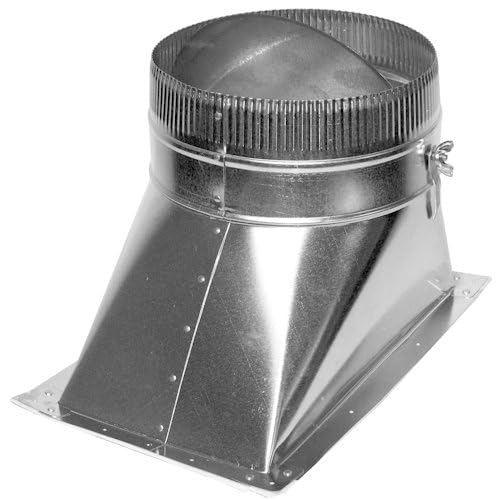
The 8″ round take-off side connection is designed to join a square duct to a round duct, facilitating a practical transition in varied duct layouts. Made from galvanized steel, this option prioritizes durability and rust resistance. It’s best for projects needing a square-to-round adapter within an 8″ footprint. Better for round-to-square transitions, but check nearby space to accommodate the side mounting layout.
Vent Systems 10″ to 6″ Saddle Branch

This saddle branch connects a larger main duct (8.81″–9.84″ diameter) to a 6″ branch, offering a flexible option for mid-to-large systems. It includes an EPDM rubber seal for improved thermal insulation and airtight performance. Best for retrofit projects where airtightness is critical. Limitation: ensure your main duct diameter falls within the stated range to avoid improper seating.
Buying Guide: Key Considerations For Duct Take-Off Fittings
- Size and compatibility: Match the take-off diameter to your main duct size and the branch size. Some products support specific ranges (for example 6″ or 8″ ducts) and exact outlet dimensions should be checked against your plan.
- Material and durability: Galvanized steel offers rust resistance and stability under HVAC conditions. For outdoor or humid environments, galvanized or coated fittings are generally preferred.
- Connection type: Stick-on or saddle take-offs provide different installation methods. Crimped ends and secure fittings reduce air leakage and improve efficiency.
- Airtightness: Some saddle branches include EPDM rubber seals to improve airtightness and reduce thermal losses. This is important in energy-conscious or high-performance systems.
- Ease of retrofit: For retrofits, consider fittings that accommodate existing duct layouts with minimal modification. Side take-offs or transitions between square and round ducts can simplify routing.
- Limitations and clearances: Check for potential interference with nearby components, walls, or insulation. Outlet dimensions and mounting orientation can affect space planning.
Frequently Asked Questions
- What is a duct take-off fitting and why do I need one?
A duct take-off fitting connects a duct branch to a main duct, enabling controlled airflow distribution. They help route air to different areas of a system and reduce leaks when designed for the matching sizes.
- Which size is best for a residential retrofit?
For typical residential retrofits, 6″ and 8″ take-offs cover many common branch sizes. Choose the size that matches your existing duct diameter and the required branch flow.
- Are saddle connections more versatile than stick-on take-offs?
Saddle connections are versatile for branching from a main to a branch with a single piece, while stick-on take-offs are often used for straightforward, practice-oriented connections. The best choice depends on your duct layout.
- Should I choose galvanized steel for every project?
Galvanized steel offers good corrosion resistance and durability, making it a reliable standard for most HVAC installations. Consider environment and budget when selecting material.
- What should I verify before ordering?
Confirm the main duct diameter, branch diameter, outlet size, and whether the installation requires a square-to-round transition or a pure round connection. Check for compatibility with any dampers or clamps in the system.
- Do these fittings affect energy efficiency?
Yes. Proper airtight connections reduce air leakage and maintain designed pressure and temperatures, contributing to overall system efficiency.