Answer: Energy-efficient table fans are best for shoppers seeking quiet operation, strong air circulation, and low energy use for a single room or desk setup. Top picks below target different spaces and needs—great for bedrooms, offices, dorms, and small living areas. The list highlights models with quiet motors, wide airflow, and adaptable tilt or oscillation for precise cooling.
Buyer profile summary:
- Small-space residents (dorms, apartments): compact designs with strong airflow and low noise.
- Bedroom users: quiet operation, adjustable tilt, and energy-smart features.
- Home office workers: precise airflow with multiple speeds and easy remote or control access.
- Shared living areas: wider oscillation and higher airflow for larger spaces.
| Product | Airflow / Range | Noise Level Focus | Best For |
|---|---|---|---|
| DREO Fan for Bedroom, 12 Inches | Up to 70 ft reach | 25 dB quiet night use | Small rooms, quiet nights |
| DREO Fan for Bedroom, 13-Inch Oscillating | Up to 75 ft, 900 CFM | Quiet with remote | Medium rooms, flexible control |
| Holmes 12 Inch Oscillating Table Fan | Up to 17 ft/sec, 1,014 CFM | Moderate noise control with multiple speeds | Everyday general cooling |
| Gaiatop Desk Fan | 360° tilt, 3 speeds | Compact, quiet operation for small spaces | Very small desks or nightstands |
| Vornado 133DC Energy Smart | Moves air up to 30 feet | Low energy, quiet operation | Workspaces, bedrooms, dorms |
DREO 12-Inch Bedroom Table Fan
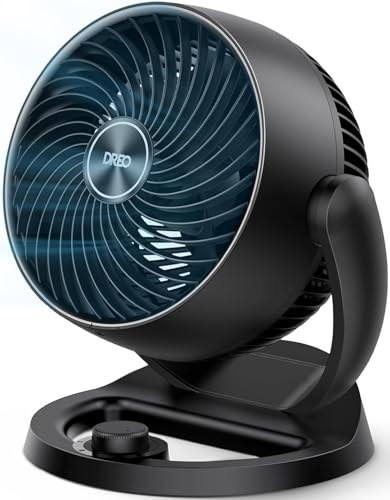
Features include Dreo’s WingBoost system for long-range circulation up to 70 ft and a blade design that delivers strong air while minimizing noise to about 25 dB. The 12-inch model offers 3 speeds and a 120° adjustable tilt. Best for: small bedrooms or desks where quiet cooling is essential. Limitation: larger rooms may benefit from a bigger model with higher airflow.
DREO 13-Inch Oscillating Table Fan

This model expands airflow with WingBoost tech, delivering up to 900 CFM and circulating air across a 75 ft range. Features include remote control, four speeds, and an Auto Mode sensor. Adjustable tilt at 120° and 90° oscillation provide flexible cooling angles. Best for: medium rooms or spaces where remote convenience matters. Caution: higher airflow may be less suitable for very small desks without mounting or placement space.
Holmes 12-Inch Oscillating Table Fan
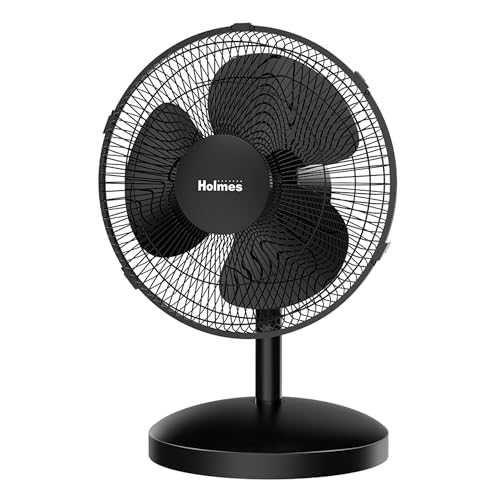
Holmes offers 3 speeds with a motor capable of wide 75° oscillation and a tilt feature up to 15°. With up to 1,014 CFM, it cools larger shared spaces more effectively than many compact models. Best for: living rooms, kitchens, or shared spaces needing broad coverage. Limitation: footprint is larger than ultra-compact options.
Gaiatop 5-Inch Desk Fan

Compact and powerful, this 5-inch fan is ideal for small desks and nightstands. It features 360° tilt, 3 speeds, and a detachable front grill for easy cleaning. Best for: very small workspaces or travel-like desk setups. Caution: limited airflow compared to larger models, so use in smaller zones for best results.
Vornado 133DC Energy Smart Circulator
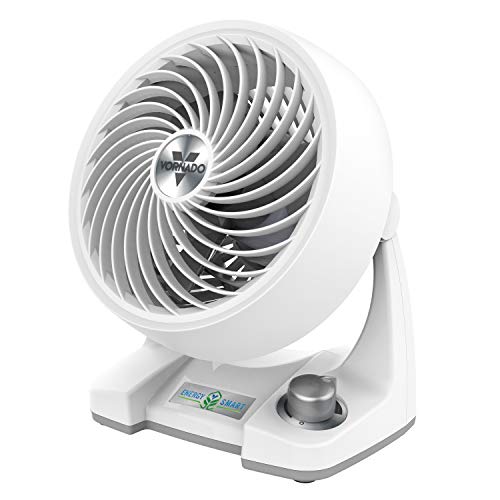
This compact circulator uses a DC motor for high energy efficiency, with adjustable tilt and true variable speed control. It moves air up to 30 feet and minimizes hot spots while maintaining quiet operation. Best for: energy-conscious users who need precise, adjustable airflow in bedrooms or small offices. Limitation: some users may prefer longer reach or louder ambient noise acceptance in very large rooms.
Buying Guide
What size should I choose?
Choose based on room size and the intended distance of airflow. Smaller desks or nightstands do well with 5–12 inch models. For most bedrooms and small living spaces, 12–13 inch fans provide a balance of airflow and noise reduction. Larger desks or shared rooms may benefit from 13–14 inch oscillating models.
DC motor vs AC motor: which is better for energy savings?
DC-motor fans generally use less energy and offer smoother speed control, making them ideal for energy-conscious buyers. They often run cooler and deliver longer-term savings, though initial cost may be higher.
Is noise level important for sleep?
Yes. Look for models advertised as quiet or with dB specifications near the low single digits to mid-teens. Fans with sound-dampening blade design, aerodynamic housing, and optimized motor technology typically perform quieter at practical speeds.
Should I prioritize oscillation or fixed directional airflow?
Oscillating fans cover larger areas and help distribute air evenly, suitable for living rooms and shared spaces. Fixed-direction fans work well for targeted cooling at a desk or bed. Some models offer adjustable tilt to direct airflow precisely where needed.
Are remote controls or timers worth it?
Remote controls and timers add convenience, especially for nighttime use or when the fan sits on a desk away from you. They reduce the need to get up to adjust settings and can help maintain consistent cooling patterns.
What features indicate better longevity?
Look for robust blades, solid grills, stable bases, and a reliable tilt/oscillation mechanism. Fulfilled brand reliability, simple maintenance access (like a detachable grill), and consistent airflow across settings are good indicators.
Quick comparison at a glance
- Best quiet night option: DREO 12-Inch Bedroom Fan
- Best remote control: DREO 13-Inch Oscillating Model
- Best overall air coverage: Holmes 12-Inch Oscillating
- Best ultra-compact: Gaiatop 5-Inch Desk Fan
- Best energy efficiency overall: Vornado 133DC
FAQ
- Q: Do energy-efficient table fans necessarily cool a whole room?
- A: They improve air circulation and reduce hot spots, which can make a room feel cooler by moving air more efficiently.
- Q: How loud are these fans typically?
- A: Noise varies by model, but many energy-efficient options aim for quiet operation around 25–40 dB at low to mid settings.
- Q: Can I pair these with a space heater or humidifier for energy savings?
- A: Yes. Properly circulating air with a fan can improve efficiency of other devices and reduce the overall energy use in a room.
- Q: Is remote control essential for an office desk fan?
- A: Remote control adds convenience, especially when the fan sits away from you or when you prefer uninterrupted airflow without getting up.
- Q: Are these fans easy to clean?
- A: Most models feature detachable grills or easy-access blades for cleaning. Regular maintenance helps maintain airflow and hygiene.
- Q: Which model is best for a dorm room?
- A: A compact, quiet model with tilt and oscillation, like the 12–13 inch DREO or Vornado options, fits well in dorms where space and electricity usage matter.