Answering the need for affordable, energy-efficient greenhouse cooling, evaporative coolers provide humidified airflow that helps plants thrive in warm climates. This guide spotlights five portable options suited for various greenhouse sizes and layouts. The best picks maximize cooling with minimal electrical use, while offering humidity benefits to leafy crops and seedlings. Ideal buyers include hobby gardeners with medium to large greenhouses, commercial growers seeking easy mobility, and spaces where window A/C isn’t practical.
| Product | Coverage / Capacity | Best For |
|---|---|---|
| Hessaire MC18M Evaporative Cooler | Up to 500 sq ft | Medium to large greenhouses needing high airflow |
| Mountman 1800 CFM Swamp Cooler | Up to 600 sq ft | Rooms with continuous use and extended humidity needs |
| Uthfy 4800 CFM Swamp Cooler | Up to 1200 sq ft | Large greenhouses or multiple zones |
| Auertech 16 Gal Evaporative Cooler | Detachable 16 gal tank, long runtime | Dry climates, long run times in larger spaces |
| Air Choice 3-in-1 Evaporative Cooler | 5.3 gal tank, 18k cu ft/hr circulation | Versatile humidification and cooling for open layouts |
Hessaire MC18M Evaporative Cooler: 1300 CFM Outdoor Air Conditioner
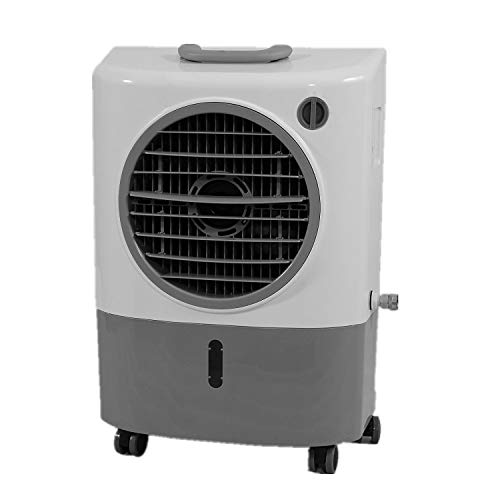
The Hessaire MC18M delivers 1,300 CFM of evaporative cooling with a hi-density XeL50 media to expand air intake and efficiency. It’s designed to cover larger greenhouse spaces and reduce energy use by leveraging evaporative cooling rather than traditional air conditioning. Best for: mid-to-large greenhouses that need substantial airflow and humidity control. Better for: outdoor or partially enclosed greenhouses where portability and simple setup matter. Choose this if you want long runtimes with straightforward operation. Caution: water management is essential to prevent mineral buildup; run-time drying is recommended before storage.
Hessaire DC18 Mobile Evaporative Cooler

This unit offers 900 CFM of cooling and is designed for mobility within greenhouse layouts. It provides effective cooling for spaces around 300 sq ft with a portable form factor, making it suitable for smaller greenhouses or zones within a larger operation. Best for: greenhouse sections needing flexible placement and easy removal for seasonal use. Better for: buyers who want a lighter footprint. Caution: not an air conditioner; humidity levels should be monitored to avoid overly damp conditions in delicate crops.
Mountman 1800 CFM Swamp Cooler
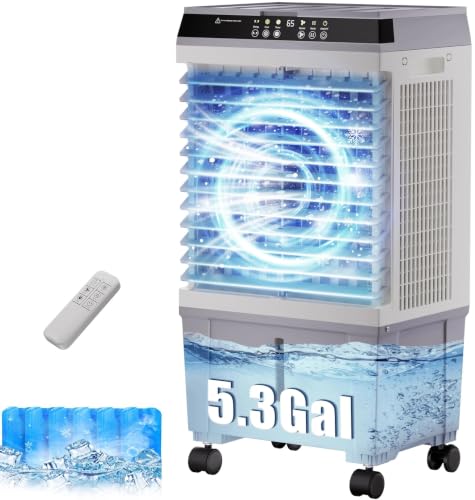
This 1800 CFM evaporative cooler features a large 5.3-gallon water tank and 6 ice packs, providing extended cooling with 120° oscillation for even air distribution. Best for: larger greenhouses or multiple rooms where consistent humidity and air movement are critical. Better for: environments that require longer, uninterrupted operation. Choose this if you want broad coverage and flexible ice-pack assisted cooling. Caution: heavy unit; ensure stable placement and consider mobility for seasonal storage.
Uthfy 41″ Swamp Cooler: 4800 CFM

With 4,800 CFM and a 10.6-gallon tank plus 3 ice packs, this model is designed for large outdoor or greenhouse spaces up to 1,200 sq ft. It includes 110° oscillation and 3 speeds. Best for: open-floor greenhouse layouts where rapid, robust cooling is needed. Better for: zones that require frequent repositioning to maintain consistent leaf temps. Caution: ensure dry, well-ventilated placement to prevent excess moisture buildup in sensitive crops.
Air Choice Swamp Cooler: 3-in-1 Evaporative Cooler
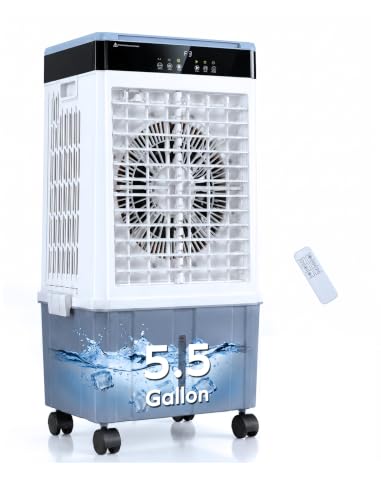
This 3-in-1 cooler functions as an evaporative cooler, humidifier, and fan with a 5.3-gallon tank and 3 speeds plus 120° oscillation. Best for: open or semi-enclosed greenhouses that need humidity control without heavy cooling. Better for: spaces where integrated humidification supports plant transpiration and growth. Choose this if you value multi-function use and remote operation. Caution: not a precise climate control unit; monitor humidity to prevent over-watering conditions for certain crops.
Buying Guide: Key Considerations For Greenhouse Evaporative Coolers
- Space and layout: Measure greenhouse dimensions to match CFM and coverage. Larger spaces may need high-CFM units or multiple devices.
- Humidity management: Evaporative cooling adds humidity. Consider models with humidification features or separate dehumidification if humidity becomes excessive for crops.
- Water capacity and maintenance: Tanks range from 5 to 16 gallons. Larger tanks reduce refills but require more frequent cleaning to avoid odors or mineral buildup.
- Portability: Wheels and compact forms help position units for zone cooling or seasonal changes.
- Energy use and noise: Compare wattage and noise levels. Higher efficiency units save electricity and reduce plant stress from noise.
- Climate suitability: Evaporative coolers work best in dry climates with low humidity. In humid regions, performance may be limited.
- Ice packs and cooling pads: Some models include ice packs or specialized pads to boost cooling; factor in ongoing availability and replacement.
Frequently Asked Questions
- What is the main advantage of evaporative coolers for greenhouses?
They provide energy-efficient cooling while increasing humidity, which can benefit many plant species. - Are evaporative coolers suitable for small or enclosed greenhouses?
Yes, but choose smaller or portable units to avoid excessive humidity and condensation. - Do I need to add ice packs to these coolers?
Some models include ice packs to enhance cooling; others rely on water and pads alone. - Can evaporative coolers replace an air conditioner in a greenhouse?
They typically supplement cooling and humidity control rather than fully replace A/C in very hot or humid climates. - How often should I clean the water tank?
Regular cleaning is recommended, especially between growing seasons, to prevent odors and mineral buildup. - Is humidity control important for greenhouse crops?
Yes, maintaining appropriate humidity supports transpiration, disease control, and overall plant health.