Answering the search for reliable, energy-smart RV climate control, these high-efficiency heat pump models are designed to keep campers comfortable in varying seasons while managing power use. The top picks below suit different RV sizes and setups—from light-traffic trailers to off-grid campers. Best for long trips, this collection balances heating, cooling, and quiet operation to fit your travel lifestyle.
Summary table of selected products
| Product | Type | Best For | Key Benefit |
|---|---|---|---|
| TOSOT 16000 BTU RV A/C | Rooftop A/C with Heat Pump | Mid-size RVs, campers seeking quiet operation | Ultra quiet (43dB), all-weather cooling & heating |
| TURBRO Inverter Under-Bench A/C | Under-bench Unit with Heat Pump | Smaller spaces, interior-limited roofs | Inverter efficiency, space-saving design |
| Gidrox 12V DC A/C | Battery-Powered Heat Pump Roof Unit | Off-grid use, battery setups | 12V operation, low power consumption |
| RecPro 15K A/C (Non-Ducted) | Rooftop A/C with Heat Pump | Casual campers, food trucks needing quiet | Low amp draw, quiet operation |
| TUSOMA 18K BTU A/C | Rooftop A/C with Heat Pump | Medium to large RVs | High cooling capacity, year-round comfort |
TOSOT 16000 BTU RV Air Conditioner

Best for mid-sized RVs and campers needing year-round climate control with quiet operation. This unit delivers 16,000 BTU cooling and 12,500 BTU heating, working in ambient temperatures from 23°F to 115°F. It is designed for non-ducted RVs 16-24 feet, including Class B and Class C models. The 43 dB sound level is notably quieter than standard RV ACs, making it suitable for light sleepers.
Who it’s best for: Buyers prioritizing a balance of strong cooling with quiet performance for mixed-season use. Why selected: high efficiency with built-in heat pump and WiFi/remote control for convenient control in tight spaces.
Caution: The unit is non-ducted, so compatibility with any existing ductwork should be confirmed before purchase.
TURBRO Inverter Under-Bench A/C with Heat Pump
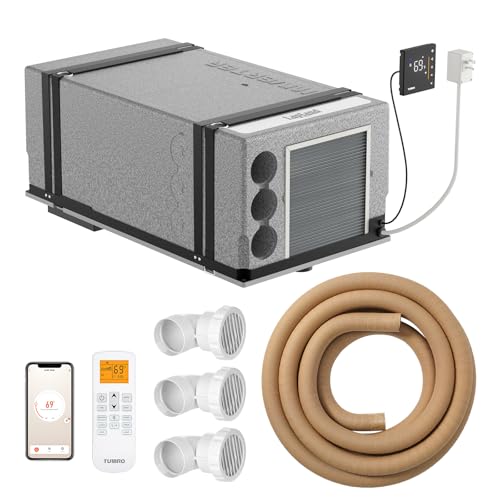
Best for campers seeking space savings and year-round climate control. This inverter-based unit reduces energy use by up to 30% through automatic speed adjustments, helping lower power bills on extended trips. It supports all-season heating and cooling with a built-in heat pump, ideal for RVs, trailers, and vans where roof space is at a premium.
Who it’s best for: Owners needing a discreet, low-profile installation with app/remote access. Why selected: space-saving design that still delivers solid heating and cooling performance.
Caution: Designed for under-bench installation; verify interior cabinet space and clearance before purchase.
Gidrox 12000 BTU 12V DC RV A/C

Best for off-grid or battery-powered setups where 12V operation is essential. The unit combines 12V DC operation with a heat pump delivering 9,000 BTU heating and 12,000 BTU cooling. It uses a low power profile (about 350W in typical nighttime use), with an energy-efficient EER up to 12.3. It is best for RVs that have substantial battery capacity and low-energy needs.
Who it’s best for: Off-grid travelers relying on batteries. Why selected: true 12V compatibility and low nightly power draw.
Caution: Requires a suitable battery bank and charge management for all-night operation.
RecPro RV Air Conditioner 15K Non-Ducted

Best for campers and food trucks needing a quiet, energy-efficient rooftop unit with easy install. This 15,000 BTU unit emphasizes low amp draw, making it compatible with solar or generator setups to maximize comfort without straining power. The rugged exterior plus an aerodynamic profile helps minimize drag while traveling.
Who it’s best for: RV enthusiasts balancing power management with noise considerations. Why selected: proven low amp draw and quiet operation for off-grid or mixed power setups.
Caution: Non-ducted design may require careful air distribution planning inside the RV.
TUSOMA 18K BTU A/C With Heat Pump

Best for larger RVs or longer travel spaces that require higher cooling capacity. The Tusoma unit delivers 18,000 BTU cooling and 10,236 BTU heating, designed to cover up to 680 sq ft. It requires both 115V AC and 12V DC power to operate correctly, offering robust performance in varied climates.
Who it’s best for: RVs that demand strong cooling in hot climates and solid heating during shoulder seasons. Why selected: higher BTU capacity and year-round functionality for mid-to-large setups.
Caution: Dual power requirements mean you must ensure adequate electrical provisioning on the vehicle to avoid outages.
Buying Guide: Key Considerations For Choosing An RV Heat Pump
- Rooftop vs. under-bench placement: Roof units are common and provide easier external installation, while under-bench models save roof space but require interior cabinet clearance.
- Power source and energy use: Consider whether your RV relies on shore power, generators, or battery power. Inverter-based, 12V systems reduce peak draw but may have lower BTU output.
- BTU range and space coverage: Match cooling/heating capacity to your RV length and floor area. Overcapacity wastes energy; under-capacity leads to inadequate comfort.
- Noise level: Lower dB ratings improve sleep quality and in-cabin comfort. Look for models advertised as whisper-quiet for better rest.
- Seasonal versatility: Units with built-in heat pumps provide heating for shoulder seasons, reducing reliance on separate heating systems.
- Electrical requirements: Verify voltage, amperage draw, and whether a unit requires 115V, 12V, or dual-power. Ensure your system supports peak loads with safe margins.
- Installation and compatibility: Some units are non-ducted; others assume ducted air distribution. Check roof size, mounting brackets, and interior clearance before purchasing.
- Smart control options: WiFi or app controls can simplify remote adjustments and monitoring, especially when parked or traveling.
Frequently Asked Questions
- Do RV heat pumps work well in cold weather? Most units provide heating when temperatures are above moderate levels, but performance can drop as temperatures fall. Check the unit’s minimum operating temperature.
- Is a separate furnace needed if I have a heat pump? In extremely cold conditions, a furnace or alternative heating source may still be required for optimal comfort.
- Can I install a heat pump on a small RV? Yes, but confirm roof or interior space, weight limits, and electrical capacity to ensure proper installation and performance.
- What maintenance does an RV heat pump require? Regular cleaning of filters, inspecting seals, and ensuring the exterior unit is free of debris helps maintain efficiency.
- Are inverter-based units more energy-efficient? Generally, yes. Inverter technology adjusts compressor speed to match demand, reducing startup surges and energy waste.