Answering the need for convenient, remote-control climate management, these smartphone-enabled thermostats let you adjust comfort and energy use from anywhere. This guide highlights five models suited for different homes and budgets, with clear pros and cons. Ideal buyers include busy households seeking energy savings, tech enthusiasts who want quick setup, and renters who need flexible, compatible options.
| Product | Brand | Best For | Why Pick This |
|---|---|---|---|
| Sensi Smart Thermostat ST55 | Sensi | Energy-conscious homeowners | Energy Star, easy DIY install, strong privacy protections |
| Honeywell Home RTH8800WF2022 T5 | Honeywell Home | Smart schedules and geofencing | 7-day scheduling, geofence, energy rebates potential |
| Sensi Lite ST25 | Sensi | Budget-smart DIY users | Energy Star, simple setup, flexible scheduling |
| Honeywell Home RTH9585WF1004 | Honeywell Home | Color display lovers | Color touch screen, energy rebates, flexible programming |
| ecobee Smart Thermostat Essential | ecobee | Broad compatibility and value | Energy savings, large compatibility, regular updates |
Sensi Smart Thermostat ST55

The Sensi ST55 is a Wi-Fi thermostat designed for straightforward installation with built-in level guidance and a user-friendly app. It supports common HVAC setups and often does not require a C-wire. Best for homeowners seeking privacy and simple DIY setup, with notable energy savings as an added benefit. A potential limitation is that some complex heat pump configurations may need alternative wiring assumptions.
- Best for: Privacy-minded users who want a quick DIY install
- Why selected: ENERGY STAR certified, easy, and energy-saver features
Honeywell Home RTH8800WF2022 T5 WiFi Smart Thermostat

This model emphasizes flexible scheduling and geofence features, helping manage heating and cooling efficiently. It pairs well with households that enjoy 7-day programming and location-based temperature control. Caution: some savings claims depend on local utility programs and actual usage alongside climate patterns.
- Best for: Households that want robust scheduling and geofencing
- Why selected: Potential utility rebates and demand response options
Sensi Lite Smart Thermostat ST25

The Sensi Lite ST25 provides a budget-friendly entry into smart control with DIY installation and flexible scheduling. It requires a C-wire for certain heat pump configurations, so verify wiring first. It remains Energy Star certified, supporting remote access, usage reports, and geofencing for energy savings.
- Best for: Budget-conscious buyers who want DIY setup
- Why selected: Strong energy-saving features at a lower price point
- Caution: C-wire requirements vary by system
Honeywell Home RTH9585WF1004 Wi‑Fi Smart Color Thermostat
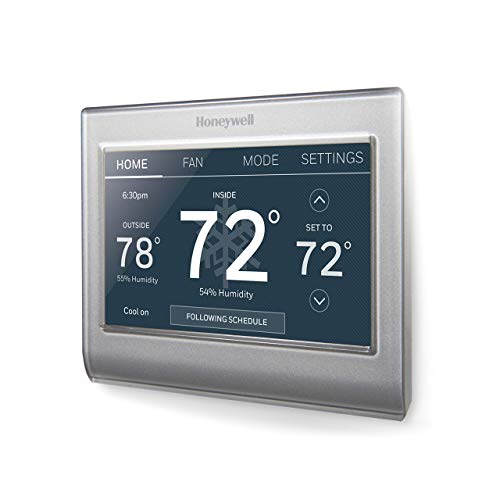
This color-display thermostat blends décor with function, offering flexible programming and energy rebate potential. It supports remote control and scheduling, making it suitable for users who appreciate a visual interface and customizable settings. Limitation: color display preference is cosmetic; the core functionality relies on programming and connectivity.
- Best for: Decor-conscious homes that want visual appeal
- Why selected: Flexible programming and energy rebates
ecobee Smart Thermostat Essential

The ecobee Essential emphasizes broad compatibility with many HVAC systems and ongoing software updates. It includes energy-saving features by adapting to your schedule and presence, making it a strong choice for households seeking versatility and long-term value. Note that compatibility varies by system, so checking ecobee’s compatibility checker is advised.
- Best for: Homes needing broad compatibility and updates
- Why selected: Energy savings and ongoing software improvements
- Caution: Check system compatibility before purchase
Buying Guide
What should I look for in a smartphone-controlled thermostat?
Key factors include compatibility with your HVAC system (including heat pumps), whether a C-wire is required, ease of installation, app quality, and energy-saving features like scheduling and geofencing. ENERGY STAR certification is a solid indicator of efficiency.
How does geofencing improve savings?
Geofencing uses your phone location to adjust temperature when you’re away or returning home. This can reduce energy use when no one is home and restore comfort before you return, optimizing daily energy consumption.
Is it better to choose a color display or a simple interface?
Color displays are mostly aesthetic and help with quick readability and matching decor. Functionality, scheduling flexibility, and app reliability tend to matter more for daily use.
What if my system isn’t compatible with a C-wire?
Some thermostats support non-C-wire configurations or use adapters. Verify wiring requirements for your HVAC setup before purchasing to avoid installation issues.
How important is the app ecosystem?
A well-supported app with remote control, usage reports, and easy installation steps enhances long-term value. Look for frequent updates and clear privacy protections.
FAQ
- Q: Do these thermostats require an internet connection?
A: Yes, most rely on Wi‑Fi to enable remote control and energy reports. - Q: Can I install these myself?
A: Many models support DIY installation with guided apps, but some configurations may require professional help. - Q: Will they work with Alexa or Google Assistant?
A: All listed models offer voice-assistant compatibility or app-based control, depending on the brand. - Q: Do these thermostats save money on energy bills?
A: They can help reduce energy use through scheduling, geofencing, and remote access, though savings vary by home and usage. - Q: How do I know which one is right for my system?
A: Check wiring needs (C-wire), system compatibility, and whether heat pump configurations are supported. - Q: Are there privacy concerns with smart thermostats?
A: Reputable models limit data sharing and offer privacy protections; review each product’s policy for details.