Looking for an effective roof ventilation fan to cool your attic, garage, or shed? This guide covers five top solar and electric attic fans that are well-suited for American homes. Each option targets a different need—high airflow, simple installation, weatherproof durability, or smart controls—so you can pick the best fit for your space and climate.
Buyer profiles at a glance:
– Best overall for solar efficiency: VEVOR 42W Solar Attic Fan
– Best for simple plug-and-play operation: DuskSnug 40W Solar Attic Fan
– Best for rugged, weatherproof use: HNRLOY 32W Solar Powered Attic Exhaust Fan
– Best for adjustable, quiet operation: DC HOUSE 32W Solar Roof Exhaust Fan
– Best for smart control and energy efficiency: Quietcool AFR SMT ES-2.0 Roof Mount Smart Attic Fan
| Product | Best For | Main Benefit |
|---|---|---|
| VEVOR 42W Solar Attic Fan | Energy-conscious homes | High airflow with smart control |
| DuskSnug 40W Solar Attic Fan | Simple DIY installs | Controller-free operation |
| HNRLOY 32W Solar Powered Attic Exhaust Fan | Extreme weather areas | IP68 weatherproof and durable |
| DC HOUSE Solar Attic Fan 32W | Large spaces | Strong 1600 CFM performance |
| Quietcool AFR SMT ES-2.0 | Smart features | App control and thermostat/humidistat |
VEVOR 42W Solar Attic Fan

The VEVOR unit provides a 42W MPPT regulator to maximize solar intake and suck hot air from the attic. With a brushless DC motor delivering up to 2800 CFM, it suits larger attic or garage spaces where rapid heat removal is needed. It includes built-in temperature sensors and a remote for convenient operation. The system is designed for all-weather performance and can switch from solar to electric at sunset to maintain cooling through the evening. Best for homeowners seeking strong solar-driven cooling with remote control for variable conditions.
- Best for high cooling demand spaces
- Better for weatherproof installations on metal or masonry roofs
- Limitations: Setup complexity may be higher than basic, controller configuration required for optimal use
DuskSnug 40W Solar Attic Fan

The DuskSnug model delivers 1800–2000 CFM with a 12-inch blade, powered by a 40W solar panel. It emphasizes simplicity with a controller-free design that automatically runs at sunrise and stops at dusk. The aluminum mesh and copper motor are built to resist weather, offering quiet operation alongside robust airflow. This option is ideal for homeowners who want a straightforward, low-maintenance solar vent without additional electronics or setup steps.
- Best for quick DIY installations
- Better for users who want a hands-off, automatic solar vent
- Limitations: No thermostat or humidity control; fixed operation window tied to sun
HNRLOY 32W Solar Powered Attic Exhaust Fan
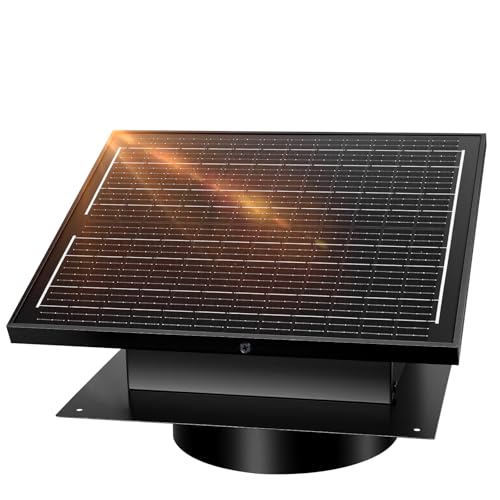
The HNRLOY unit uses a 32W solar panel with IP68-rated waterproof performance and a copper core brushless motor. It claims strong airflow up to 2500 sq ft coverage and is designed for off-grid operation with durable, weatherproof construction. The model supports multi-angle solar panel adjustments and continuous operation via AC/DC adapter in some configurations. Best for homes in wet or harsh climates where enduring performance matters.
- Best for weather-resistant installations
- Better for large, open spaces needing sustained airflow
- Limitations: Some configurations require an adapter for 24/7 operation
VEVOR Roof Exhaust Fan 500CFM / 900CFM

This model offers two adjustable speed settings, providing either 500 or 900 CFM with a high-power motor and a compact 21-inch base. The aluminum alloy housing and base contribute to durability, while dual speed control enables flexible ventilation for garages, kitchens, or bathrooms. Best for moderate airflow needs with a compact footprint, and for users who desire adjustable performance without adding complexity to the setup.
- Best for mid-range airflow with a compact design
- Better for spaces where variable airflow is useful
- Limitations: Not solar-powered; depends on electrical supply
DC HOUSE Solar Attic Fan 32W
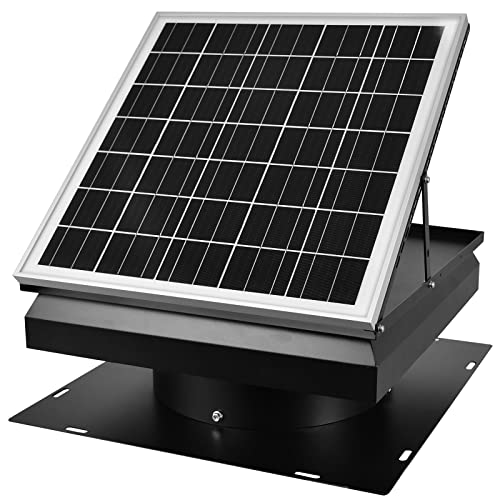
The DC HOUSE fan runs on 32W solar power and delivers up to 1600 CFM of airflow. It emphasizes full off-grid capability, with a weatherproof, family-friendly design intended for homes, garages, and greenhouses. The unit performs best when paired with existing vents to maximize overall attic circulation. It is suitable for larger spaces needing steady solar-driven cooling while avoiding grid power usage.
- Best for off-grid cooling with built-in solar power
- Better for homes needing a balance of airflow and energy savings
- Limitations: Large spaces may require additional vents to achieve optimal coverage
Quietcool AFR SMT ES-2.0 Roof Mount Smart Attic Fan

The Quietcool AFR SMT ES-2.0 is a smart attic fan designed for modern homes. It offers up to 1950 CFM with low power consumption (as low as 25 watts) and includes app control, a thermostat, and a humidistat. The unit ships with a long power cord for flexible installation and is plug-and-play for straightforward setup. Best for homeowners seeking smart control and precise climate management in an attic or roof space.
- Best for smart control and automation
- Better for precise temperature and humidity management
- Limitations: Requires app integration and power source; some users may need professional setup for in-duct integration
Buying Guide: Key Purchase Considerations
What should you consider before buying a roof ventilation fan? Start with airflow needs, roof type, and whether you prefer solar-powered operation or mains-powered reliability. Consider efficiency, weather resistance, and ease of installation. For solar models, check panel quality, motor durability, and whether the unit includes automatic switching at night or cloudy days.
- Airflow needs: Measure attic size in square feet and target CFM based on climate and insulation level. Higher CFM is better for large or hot spaces.
- Power source: Choose solar for off-grid operation and energy savings, or electric for consistent performance.
- Weatherproofing: Look for IP ratings and corrosion-resistant housings for wet or windy climates.
- Controls and automation: Thermostats, humidistats, and remotes add convenience and efficiency.
- Installation complexity: Some units are plug-and-play; others require wiring or professional mounting.
Frequently Asked Questions
- What is CFM and why does it matter for attic fans? CFM stands for cubic feet per minute and indicates airflow. Higher CFM removes heat faster but may require more power or vent openings.
- Do I need a thermostat or humidistat with a roof vent? A thermostat or humidistat helps regulate when the fan runs, improving comfort and energy use. Not all models include these features by default.
- Can solar attic fans run at night? Some models switch to electrical power automatically at night or on low-sun days, while others rely solely on daylight.
- Is installation difficult for a single-story home? Many solar attic fans are designed for easy DIY installation, but ensure roof type and mounting space are compatible with the chosen unit.
- Should I pair a solar attic fan with existing vents? Yes, pairing improves overall attic circulation and reduces hot spots when combined with existing vent pathways.
- What maintenance is required? Regularly remove dust from blades and verify weatherproof seals; solar panels should be kept clear of debris to maximize sun exposure.