Answering the common buyer question: which duct sealants and sealant aerosols deliver reliable, long-lasting seals for HVAC ductwork across residential and commercial settings? This guide highlights five top products suited for different needs—from fast-setting aerosol adhesives for duct wrap to durable silicone sealants for high-temperature or exterior applications. The top picks are best for: quick, temporary or semi-permanent fixes; fiber-reinforced and water-based sealants for standard duct systems; and extreme-temperature silicone options for harsh environments. Use the quick reference below to compare fundamentals at a glance.
| Product | Best For | Key Benefit |
|---|---|---|
| HVAC Guys ThermaTack Aerosol Spray Glue | Large duct wrap and insulation jobs | Wide web spray pattern for fast, even coverage |
| Red Devil 0841DX F-Seal 181 | All ductwork types (metal, fiberglass, flexible) | Fiber-reinforced for leak-free seals |
| Red Devil 0841DW F-Seal 181 White | Indoor/outdoor ducts and visible seams | Fiber-reinforced, weather-resistant |
| RectorSeal Duct Seal 81881 | Putty-style, hand-formed seals | Easy hand-molded application |
| DAP HVAC 100% RTV Silicone Sealant | Dry, weather-exposed or moving joints | Waterproof, flexible, cures fully |
HVAC Guys ThermaTack Aerosol Spray Glue

Purpose-built for adhering duct wrap and insulation, ThermaTack delivers strong, lasting bonds on duct insulation materials such as fiberglass, cotton liners, reflective bubble wrap, and more. The wide web spray pattern promotes even coverage, reducing waste and speeding up large insulation projects. Fast-tacking bonds allow temporary or permanent fixes by adjusting spray application.
Best for: insulation installers and contractors working on large duct wrap projects or temporary holding of materials before final fastening. Caution: for some surfaces, allow tack time before joining pieces to ensure maximum bond strength.
Red Devil 0841DX F-Seal 181 Duct Seal
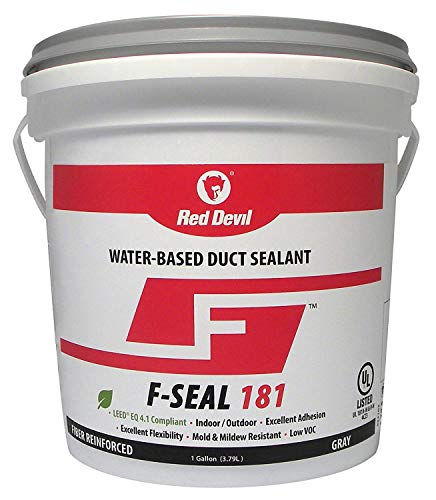
Fiber-reinforced water-based duct sealant designed for all HVAC ductwork types, including metal, fiberglass, and flexible ducts. It is suitable for indoor and outdoor use due to its weather-resistant properties, which help maintain a tight seal across temperature variations and exposure conditions.
Best for: standard to demanding duct runs needing a robust, versatile sealant. Limitation: color is gray, which may affect appearance in visible, finished ductwork areas.
Red Devil 0841DW F-Seal 181 White

White, fiber-reinforced duct sealant with the same HVAC-grade performance as the DX variant. It provides a durable, weather-resistant seal for ducts exposed to varying interior or exterior conditions. The white formulation is often preferred for visible seal lines or particular installation aesthetics.
Best for: visible seams or high-visibility ductwork where color matching matters. Caution: ensure correct surface preparation to achieve the best bond.
RectorSeal Duct Seal 81881

A gray, putty-like duct seal compound that is hand-moldable and reusable. It adheres to clean dry surfaces and remains workable within a broad temperature range, from 25°F to 120°F. It is non-toxic and designed to create an air- and water-tight seal while resisting water, alcohol, and mild acids and bases.
Best for: hands-on projects or where a moldable seal is required at joints, ends, or service openings. Limitation: not a spray or aerosol; requires manual shaping and application.
DAP HVAC 100% RTV Silicone Sealant

This 100% RTV silicone sealant provides a waterproof, weather-resistant seal suitable for air conditioners, ducts, vents, and other HVAC penetrations. It remains flexible to accommodate movement and temperature changes. It cures tack-free in about 15 minutes and fully within 24 hours.
Best for: joints and seams exposed to weather or vibration where lasting flexibility is essential. Limitation: not paintable; consider priming or surface prep if painting is required later.
Buying Guide
What to consider when choosing HVAC duct sealants and aerosols:
- Application method: Are you sealing wrap, joints, or large-diameter ducts? Aerosol adhesives work well for wrap, while putty or sealants suit joints and seams.
- Material compatibility: Check whether the product bonds to metal, fiberglass, plastic, or concrete to match your duct system.
- Temperature tolerance: For environments with extreme heat or outdoor exposure, select silicone or fiber-reinforced formulations rated for high temperatures.
- Durability and movement: HVAC joints experience expansion and contraction; choose flexible sealants that won’t crack or peel.
- Indoor vs outdoor use: Outdoor-ready products resist moisture and UV exposure; interior applications may prioritize ease of removal or color.
- Ease of application: Aerosols provide quick coverage; putty-like sealants allow moldable shaping; consider surface prep needs and curing times.
FAQ
- Q: Can these sealants be used on metal ducts? A: Yes, several products are certified or designed for metal ductwork, including UL-certified options.
- Q: Are aerosol duct sealants suitable for large insulation projects? A: They are often best for surface adhesion of insulation wraps and quick bonding rather than full-duct sealing.
- Q: Do these products require curing time before pressurizing the system? A: Most require some tack time or curing; refer to the product’s drying and curing guidelines.
- Q: Can I use White sealants on interior ducts to match aesthetics? A: White or lighter colors are commonly chosen for visible seams; confirm compatibility with the duct material.
- Q: Are there environmentally friendlier options for duct sealing? A: Water-based and fiber-reinforced formulations tend to have lower odor and fewer solvents; check MSDS for details.
- Q: Which product is best for extreme temperature conditions? A: Extreme-temperature silicone sealants are designed for environments from -60°F to 400°F.