If you want to keep your home warmer in winter and cooler in summer, insulated window AC covers are a practical upgrade. They help block drafts, reduce energy loss, and protect outdoor and indoor units from weather and dust. This guide highlights five top options and explains who should choose each. The selections are suitable for various window AC sizes and configurations, from standard rectangular units to Midea U‑shaped models.
What buyer type each top product is best for: homeowners seeking seasonal energy savings and weather protection; renters needing easy installation without tools; households with outdoor units exposed to sun, rain, or snow; and owners of U‑shaped units requiring a tailored fit. Below is a quick reference table of the featured products to compare size, insulation approach, and usage context at a glance.
| Product | Best For | Highlights |
|---|---|---|
| Breeze Stop Surround Insulation Side Panels | Windows 36″ wide or smaller, indoor use | 1″ thick foam, fits existing AC sides |
| Porch Shield Outdoor Window AC Cover | Outdoor units up to 21″L x 16″D x 15″H | 3‑in‑1 material, UV and weather protection |
| i frmmy Outside Insulated Window Cover | Outdoor units, general weather protection | Triple‑layer construction, adjustable fit |
| Amerbro Window AC Unit Cover (Beige) | Standard outdoor units, easy fit | Thermal trilayer for insulation |
| BEWAVE Indoor Cover with Drawstrings | Indoor window AC units needing snug, adjustable fit | Drawstring closure, rewashable |
Breeze Stop Surround Insulation Side Panels
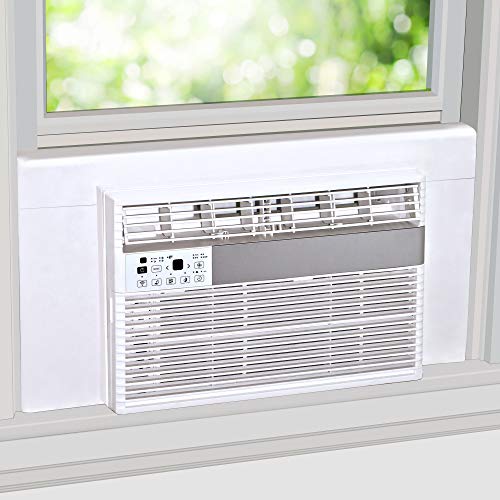
The Breeze Stop panels are 1″ thick insulating foam covered with white vinyl. They are designed to fit windows 36″ wide or smaller, with cut-to-size flexibility. They cover the existing pull-out plastic sides that come with an AC and do not replace them. Best for indoor spaces where the goal is to reduce drafts around a standard window AC in milder climates. A potential limitation is that these panels must be cut to fit precisely, which may add setup time for unusual window dimensions.
Porch Shield Outdoor Window AC Cover

Porch Shield offers a universal 21″L x 16″D x 15″H outdoor cover built from waterproof polyester, PE sponge, and aluminum foil. The three‑in‑one fabric guards against sun, rain, and wind while the thermal insulation helps minimize heat loss. This option is well suited for outdoor windows with standard rectangular AC units and emphasizes durability against long‑term exposure. Measure first to ensure a proper fit for your model, as mismatches can reduce effectiveness.
Outside Insulated Window AC Cover (i frmmy)

i frmmy’s outdoor cover features a triple‑layer construction: a black waterproof outer layer, aluminum foil mid‑layer for heat reflection, and a pearl cotton inner insulation layer. It includes adjustable straps with metal buckles to secure the fit against wind. Choose this if you need robust weather resistance and a more customizable fit for outdoor AC units, with a caveat that the fit may require careful measurement to avoid wind gaps.
Amerbro Window AC Unit Cover (Beige)

Amerbro’s 3‑layer insulation uses a 600D Oxford outer fabric, 2mm pearl cotton insulation, and a heat‑reflective aluminum foil lining. This design aims to block drafts and reflect heat, improving energy efficiency for outdoor units up to standard dimensions. It also notes an easy‑fit bottom seam designed for brackets, making installation simpler if your unit has mounting hardware. A limitation is to verify compatibility with non‑standard bracket configurations before purchasing.
BEWAVE Indoor Window AC Unit Cover

BEWAVE’s indoor cover uses a drawstring closure and a durable 210D polyester with cotton. It’s designed to tighten around indoor units to reduce dust infiltration and prevent cold air from leaking into the room. The product is machine washable and reusable, which can appeal to households seeking a low‑effort maintenance option. It’s best for renters or spaces where a simple, tool‑free installation is preferred, but note that interior covers may not address outdoor weather exposure as effectively as external covers.
Buying Guide
What to consider when choosing an insulated window AC cover:
- Outdoor vs. indoor placement: Outdoor covers should prioritize waterproofing and wind resistance; indoor covers should emphasize dust control and fit around the unit’s interior cavity.
- Fit and measurements: Accurately measure width, height, and depth. Look for covers that mention compatibility with your model type (standard rectangular or Midea U‑shaped).
- Insulation layers: Multi‑layer designs (combining waterproof fabric, foam or pearl cotton, and aluminum foil) tend to offer better temperature control and draft reduction.
- Installation ease: Drawstrings, adjustable straps, or bottom seams that accommodate mounting brackets can simplify setup and maintenance.
- Durability and weather exposure: For outdoor units, choose covers with UV resistance, sturdy stitching, and closures that resist wind and rain.
- Maintenance: Removable or machine‑washable inner layers can simplify cleaning and extend the life of the cover.
What to avoid
- Overly tight fits that compress the AC unit’s airflow or brackets, potentially affecting performance.
- Non‑breathable materials in extreme climates, which can trap moisture and promote mold or mildew.
- Unverified compatibility with non‑standard window units or U‑shaped models without proper sizing checks.
Usage scenarios and recommendations
- Best for evident outdoor exposure: Porch Shield and i frmmy covers offer robust weather resistance and insulation for exterior units.
- Best for indoor energy savings: BEWAVE or Breeze Stop panels help reduce drafts around indoor units without requiring outdoor exposure.
- Best for U‑shaped units: Forestchill and Amerbro options provide compatibility notes and trilayer insulation for specialized shapes.
FAQ
Do insulated window AC covers actually save energy?
Yes, by reducing drafts and minimizing heat transfer around the unit, which can lower heating and cooling loads.
How do I measure my AC unit for a cover?
Measure width (W), height (H), and depth (D) of the unit. Compare to product dimensions and stated compatibility.
Can I use indoor and outdoor covers together?
For maximum protection, use outdoor covers on exterior units and indoor covers on interior units where appropriate.
Are covers easy to install and remove?
Many models feature adjustable straps, drawstrings, or Velcro; most are designed for tool‑free installation and removal.
Will covers fit all Midea U‑shaped units?
Some covers advertise compatibility with Midea U‑shaped models; verify exact dimensions before ordering.
How should I maintain these covers?
Choose machine‑washable or easily wipeable fabrics and follow manufacturer care instructions to extend life.