Looking to stop refrigerant leaks quickly and safely, with minimal tools? This guide highlights five top-rated leak sealants designed for most HVAC systems up to 5 tons. Each option is best for different needs, from simple quick injections to multi-purpose kits with UV dye. Whether you’re a DIY homeowner, a service tech, or a business manager maintaining commercial equipment, these products help seal leaks, remove moisture, or locate large leaks. The summary table below compares key buyer-friendly details to help you choose efficiently.
| Product | Best For | Note |
|---|---|---|
| Leak Saver Direct Inject AC Leak Sealer | Most systems up to 5 tons; preventative maintenance | USA-made |
| Leak Saver Direct Inject Ultimate 3-in-1 | Combined sealant, moisture remover, UV dye | Professional-grade |
| Leak Saver Direct Inject UV | UV dye to detect large leaks | Light up leaks under UV |
| Leak Saver Direct Inject AC Leak Sealer Small System 1 Ton | Small systems up to 1 ton | Compact package |
| Leak Saver Direct Inject AC Leak Sealer 3-Pack | Bulk inventory; multiple applications | Cost-effective |
Leak Saver Direct Inject AC Leak Sealer

What it is: A direct-inject leak sealer designed to permanently seal small refrigerant leaks where the charge isn’t fully depleted within 7 days. It can circulate safely for preventative maintenance and works with most systems and refrigerants.
Best for: Homeowners and technicians with basic manifold gauge sets who need a straightforward installation. Suitable for central AC, automotive, refrigerators, ductless mini-splits, heat pumps, and more.
Why chosen: It offers a simple injection method without syringes or hoses, appealing to users who value quick setup and broad compatibility. It covers most refrigerants including R410A, R22, R134A, and many others.
Limitations: For automotive systems, standard adapters may still be required. Mini-splits might need specific charging adapters. Not compatible with ammonia.
Leak Saver Direct Inject Ultimate 3-in-1
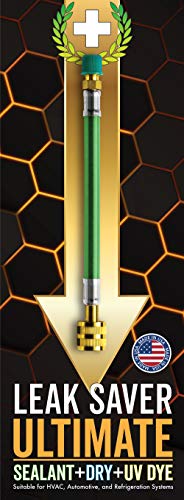
What it is: A 3-in-1 solution that combines sealant, moisture remover, and UV dye for locating large leaks. It seals leaks, removes moisture, and helps detect leaks with UV light.
Best for: Professionals or meticulous DIYers who want a single kit serving three purposes. Works across central ACs, homes, commercial systems, and cars.
Why chosen: The UV dye feature provides a proactive approach to leak detection, reducing diagnostic time. It remains compatible with a wide range of refrigerants.
Limitations: The dye requires a UV light to maximize leak visibility; not necessary for all users but helpful for traceability. Not compatible with ammonia.
Leak Saver Direct Inject UV

What it is: Leak sealant with added UV dye to locate large leaks. It injects directly into the system with a basic manifold gauge setup or Leak Shot Injection Kits.
Best for: Technicians who routinely trace larger leaks and need quick visualization under UV light.
Why chosen: The integrated UV dye makes identifying significant leaks faster and more precise. Broad refrigerant compatibility.
Limitations: UV dye requires proper lighting to reveal leaks; not all inspections require dye. Automotive adapters may still be needed for some vehicles.
Leak Saver Direct Inject AC Leak Sealer Small System 1 Ton

What it is: A compact leak sealer for small systems up to 1 ton. It seals small refrigerant leaks and is compatible with all listed systems and refrigerants.
Best for: Small-room AC units, window units, or compact ductless systems where space and ease of use are priorities.
Why chosen: The small-system variant provides a targeted option for limited-capacity setups while staying within the same broad compatibility range.
Limitations: It has a lower tonnage limit; for larger systems, choose a 5-ton-capable formula to ensure adequate coverage.
Leak Saver Direct Inject AC Leak Sealer 3-Pack

What it is: A three-pack of leak sealant solutions for multiple or bulk applications. Each bottle follows the standard direct-inject method for quick use.
Best for: Maintenance teams, rental properties, or households needing several applications over time without repeatedly purchasing new kits.
Why chosen: The 3-pack offers value and convenience for ongoing maintenance across different systems or multiple units.
Limitations: The kit replicates standard functionality across bottles; ensure you have the right adapters for automotive or mini-split setups if used outside typical home HVAC systems.
Buying Guide
What to consider when choosing a leak sealer
System size and type: Confirm the product’s tonnage rating aligns with your HVAC system. For larger homes or commercial setups up to 5 tons, choose the 3-in-1 or direct-inject variants that advertise up to 5 tons. For small rooms or compact units, a 1-ton option may be more cost-effective.
Compatibility: Ensure the product supports the refrigerants in your system (R410A, R22, R134A, etc.) and oils used in your unit. Avoid products that list ammonia as a compatible refrigerant if your system uses other types.
Installation method: Look for direct-inject designs that avoid syringes or hoses, and consider whether you prefer UV dye for leak detection or moisture removal features for a more complete service.
Detection features: UV dye can help locate leaks quickly, while moisture removers improve long-term seal integrity. UV-enabled options are especially useful for technicians during inspections.
Safety and compatibility notes: Check for 100% polymer-free formulas if you have sensitivity to additives or concerns about residue blocking valves or TXVs. Also verify that the product’s use is permitted for your specific system type (cars vs. residential vs. commercial).
How to use a leak sealer effectively
Follow the manufacturer’s injection method precisely. Prepare the service ports, connect a basic manifold gauge, and inject the recommended amount. For systems using UV dye, perform leak detection under proper lighting to identify the site. If moisture is present in the system, use the moisture remover feature if available.
After application, monitor the system pressure and refrigerant charge to determine if a follow-up service is needed. Retain installation videos or manuals for reference during future maintenance.
Multiple options: when to buy in bulk
A 3-pack or multi-pack is ideal for property managers or service technicians who manage several units. Bulk purchases reduce per-unit costs and ensure you have replacements on hand for ongoing maintenance or preventive treatments.
Maintenance considerations
Even with a leak sealer, routine maintenance and periodic inspections remain essential. Combine sealant use with proper filtration, refrigerant charge management, and moisture control to keep HVAC systems functioning efficiently over time.
FAQ
What is a leak sealer used for in HVAC systems?
A leak sealer is formulated to permanently seal small refrigerant leaks in HVAC systems and can be used for preventative maintenance to help reduce future leaks.
Can these products be used on all refrigerants?
Most Leak Saver products are designed to work with a wide range of refrigerants, but not ammonia. Always check compatibility for your specific refrigerant type.
Do I need UV dye?
UV dye helps locate larger leaks by lighting up under a UV flashlight. It’s helpful for diagnostics but not strictly necessary for all users.
Is direct injection safer or more difficult than syringes?
Direct injection is generally easier and cleaner, avoiding syringes and hoses. It is designed for straightforward installation with standard gauge sets or kits.
When should I replace or refill the product?
Many products are reusable or refillable; check the product’s US patent information or kit details for refill options and long-term use guidelines.
Are there any situations where a leak sealer should not be used?
Do not use if the leak is large enough to require professional repair, or if the system uses incompatible refrigerants such as ammonia. Always follow safety and disposal guidelines.