Answering your search for compact, energy-efficient climate control, these mini split AC systems deliver reliable cooling and heating for varied spaces. Best for small to mid-size rooms, open-plan areas, bedrooms, home offices, and garages, they offer inverter efficiency, multiple operation modes, and simple installation. This guide highlights five top choices, explaining who each unit is best for and why it stands out, plus practical buying tips and common questions to help you compare at a glance.
Summary of selected products for quick reference
- Albott Mini Split Air Conditioner and Heater, 12,000 BTU — Best for mid-sized living spaces and budgets seeking energy efficiency.
- Rellytech Mini Split AC/Heating System, 18,000 BTU — Best for larger rooms or small homes needing strong cooling and heating.
- Rellytech Mini Split AC/Heating System, 9,000 BTU — Best for bedrooms and compact spaces with steady comfort.
- Rellytech Mini Split AC/Heating System, 12,000 BTU — Best for versatile rooms up to 750 sq ft with strong performance.
- Senville LETO Series Mini Split AC/Heating System, 12,000 BTU — Best for Alexa-enabled, versatile all-season use in homes or small business spaces.
Albott 12,000 BTU Mini Split: Inverter Efficiency And Self-Cleaning

Overview and best-fit scenario: This all-in-one unit cools up to 750 sq ft with 12,000 BTU capacity and SEER2 18 efficiency. It provides cooling, heating, dehumidifying, and a fan mode with temperature control from 61°F to 90°F. A 24-hour timer and sleep mode add convenience for daily use. Best for mid-sized living rooms, open-plan spaces, or studio apartments where energy savings matter without sacrificing comfort.
Why it’s chosen: The inverter-based heat pump combines strong airflow with efficient energy use, helping reduce operating costs while maintaining comfort across seasons. It operates reliably from 5°F to 122°F, supporting year-round comfort in varied climates. The self-cleaning feature helps maintain performance with less maintenance. Consider this option if you want a compact, all-season system for a single large room or an open area around 600–750 sq ft.
Limitations or caution: While suitable for moderate spaces, very large, multi-room layouts may require additional units for even temperature distribution. Installation requires attention to indoor and outdoor clearances for best performance.
Rellytech 18,000 BTU Mini Split: Whole-Home Comfort

Overview and best-fit scenario: This 18,000 BTU unit is designed for larger spaces up to 1,250 sq ft, providing strong cooling and heating with four operation modes and a smart Eco setting. Ideal for open living areas, finished basements, or small homes needing consistent climate control and energy-conscious operation.
Why it’s chosen: It offers substantial capacity for bigger rooms while incorporating energy-efficient features like Eco mode. The 90° vertical swing and multiple fan speeds help tune comfort precisely, which is beneficial in open floor plans or zones with uneven heat loads. Choose this if you need a higher-capacity option that still prioritizes efficiency.
Limitations or caution: Higher BTU models may require professional sizing and proper line-set pre-charging for optimal operation. Ensure electrical availability (230V) and outdoor unit space for best results.
Rellytech 9,000 BTU Mini Split: Ideal For Bedrooms
Overview and best-fit scenario: The 9,000 BTU unit provides efficient cooling and heating suitable for bedrooms, small living rooms, or home offices up to about 550 sq ft. It includes four modes and an Eco setting to control energy use while maintaining comfort, with a temperature range from 61°F to 88°F.
Why it’s chosen: This model emphasizes efficiency and quiet operation in smaller spaces. The compact footprint and broad comfort range make it a dependable choice for night-time use or secondary rooms where energy savings matter most. Opt for this if you mainly need climate control for a single room or small apartment zone.
Limitations or caution: It may be undersized for larger open areas. Ensure space for adequate air circulation and consider zoning with additional units for multi-room comfort.
Rellytech 12,000 BTU Mini Split: Strong All-Rounder
Overview and best-fit scenario: This 12,000 BTU unit serves up to 750 sq ft, combining robust cooling and heating with a similar four-mode setup and Eco energy optimization. It’s a versatile option for living rooms, bedrooms, and home offices where a mid-size room requires dependable climate control.
Why it’s chosen: It balances capacity and efficiency, offering flexible airflow with a 90° swing to adapt to different layouts. It’s a “choose this if” option for spaces that occasionally see higher heat or cooling demands but aren’t sprawling open-plan areas.
Limitations or caution: Like other ductless systems, proper installation is key. Ensure correct refrigerant pre-charge and seal integrity to maintain performance and energy savings.
Senville LETO 12,000 BTU: Alexa-Enabled Convenience
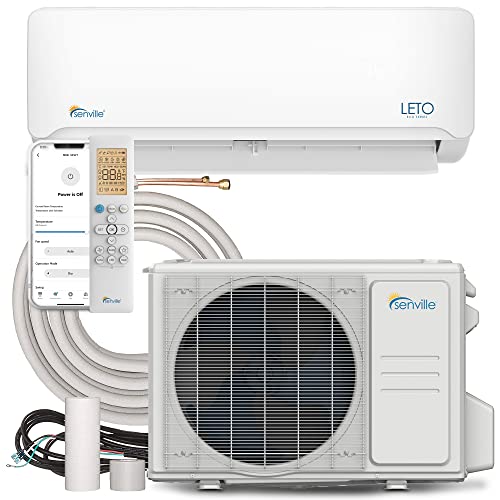
Overview and best-fit scenario: This 12,000 BTU model from Senville offers Alexa compatibility and a four-in-one operation (cooling, heat pump, dehumidifier, fan) with a DC inverter and high efficiency. It’s suitable for bedrooms, living rooms, or small offices that benefit from voice control and energy savings.
Why it’s chosen: The Alexa integration provides hands-free control and scheduling, while the all-season capability supports both cooling in summer and heating in winter. It’s a good pick for tech-friendly homes and small commercial spaces that require flexible climate management.
Limitations or caution: Ensure your smart home ecosystem supports the chosen integrations. Some users may prefer non-voice control setups for privacy concerns or simplicity.
Buying Guide: Key Considerations For Mini Split Systems
- Room size and BTU needs: Match unit capacity to space size. Too small a unit leads to longer runtimes and uneven comfort; too large can cause short cycling and inefficiency.
- Climate and operating range: Look for models with wide operating ranges to handle extreme temperatures, especially in unheated spaces or hot summers.
- Energy efficiency: SEER2 ratings indicate energy efficiency. Higher values generally translate to lower operating costs over time.
- Installation considerations: Ductless systems require indoor mounting, outdoor unit placement, and refrigerant line routing. Professional installation ensures correct charge and sealing.
- Controls and smart features: Inverter technology improves efficiency. Consider whether you want app control, voice compatibility, timer functions, and memory presets.
- Maintenance needs: Self-cleaning features and filter accessibility can reduce maintenance time. Plan for regular filter cleaning to sustain air quality.
- Noise and comfort: Check outdoor and indoor unit noise levels. Quiet operation is important for bedrooms and study areas.
FAQs
- What size mini split do I need for a 600 sq ft space?
– A 6,000–9,000 BTU unit is typically suitable for 300–700 sq ft, depending on climate and insulation. For 600 sq ft with mixed-use space, consider a 12,000 BTU unit if there are high heat loads or poor insulation. - Are inverter mini splits worth it?
– Yes. Inverter technology adjusts compressor speed for efficient, steady temperatures and lower energy bills than traditional fixed-speed units. - Do mini splits require professional installation?
– For optimal performance and refrigerant handling, professional installation is strongly recommended, though some smaller setups may be DIY with proper guidance and permits where required. - Can mini splits heat a house in winter?
– Many models operate as heat pumps, delivering heating even in cool temperatures. Extreme cold may reduce efficiency; check the specified operating range. - Is it better to buy multiple smaller units or one large unit?
– Zoning with multiple smaller units provides better temperature control and energy savings in multi-room homes, compared to a single large unit cooling an entire house. - How long do mini split systems last?
– Proper maintenance and installation can extend life to 15–20 years or more, depending on usage and environment.