When choosing between a mini split system and electric heat for a space, the answer depends on performance, efficiency, and your living needs. This article highlights five top mini split options and explains how they compare to traditional electric heating. The top picks are best for small apartments, larger rooms, offices, and sunrooms. Use this guide to identify which system fits your space, climate, and budget, with clear pros and drawbacks for each option.
| Product | Best For | Key Advantage |
|---|---|---|
| Albott 12,000 BTU Mini Split (B0GMDB62W1) | Medium rooms up to 750 sq ft | High SEER2 18, inverter efficiency |
| Mitsubishi 12,000 BTU (B0F7MM67F7) | Coastal or contaminated outdoor settings | Pro-grade durability with corrosion protection |
| Senville LETO 9,000 BTU (B00UV3LGPY) | Smaller spaces or bedrooms | Alexa-enabled and versatile 4-in-1 functions |
| Albott 24,000 BTU (B0GMDD6QHY) | Larger living areas up to 1,550 sq ft | Higher capacity with strong year-round comfort |
| EXNOS 12,000 BTU (B0H15DXB8L) | Offices or sunrooms needing quiet nights | Energy-efficient with ECO mode |
Buyer tip: mini splits provide both cooling and heating, often with better efficiency than central electric heat in irregular or smaller spaces. If you primarily need heat in cold months, consider model capacity and performance at low temperatures. For rapid temperature changes or quieter operation, check the inverter technology and compressor design. These five options cover a spectrum from compact to higher-capacity units, suitable for different rooms and energy goals.
Albott 12,000 BTU Mini Split: All-in-One Comfort

Best For: Medium rooms up to 750 sq ft. This 12,000 BTU system combines cooling, heating, dehumidifying, and fan modes with a SEER2 18 rating. It supports a wide temperature range (61°F–90°F) and includes a 24-hour timer and sleep mode for daily comfort. It’s designed for year-round use in varied climates and performs well with inverter-based efficiency.
Why selected: Strong energy performance and all-in-one control make it a balanced choice for living rooms or open-plan spaces where both heat and cooling are needed. The self-contained design favors quick installation for homeowners. Caution: installation requires proper outdoor-to-indoor connections; ensure clearance and electrical setup comply with local codes.
Mitsubishi 12,000 BTU: Durable Coastal-Ready System

Best For: Rooms up to 550 sq ft where climate conditions may include coastal exposure or air pollutants. The unit uses an anti-corrosion treatment on outdoor heat exchanger fins to resist corrosion and a precise inverter-driven compressor that matches capacity to demand.
Why selected: Known for reliability and durable outdoor components, this option suits spaces near the coast or in industrial areas. Caution: Mitsubishi models can be on the higher end of price; budget planning may be a consideration. Better for: users prioritizing long-term durability and steady performance in challenging outdoor environments.
Senville LETO 9,000 BTU: Alexa-Enabled Comfort
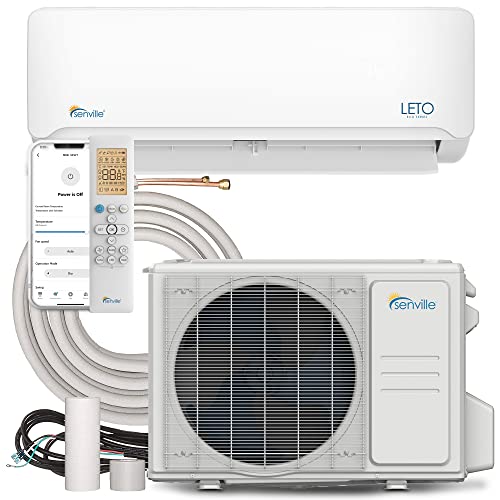
Best For: Smaller bedrooms or offices up to 750 sq ft. This 9,000 BTU system offers a 4-in-1 function with heating, cooling, dehumidification, and fan, plus compatibility with Alexa and app control for remote operation. It uses DC inverter technology for efficiency and quiet operation.
Why selected: Great for personal spaces where voice control and space-saving design are valuable. Caution: lower cooling/heating capacity compared with larger units may be less suitable for very large rooms or high heat loads.
Albott 24,000 BTU: Peak Capacity for Bigger Areas
Best For: Larger living spaces up to 1550 sq ft. This system provides 24,000 BTU of cooling and heating with a SEER2 18 rating, suitable for open-concept rooms, basements, or additions that demand substantial climate control.
Why selected: Higher capacity reduces the need for multiple units in medium-to-large areas. Caution: higher upfront equipment costs and professional installation may be required for 24,000 BTU systems. Choose this if you need strong performance across a big space.
EXNOS 12,000 BTU: Quiet, Energy-Efficient

Best For: Offices or bedrooms up to 750 sq ft where quiet operation is a priority. The unit features a SEER2 19 rating and ECO mode for reduced energy consumption, with a sleep mode that helps maintain comfortable temperatures overnight.
Why selected: Excellent balance of efficiency and quiet performance, suitable for spaces where night-time noise must be minimized. Caution: some users may prefer higher heating capacity if used in very cold climates; check local heating needs when choosing.
Buying Guide: Key Considerations
- Room size and heat load: Match BTU to space; undersized units struggle to maintain comfort, while oversized units may short-cycle and waste energy.
- Climate and low-temperature performance: Inverter heat pumps perform differently at very cold outside temperatures; verify operating range if you live in freezing climates.
- Energy efficiency: Look for SEER2 and HSPF ratings; higher ratings typically mean lower operating costs over time.
- Installation requirements: Ductless mini splits need outdoor clearance and proper electrical connections; professional installation is often recommended.
- Smart features and control: Inverter technology, app control, and voice integration can improve convenience and scheduling.
- Noise levels: Especially important for bedrooms and study areas; check decibel ratings or sleep modes.
- Longevity and outdoor durability: Systems exposed to harsh weather benefit from corrosion protection and robust outdoor components.
FAQ
- What is the main difference between mini splits and electric heat?
– Mini splits provide both cooling and heating using an inverter-driven compressor, while electric heat refers to electric resistance heating, which is typically less energy-efficient for heating large spaces. - Are mini splits expensive to install?
– Installation can vary, but professional installation is often needed, especially for higher-capacity units or multi-zone systems. - Do mini splits work well in cold climates?
– Many models offer heat pump functionality down to moderate low temperatures, but performance may vary by model and climate. - Which mini split is best for a small bedroom?
– A smaller unit like 9,000 BTU or 12,000 BTU with inverter technology provides balanced heating and cooling with quiet operation. - Can I control a mini split with smart home devices?
– Yes, several models support Alexa or app-based control for remote operation and routines. - What should I consider for energy savings?
– Look for high SEER2/HSPF ratings, ECO modes, and variable-speed compressors that adjust output to demand.