Find the right plastic condenser mounting pad for outdoor HVAC and mini-split setups. This guide targets buyers seeking lightweight, durable, and weather-resistant pads that stabilize outdoor condensers and reduce vibration. The top picks are best for different environments: urban patios, grassy yards, and rugged job sites. Each product section highlights who it’s best for, why it was chosen, and any practical limitations to consider. A quick comparison table helps you compare size, load capacity, and material at a glance.
| Product | Material | Approx. Size | Best For |
|---|---|---|---|
| Diversitech EL3636-3 E Lite | Plastic (PP) | 36″ x 36″ x 3″ | Heavy outdoor units and general equipment mounting |
| DUPDMKIN 4 Pack Mini Split Pad | Rubber | 4 pads per pack | Vibration reduction for heavy outdoor units |
| Cestluck Mini Split Pad | Plastic | 34.6″ x 18.1″ x 2″ | Uneven ground, vibration control |
| Toutgood Mini Split Pad | Plastic | 34.6″ x 18.1″ x 2″ | Stable base on soil/grass/gravel |
| ComfortUp HDPE Condenser Pad | HDPE | 18″ x 36″ x 3″ | Durable, weather-resistant base for outdoor condensers |
Diversitech EL3636-3 E Lite Plastic Equipment Pad

Best for: Outdoor HVAC units and general equipment mounting in moderate weather. This injection-molded polypropylene pad is lightweight yet rugged, providing a stable base that resists weathering and shifting. The subtle top texture helps prevent equipment movement during operation, improving reliability in windy or uneven ground conditions. A potential limitation is the fixed size; ensure the 36″ by 36″ footprint suits your unit.
DUPDMKIN 4 Pack Mini Split Pad

Best for: Mini split systems requiring strong vibration isolation. The four rubber isolator mounts provide high load support when paired with a mounting bracket, delivering stable performance for heavy outdoor units. It’s a strong choice where vibration is a concern. Caution: rubber pads may compress slightly over time, potentially affecting levelness on soft ground.
RecDec 4 Pack Mini Split Anti-Vibration Pads

Best for: Versatile dampers for ductless A/C and outdoor equipment. Each rubber pad acts as a shock absorber to reduce vibration and noise. Suitable for use under couches, washers, or compressors in addition to condensers. Limitation: rubber pads rely on a stable surface; very soft soil may still shift under heavy loads.
Cestluck Mini Split Pad for AC Condenser
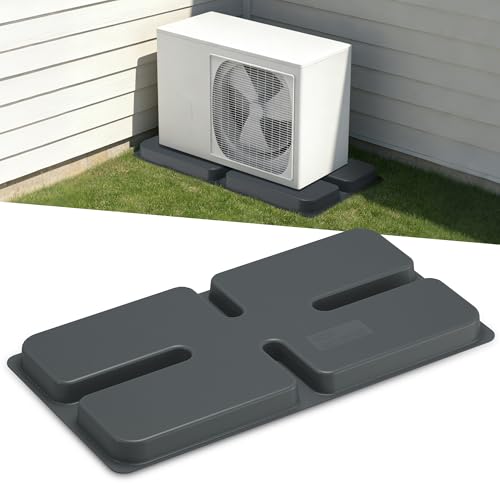
Best for: Ground-level mini split condensers on uneven surfaces. The reinforced bottom design helps prevent sinking and tilting, while a textured surface reduces unit movement. The pad supports up to 770 lbs, which covers most residential condensers. Watch for compatibility with floor-mounting bases if your setup requires a two-piece system.
Toutgood Mini Split Pad for Condenser

Best for: A stable, all-plastic base with anti-slip texture and reinforcement ribs. The design emphasizes load distribution and friction to minimize movement on soil, grass, or gravel. It’s suitable for a wide range of outdoor equipment. Limitation: ensure the unit weight aligns with the 770 lbs load capacity stated for many installations.
ComfortUp HDPE Condenser Mounting Pad

Best for: Stable, long-lasting base for ductless mini-split outdoor units. Made from high-density polyethylene (HDPE), this pad resists weathering, moisture, and ground contact for durable outdoor use. A potential limitation is the 18″ width may be narrow for very wide condensers; verify fit with your unit’s footprint.
Buying Guide: Key Considerations For Plastic Condenser Mounting Pads
- Load capacity: Match pad weight support to your condenser and any mounting hardware to avoid sinking or tilt.
- Ground surface compatibility: Consider whether you’ll place the pad on soil, grass, gravel, or solid concrete.
- Material durability: Plastic pads made from PP or HDPE offer weather resistance and corrosion protection; rubber pads excel at vibration dampening but may wear over time.
- Size and footprint: Confirm the pad dimensions align with your condenser’s base; larger footprints can improve stability on uneven ground.
- Anti-slip and anti-vibration features: Look for textured surfaces and beneath-pad ribs to minimize movement and noise.
- Drainage and elevation: Some designs raise the unit slightly to improve drainage and airflow underneath.
- Installation considerations: Some pads are designed to be fixed with screws or clips; others rely on friction and surface texture.
Buying tips by scenario: choose a larger, texture-rich plastic pad for broad outdoor units in windy areas; select rubber isolators for high-vibration mini splits; and prioritize HDPE or reinforced plastic for longevity in harsh climates. If you need a base that’s easy to install on uneven terrain, prefer pads with ribbed bottoms and anti-slip surfaces.
Frequently Asked Questions
- Q: Do plastic condenser pads require maintenance? A: Minimal maintenance is needed; inspect for cracks or insufficient leveling after extreme weather and relevel if needed.
- Q: Can pads be used on grass or soil? A: Yes, many pads are designed for soft ground, but ensure the load is appropriate and the surface is reasonably level.
- Q: Are these pads compatible with all mini-split brands? A: They are designed to accommodate a range of outdoor condensers, but verify dimensions and load limits for your model.
- Q: Do pads prevent water damage to condensers? A: Elevating the unit and providing drainage underneath helps reduce moisture-related issues, depending on the pad design.
- Q: What is the benefit of anti-vibration pads? A: They reduce transmitted vibrations and noise, protecting the unit and extending life.
- Q: Should I mount pads with screws? A: Some pads require expansion screws or mounting clips; others rely on a careful placement, so follow manufacturer guidance.