Answering the core buyer question: which pool heat exchangers and water-to-air systems deliver reliable heating or cooling for residential setups? This guide highlights five top products, ideal for pool and spa enthusiasts, homeowners with outdoor wood boilers, and individuals seeking versatile heat transfer options. The selections emphasize corrosion resistance, capacity, and installation practicality. Best for outdoor pools with larger water volumes, better for spa or hot tub enthusiasts, choose this if you need robust stainless steel construction, and avoid this if you require ultra-compact units for tight spaces. The table below summarizes key choices.
| Product | Capacity | Material | ||
|---|---|---|---|---|
| AB Pool Heat Exchanger 155kBtu (Same Side Ports) | Up to 11,900 gallons | 316L Stainless Steel | 1.5″ & 1″ FPT | Smaller to mid-size pools; spa heating |
| AB Pool Heat Exchanger 300 kBtu (Same Side Ports) | Up to 23,800 gallons | 316L Stainless Steel | 2″ & 1.5″ FPT | Larger pools; higher heating demand |
| AB 3xx kBTU Outdoor Wood Boiler/Pool Exchanger | Up to 23,800 gallons | 316L Stainless Steel | Opposite Ports 2″ & 1.5″ | Outdoor wood heating integration |
| VEVOR 210K BTU Pool Heater Exchanger | Up to 210k BTU/h | 316L Stainless Steel | Standard water-to-water configuration | High-capacity needs; hot tub or spa heat |
| AB Water-To-Air Heat Exchanger 20×20 | Up to 360kBtu/h (max performance) | Copper tubes with steel shell | 1″ copper ports | Outdoor wood furnaces; residential heating and cooling |
AB Pool Heat Exchanger 155kBtu 316L—Same Side Ports

Features: Pool heating capacity up to 11,900 gallons; 155 kBtu/hr based on a 60°C (140°F) delta. Fully made of high-grade anti-corrosion stainless steel 316L suitable for swimming pools, spas, and chemically treated water. Includes a 1-year manufacturer warranty.
Best For: Small to mid-size residential pools or spas where robust stainless steel construction is a priority. Limitations: Capacity is lower than larger units, so use for moderate heating needs.
AB Pool Heat Exchanger 300 kBtu 316L—Opposite Ports
Features: Up to 23,800 gallons in pool heating capacity, 300 kBtu/hr delta-based performance. Stainless steel 316L construction, corrosion-tolerant with chemical treatment environments. Comes with a 1-year warranty.
Best For: Larger pools or higher heating demands where efficiency matters. Limitation: Slightly larger connection ports require compatible plumbing.
AB 155kBtu Exchanger—Opposite Ports
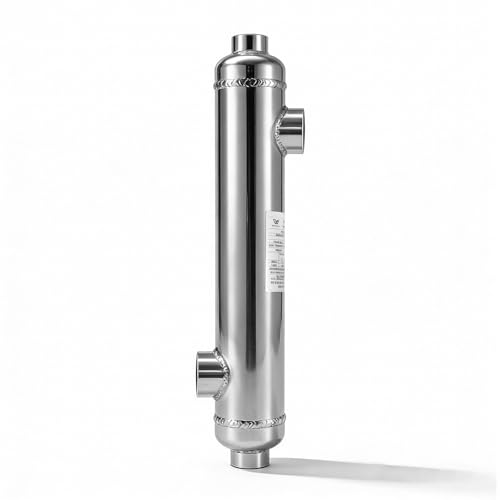
Features: 11,900 gallon pool heating capacity; 155 kBtu/hr with 316L stainless steel for corrosion resistance. Includes a 1-year warranty.
Best For: Budget-conscious buyers needing reliable performance for modest pool sizes. Limitation: Not ideal for very large volumes.
AB Water to Air Heat Exchanger 20×20

Features: Energy-efficient water-to-air heat exchange with up to 360kBtu/h potential. 20×20 size with 1″ copper ports, epoxy-coated fins for durability, and durable steel shell. Premium copper and aluminum conductors for effective heat transfer.
Best For: Residential heating and cooling setups that integrate multiple energy sources (boilers, solar, etc.). Limitation: Larger footprint may not suit compact installations.
AB Water to Air Heat Exchanger 12×15
Features: 67,500 Btu capacity; up to 360kBtu/h depending on application. Steel shell, base-brazed joints, and copper/aluminum construction with epoxy-coated fins for longer life. Supports renewable energy integration for heating or cooling needs.
Best For: Smaller to mid-size setups seeking efficient water-to-air exchange. Limitation: Lower maximum area than larger models, so plan for future expansion if needed.
Buying Guide: Key Purchase Considerations
- Heating vs. cooling needs: Choose a unit with appropriate BTU/h capacity for your pool size and climate. Larger volumes require higher capacity exchangers.
- Port configuration and plumbing: Verify port sizes (1″, 1.5″, 2″ FPT) to ensure compatibility with existing piping.
- Material durability: Stainless steel 316L offers strong corrosion resistance, especially in chemically treated water. Copper heat exchangers excel in heat transfer but may require additional maintenance.
- Installation environment: Outdoor installations should tolerate humidity and temperature swings; solid shells and brazed joints enhance durability in demanding conditions.
- Energy strategy: Water-to-water vs. water-to-air designs suit different setups—consider whether you want pool heating only or integrated home heating/cooling with renewable sources.
- Warranty and service: A standard 1-year warranty provides baseline protection; verify local service options and warranty terms before purchase.
Frequently Asked Questions
- What is the difference between water-to-water and water-to-air heat exchangers?
– Water-to-water transfers heat directly between two water circuits (pool to heater), while water-to-air transfers heat from water to air, cooling or warming indoor spaces or an outdoor setting. - Which exchanger is best for a small spa pool?
– A 155 kBtu/hr unit with 1.5″ and 1″ ports is often sufficient for small to mid-size pools or spas. - Can these exchangers work with solar heating systems?
– Yes, several models are designed to work with solar or other renewable energy sources as part of a larger heating strategy. - Do all units require professional installation?
– Installation complexity varies by model and existing plumbing; consult a licensed technician for proper sizing and connection. - Are stainless steel exchangers better than copper ones?
– Stainless steel 316L offers superior corrosion resistance in chemically treated water; copper provides excellent heat transfer but may require more maintenance in some applications. - What maintenance is needed for these exchangers?
– Regular checks for leaks, corrosion signs, and mineral buildup are recommended; follow OEM guidelines for cleaning intervals and compatible cleaners.