Choosing a quiet crawl space fan starts with identifying your space and humidity needs. The top picks below are ideal for preventing moisture buildup in basements, attics, garages, and crawl spaces while minimizing noise. Best for: small to medium crawl spaces where quiet operation is essential; better for: spaces needing automated humidity control; choose this if you need WiFi or smart scheduling features; avoid this if you require ultra-low power consumption only.
Summary table of chosen products
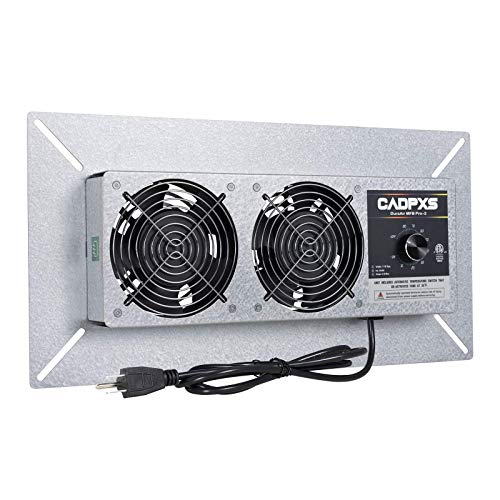
- CADPXS Crawlspace Ventilation Fan — 220 CFM, humidistat, exhausts radon and odors
- AC Infinity AIRTITAN T8 — 780 CFM, WiFi app control, IP-55, exhausts and humidity control
- Tjernlund V2D Underaire — 220 CFM, simple power ventilation
- ALORAIR 780 CFM Crawlspace Ventilator — stainless steel, IP55, freeze protection
- Abestorm 540CFM IP-55 — humidistat, thermostat, isolation mesh
CADPXS Crawlspace Ventilation Fan
Airflow: 220 CFM. Dimensions: 18″ x 9″ x 2”. Dual fans with a 6.56-foot grounded power cord. This unit vents moisture from crawl spaces and exchanges outdoor and indoor air to improve overall air quality. It includes a built-in humidistat covering 20%–80% RH and a freeze-protection thermostat that prevents running when outdoor temperatures are too low. Best for smaller crawl spaces or basements where radon or odor control is a priority and you want automatic humidity management. Caution: performance may be reduced in extremely large spaces without additional units.
Who it’s best for: homeowners needing a compact, automated solution to manage humidity and odor in crawl spaces, basements, or garages. Why selected: its integrated humidistat and freeze protection make it a reliable all-in-one solution for moderate humidity and seasonal temperature swings.
AC Infinity AIRTITAN T8

Airflow: 780 CFM. IP-55 rated, stainless steel body with a corrosion-resistant design. This crawlspace and basement ventilator supports dynamic temperature and humidity programming, plus VPD (vapor pressure deficit) controls, with timers, cycles, scheduling, and a minimum speed. Best for larger crawl spaces or homes requiring robust air exchange and smart scheduling. Caution: higher airflow may be louder in very small spaces; ensure mounting location minimizes sound transmission.
Who it’s best for: households needing strong air exchange with smart controls and remote monitoring. Why selected: it combines high airflow with advanced programming, making long-term moisture management easier and more precise.
Tjernlund V2D Underaire Crawlspace Ventilator

Airflow: 220 CFM. Power-ventilates through existing passive vents; flat face plate sized for standard brick openings. This is a practical, no-frills option for continuous moisture control and air exchange. Best for: older homes with passive vent systems where a simple, reliable blower is adequate. Caution: lacks built-in humidity control, so pairing with a separate humidistat may be necessary.
Who it’s best for: budget-conscious buyers seeking straightforward venting in standard crawl spaces. Why selected: simple operation and compatibility with existing vents make it a low-complexity solution.
Abestorm 540CFM IP-55 Crawlspace Ventilation Fan

Airflow: 540 CFM. Features a built-in dehumidistat and freeze protection thermostat with operating humidity 5%–80% RH. Includes an IP-55 rated aluminum-zinc shell and isolation mesh to keep pests and particulates out. Best for damp crawl spaces requiring robust humidity control and durable weather protection. Caution: 540 CFM may be overkill for very small spaces, potentially increasing noise and energy use if not sized properly.
Who it’s best for: homeowners needing a mid-to-high airflow solution with integrated humidity control and rugged construction. Why selected: the combination of dehumidistat, thermostat, and IP-55 protection suits humid environments and long-term durability.
Buying Guide
What size and airflow do I need? Choose based on crawl space volume and moisture level. Smaller spaces typically succeed with 220–340 CFM units, while larger areas may require 540–780 CFM fans. If humidity is a primary concern, models with built-in humidistats offer automatic control that reduces condensation and mold risk.
Should I get a programmable or smart fan? If you want remote control, scheduling, and automatic adjustments, select models with WiFi or app compatibility and dynamic humidity programming. For simple, automatic ventilation, a basic fan with a humidistat is often enough.
What about durability and environment? Look for IP-rated housings (IP-55 or higher) for damp crawl spaces, anti-corrosion materials (stainless steel or aluminum zinc shells), and isolation mesh to prevent debris or pests from entering the space.
Is automatic freeze protection important? In locations with freezing winters, a freeze protection thermostat helps prevent backflow or damage by stopping operation at low outdoor temperatures.
How should I plan installation? Ensure you have a vent opening compatible with the fan’s dimensions, plan for cord length, and consider mounting to minimize noise transmission. Some models require ductwork or external venting, while others exhaust directly through openings.
FAQ
- What is a crawlspace humidistat and why do I need one? A humidistat automatically turns the fan on or off to maintain a set humidity range, reducing mold risk and wood rot.
- Can I use any of these fans in an attic? Yes, most are suitable for attics and basements, but check the stated humidity range, temperature range, and installation requirements.
- Is higher CFM always better? Not necessarily. Match airflow to your space size; excessive airflow can create noise and energy waste in smaller spaces.
- Do these fans require professional installation? Not always. Some models are simple plug-in units, while others may need wiring, mounting, or venting adjustments.
- What maintenance is needed? Regularly inspect for dust buildup, check seals and mesh, and test humidity control functions to ensure reliable operation.
- Which model is best for a smart home? Models with WiFi app support and programmable controls are best for smart-home integration.