Answering the question “which roof ventilation fan should I buy for my home?” this guide highlights five highly relevant options. Each product targets common needs: solar-powered cooling, high airflow for large attics, or easy installation for garages and workshops. Best for homeowners seeking energy savings, best for larger attic spaces, and best for easy DIY installations are noted in each section. The following picks balance efficiency, practicality, and ease of use for American homes.
| Product | Best For | Key Benefit |
|---|---|---|
| VEVOR 42W Solar Attic Fan | Solar-powered cooling | Smart temperature/humidity control with remote |
| Master Flow GAF 1500 CFM ERV6 | Large attics | High airflow up to 1500 CFM |
| Master Flow GAF 1000 CFM ERV4 | Mid-size attics | Efficient, cost-saving airflow |
| Voltset 8-Inch 535 CFM | Garage/workshop exhaust | All-metal build, easy wall mounting |
| DC HOUSE Solar Attic Fan 32W | Solar off-grid cooling | 1600 CFM with weatherproof design |
VEVOR 42W Solar Attic Fan, 2800 CFM

Best for solar-first cooling where grid power is limited. This model uses a 42W MPPT regulator to maximize sunlight, pulling hot attic air at up to 2800 CFM with a brushless DC motor for quieter operation. It includes smart temperature and humidity control and a remote for convenience. The system switches to electric at sunset to maintain cooling on cloudy days, offering 24/7 effectiveness. Suitable for metal or masonry roofs and larger spaces that need rapid air exchange.
- Best for: homeowners who want solar-powered attic cooling with smart control.
- Why chosen: high airflow, weatherproof design, and remote operation improve comfort and energy savings.
- Limitation: performance depends on sun exposure; may require backup power on extended overcast days.
Master Flow GAF 1000 CFM ERV4 Power Roof Vent

Best for mid-size attics where steady, cost-conscious ventilation is desired. This 1000 CFM model emphasizes efficient airflow and reduced energy use, moving air quickly to keep attic temperatures in check. It suits spaces up to about 1600 square feet and includes features geared toward long-term savings. A good pick when you want reliable attic cooling without the need for high-end controls.
- Best for: mid-sized homes needing robust airflow without premium features.
- Why chosen: solid balance of airflow, efficiency, and installed footprint.
- Limitation: lacks advanced thermostat controls found on higher-end models.
Master Flow GAF 1500 CFM ERV6BL

Best for larger, high-heat attic spaces or homes requiring strong continuous airflow. The ERV6BL delivers up to 1500 CFM and includes a thermostat/humidistat for responsive cooling. Its galvanized steel construction supports durability in busy homes with heat buildup. This model is a solid choice when cooling efficiency and quiet operation are both priorities in substantial attic areas.
- Best for: large-attic homes and spaces needing substantial air exchange.
- Why chosen: high airflow and built-in controls help maintain comfort.
- Limitation: larger footprint may require more install planning in tight spaces.
Voltset 8-Inch 535 CFM Exhaust Fan

Best for quick, wall-mounted exhaust in garages, workshops, or basements. This all-metal unit delivers 535 CFM with a durable 60W motor and a backdraft damper, resisting rust and debris. It is a practical, install-anywhere solution for immediate heat, smoke, or odor removal. The wall-mount design simplifies DIY setups and minimizes attic involvement.
- Best for: garage or workshop ventilation with straightforward installation.
- Why chosen: robust metal build and practical mounting options.
- Limitation: not designed for primary attic ventilation in large spaces.
Solar Attic Fan 32W 1600CFM DC HOUSE
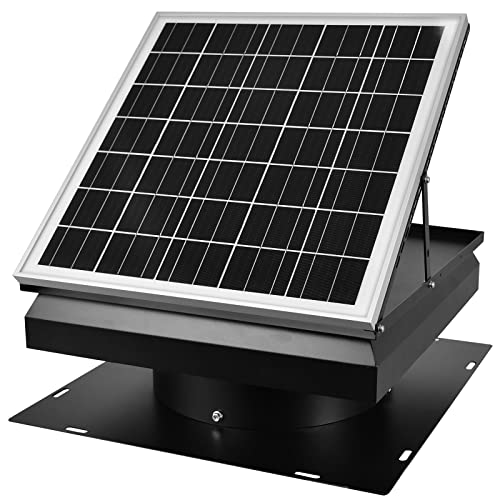
Best for off-grid solar cooling with high airflow. The Solar Attic Fan operates for free using solar energy, automatically starting at sunrise and stopping at dusk. It can move up to 1600 CFM to combat attic heat and humidity, making it suitable for homes seeking substantial heat relief without electrical wiring. The design emphasizes weather resistance and energy independence.
- Best for: off-grid homes or areas with high sun exposure.
- Why chosen: high airflow with solar autonomy and weatherproofing.
- Limitation: performance depends on daily sun; may need backup cooling during long cloudy periods.
Buying Guide: How To Choose A Roof Ventilation Fan
- Attic size and airflow needs: Larger spaces benefit from higher CFM ratings (1200–1500 CFM or more). For small to medium attics, 500–1000 CFM models may suffice.
- Power source: Solar-powered units save energy but rely on sun exposure. Electric- or hybrid-powered vents provide more consistent performance in cloudy days or at night.
- Controls and automation: Thermostat or humidistat controls help maintain comfortable conditions and optimize energy use. Remote control adds convenience.
- Durability and installation: Look for weatherproof housings, galvanized steel construction, and easy mounting options (roof or wall).
- Noise level: Brushless DC motors tend to run quieter; consider placement to minimize sound in living areas.
- Compatibility: Ensure the unit suits your roof type (metal or masonry) and attic dimensions. Large attics may require multiple units or higher-capacity fans.
Frequently Asked Questions
- What is a typical attic ventilation need in CFM? Attics often benefit from 1 CFM per square foot of attic area, though this varies with climate and insulation.
- Can I install a solar attic fan myself? Many options are designed for DIY installation, especially wall-mounted or roof-mounted units with standard hardware.
- Do attic fans reduce cooling costs? Yes, by removing hot air, they reduce the load on air conditioning, lowering energy use in many homes.
- Is a thermostat-controlled attic fan worth it? Yes, it helps ensure cooling only when necessary, preventing wasted energy during mild days.
- Should I pair attic fans with other vents? Pairing with existing vents can improve overall airflow and attic cooling effectiveness.
- Do all solar attic fans work on cloudy days? Hybrid models or those with built-in electric backup can maintain cooling during limited sunlight.