Answering the search intent for a reliable smart attic fan controller, this guide highlights five top options designed to automate attic ventilation, manage humidity, and save energy. Each product suits different buyers—from homeowners upgrading an old thermostat to property managers needing remote access. The comparison below helps you choose by compatibility, control style, and installation considerations. A quick summary table is provided to compare core features at a glance.
| Product | Best For | Key Benefit | Limitations |
|---|---|---|---|
| Quietcool Smart Attic Fan Control | Homeowners replacing a failed thermostat | App control with built-in humidistat and fire safety shut-off | Requires compatible attic fan wiring |
| Master Flow Wi-Fi Control Module | Vacation homes and rentals | Control multiple vents from one app | Requires existing Master Flow vents |
| briidea Attic Fan Control Kit | Remote-controlled automated setups | Two modes: automatic and manual with temp/humidity sensor | Limited wattage handling may affect high-load fans |
| JVWKPU Temperature And Humidity Switch | Affordably modernizing traditional fans | Auto On/Off by temp and humidity | Low-cost option with basic features |
| iLiving ILG8SFRC Kit | Easy smart conversion | Programmable thermostat/humidistat with remote | Requires peripheral receiver |
Quietcool Smart Attic Fan Control Overview
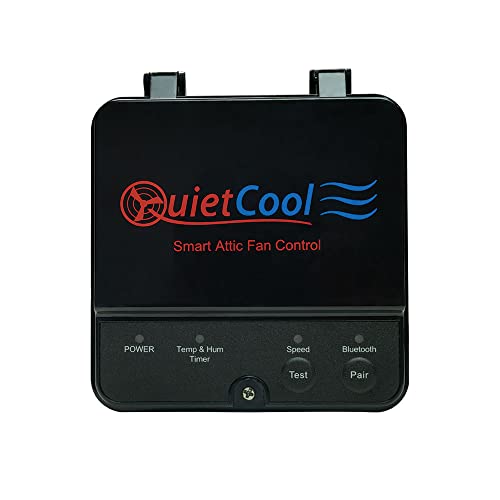
Brand: Quietcool. Features include a smart app for automated operation, a thermostat and humidistat, built-in fire safety shut-off, and a modern replacement for an old attic fan thermostat. Best for buyers who want a single-device upgrade with safety features and remote control. Caution: installation compatibility depends on your existing wiring and fan setup.
Master Flow Wi-Fi Control Module

Brand: Master Flow. Best for vacation homes or multi-vent setups, it lets you control multiple attic vents from a single app login and is designed to work with GAF Master Flow and LL Building Products vents. Choose this if you manage several spaces and want centralized control. Limitation: requires compatible vents and a stable Wi-Fi connection.
Briidea Attic Fan Control Kit

Brand: briidea. This kit provides two operation modes (automatic and manual) and uses temperature and humidity sensing to optimize attic cooling and dehumidification. Best for users seeking wireless control with clear sensor feedback. Limitation: rated to control up to 360W, so verify your fan’s wattage before purchasing.
JVWKPU Temperature And Humidity Switch
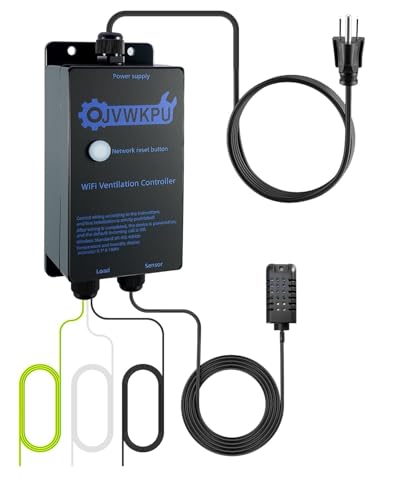
Brand: JVWKPU. A multi-functional control that auto on/off by temperature and humidity with 25A load capacity. Best for budget-conscious buyers who want auto-ventilation without complicated setup. Caution: entries emphasize safety with proper wiring; verify wire gauge and circuit limits for your fan.
iLiving ILG8SFRC Smart Kit

Brand: iLiving. The kit features a programmable thermostat/humidistat with a solid-state speed controller and timer for flexible control from a distance. Best for homeowners who want a full remote-controlled option with long-range capability. Limitation: depends on the included receiver and may require additional setup steps for some fan models.
Buying Guide: Smart Attic Fan Controllers
Key considerations help identify the right controller for your attic’s ventilation needs.
What installation complexity should I expect?
Some units replace existing thermostats directly, while others require additional receivers or adapters. If you have basic wiring knowledge, a plug-and-play module is often easiest. For multi-vent homes, centralized control options reduce setup time but may require more planning.
How important are sensors and safety features?
Humidity and temperature sensors improve efficiency by matching fan speed to attic conditions. Fire safety shut-offs add a critical safety layer in spaces with heat-sensitive materials or high fire risks.
What about compatibility and load capacity?
Verify wattage and voltage ratings to avoid overloading the fan circuit. Some devices are rated for up to 25A or independent of motor type; ensure compatibility with your attic fan model.
Remote access and ecosystem integration
Wi-Fi-enabled controllers work with smartphone apps and voice assistants. If you already use Alexa, Google Assistant, or similar systems, choose a model that integrates smoothly with your existing setup.
How to choose between auto versus manual modes?
Auto mode saves energy by adjusting automatically to attic conditions. Manual mode provides direct control when you want a quick override for specific weather or activities.
What are common limitations to expect?
Many controllers depend on your home’s Wi-Fi stability, proper wiring, and the fan’s electrical rating. Some units require a neutral wire or a compatible fan model. Always confirm installation requirements before purchase.
Product comparison snapshot
- Best for single-room attic upgrades: Quietcool Smart Attic Fan Control.
- Best for multiple-vents management: Master Flow Wi-Fi Control Module.
- Best budget wireless option: JVWKPU Temperature And Humidity Switch.
- Best plug-and-play smart kit: iLiving ILG8SFRC Kit.
- Best two-mode operation with sensors: briidea Attic Fan Control Kit.
FAQ
- Q: Do I need professional installation for a smart attic fan controller? A: It depends on your wiring and the unit’s requirements. Some installations are straightforward, while others may require wiring changes or a dedicated circuit.
- Q: Will these controllers work with all attic fans? A: Most work with common 120V attic fans, but compatibility depends on the unit’s load rating and wiring. Check the fan’s wattage and motor type.
- Q: Can I control attic ventilation remotely if my Wi-Fi goes down? A: Many controllers operate automatically based on sensors even if Wi-Fi is unavailable, but remote control requires network access.
- Q: Do these devices include a humidistat? A: Several models include built-in humidistats, which help manage humidity alongside temperature for better attic air quality.
- Q: Are safety features like fire shut-off common? A: Fire safety shut-offs are offered on select models, providing an extra layer of protection for heat-prone spaces.
- Q: How do I know which model is best for my property? A: Consider the number of vents, desired remote control features, sensor needs, and whether you prefer auto or manual modes.