Answering the question you asked: solar attic vents can reduce attic temperatures and save cooling costs, especially in sunny climates. This guide highlights pros and cons and helps shoppers pick vents that fit roof type, space, and climate. The top picks below are best for homeowners seeking off-grid or hybrid power, easy installation, and reliable performance across attics, garages, and sheds. The following summary table compares key attributes to aid quick decisions.
| Product | Best For | Airflow (CFM) | Power Source |
|---|---|---|---|
| VEVOR 42W Solar Attic Fan | Large, hot attics; metal or masonry roofs | 2800 | Solar with MPPT; remote control |
| Hon&Guan Solar Attic Fan | Mid-size spaces; adjustable exposure | 2000 | Solar with MPPT; dual power option |
| DC HOUSE Solar Attic Fan | Residential garages and workshops | 1600 | Solar |
| VEVOR 35W Solar Attic Fan | Medium attics; budget-friendly | 2400 | Solar with thermostat |
| Fnova 35W Solar Attic Fan | Smaller to mid-sized spaces; quiet operation | 2200 | Solar with auto temp control |
Note: This article presents objective information based on listed features. Buyers should verify roof compatibility, mounting options, and local climate considerations before purchasing.
VEVOR 42W Solar Attic Fan

Best for hot, large attics with metal or masonry roofs. The 42W MPPT regulator maximizes sunlight to remove hot air, delivering up to 2800 CFM. A brushless DC motor enables quiet operation. Integrated temperature and humidity control maintains steady conditions year-round. The unit switches to electric power at sunset and includes a remote control for up to ~9.75 meters. Cautions: ensure roof wiring and mounting clearance match your roof type, and verify that remote control range suits your setup.
Who this is best for: homes with very hot attics, solar-ready roofs, and a desire for automatic year-round cooling with remote operation.
Hon&Guan Solar Attic Fan with Thermostat
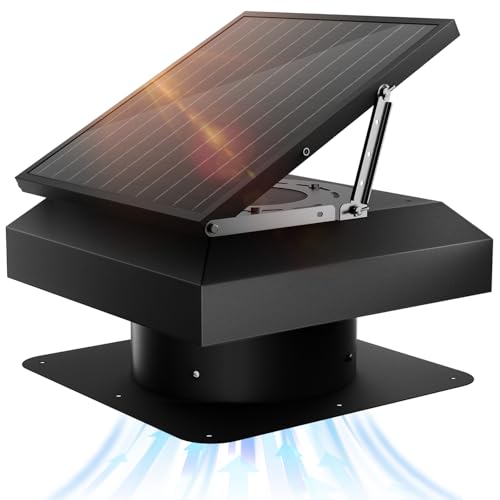
Best for spaces up to about 2500 sq ft with adjustable solar exposure. This model provides up to 2000 CFM and includes an MPPT-style controller with two modes and a thermostat. It can auto-start at set temperatures (68–113°F) for energy-saving operation. A caveat: continuous day-and-night operation relies on an AC/DC adapter in some modes, so plan for optional power sources if you need non-stop cooling.
Who this is best for: buyers wanting a thermostat-based control and flexible operation modes for varied sunlight conditions.
DC HOUSE Solar Attic Fan 32W
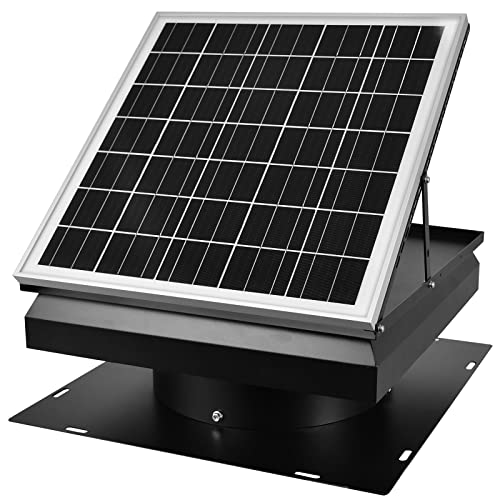
Best for off-grid setups needing reliable, weatherproof operation. The 32W fan produces 1600 CFM and is designed for 100% solar operation, with a built-in thermostat for auto-start at 26°C (79°F). It is weatherproof, making it a solid choice for exposed rooftops. Limitation: installation should consider panel orientation to maximize sun exposure, as no battery backup is mentioned in the listed data.
Who this is best for: homeowners who want straightforward solar cooling with auto temperature control and weather resistance.
VEVOR 35W Solar Attic Fan

Best for mid-sized attics seeking a balance of airflow and energy efficiency. This unit delivers up to 2400 CFM with a brushless DC motor and has an automatic temperature-based start (thermostat). It’s suitable for metal and masonry roofs and includes MPPT control for efficient solar use. A caution: some users may prefer additional power backup for extremely cloudy periods.
Who this is best for: buyers needing a strong, affordable option with auto temp control for daily attic cooling.
BINGLUX 55W Solar Attic Fan with Thermostat

Best for energy-conscious homes needing smart thermostat control and hybrid operation. The 55W panel drives up to 1300 CFM, and the thermostat takes over automatically when temperatures rise. The hybrid feature allows switching to AC power on cloudy days for continuous ventilation. Limitation: the higher panel wattage may require stronger roof mounting and wiring considerations.
Who this is best for: homes wanting automatic on/off behavior with a hybrid power option to ensure ventilation during variable sunlight.
Buying Guide: Key Considerations
What attic size and airflow do you need?
Airflow (CFM) should match attic volume and insulation quality. Larger attics typically require higher CFM models to reduce heat quickly.
Do you need a thermostat or auto-start?
Thermostat-based models start cooling at set temperatures, saving energy. Auto-start helps during variable sunlight but may add complexity.
What about roof type and mounting?
Roof material (metal vs. masonry) and pitch influence mounting hardware, weatherproofing, and wind resistance. Verify compatibility with your roof.
Is a hybrid or solar-only setup best?
Hybrid options keep attic cooling consistent during cloudy days, while solar-only units save energy when sun is abundant but may pause during overcast periods.
What about control and usability?
Remote control, smartphone integration, and straightforward wiring affect ease of use and long-term maintenance.
Frequently Asked Questions
- Do solar attic vents really lower attic temperatures?
Yes. They expel hot air, reducing attic temperatures and easing AC load when the sun is out. - What is CFM and why does it matter?
CFM indicates airflow; higher CFM removes heat faster but should match attic size for efficiency. - Can solar attic fans operate at night?
Most models rely on sunlight; some offer AC or battery backup to maintain ventilation after dark. - Are all solar attic fans weatherproof?
Most are designed for outdoor use, but verify IP rating and mounting suitability for your climate. - Is a thermostat important for attic fans?
Thermostats help auto-start and conserve energy by ventilating only when needed. - Do I need professional installation?
Installation complexity varies. Some units require roof mounting, wiring adaptors, and weatherproof seals.