Answering the need for energy-efficient, weatherproof crawl space ventilation, these solar-powered and hybrid crawl space fans help reduce humidity, prevent mold, and improve indoor air quality. They are best for homeowners with damp basements, crawl spaces, attics, or garages who want low operating costs and easier installation. The top picks below balance airflow, moisture control, and climate protection features like humidistats and freeze protection. This guide highlights five strong options and explains who each is best for, along with practical buying tips.
| Product | Airflow | Humidistat | Freeze/Temp Control | Best For |
|---|---|---|---|---|
| CADPXS Crawlspace Ventilation Fan | 220 CFM | Yes (humidistat) | Yes (freeze protection) | Bases in moderate climates; balanced humidity |
| Pewoaoa 240 CFM Crawlspace Fan | 240 CFM | Yes (humidistat) | Yes (low-temp protection) | Climate-sensitive spaces; auto-start on thresholds |
| Abestorm 540CFM IP-55 Vent Fan | 540 CFM | Yes (humidistat) | Yes (freeze protection) | Larger areas; robust moisture control |
| ALORAIR 300CFM Crawl Space Fan | 300 CFM | Yes (humidistat) | Yes (antifreeze thermostat) | Durable, rust-resistant; versatile spaces |
| Tjernlund V2D Underaire | 220 CFM | No | No | Simple, cost-effective venting for standard crawl spaces |
CADPXS Crawlspace Ventilation Fan
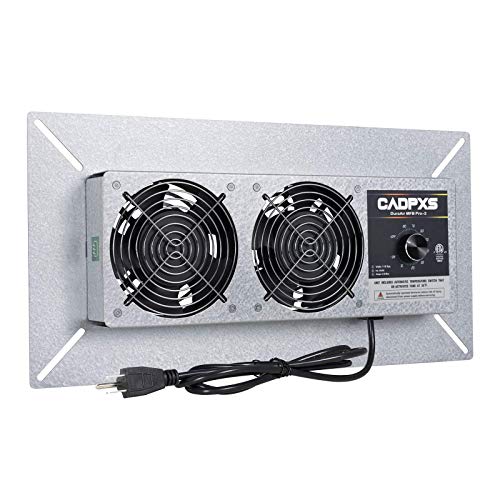
The CADPXS unit moves air out of crawl spaces at 220 CFM and includes a built-in humidistat with a 20%–80% RH range, plus temperature-based freeze protection. The dual-fan layout with a 6.56-foot grounded cord supports ventilation across damp areas, basements, and hydroponics tents. Best for moderate spaces where humidity varies and radon or odor control is desired. Caution: performance may decrease in extremely large or poorly sealed crawl spaces without supplemental passive ventilation.
Why chosen: compact size, integrated humidity control, and a practical balance of airflow and protection features for typical crawl spaces.
Pewoaoa 240 CFM Crawlspace Fan

The Pewaoa model delivers 240 CFM with dual humidity and temperature control, auto-activating when thresholds are exceeded. It includes a low-temperature protection thermostat to avoid cold air backflow, making it suitable for harsher climates. Best for crawl spaces that require climate-based adjustments and reliable moisture management. Limitation: slightly lower airflow than mid-sized units, so larger spaces may need multiple units or higher-capacity fans.
Abestorm 540CFM IP-55 Ventilation Fan

With 540 CFM, this Abestorm unit offers strong airflow for larger crawl spaces or garages. It includes a humidistat, a freeze protection thermostat, and an IP-55 isolation mesh to keep debris and pests out. Best for larger areas or spaces where moisture control is critical and environmental exposure is high. Caution: larger size requires more robust mounting and power considerations.
ALORAIR 300CFM Crawl Space Fan

The ALORAIR unit provides 300 CFM with IP55 protection, an isolation mesh, and an antifreeze thermostat. Humidity is adjustable from 5%–80%, and noise remains under 40 dBA for quieter operation. Best for spaces where rust resistance and reliable warmth protection are priorities. Limitation: slightly higher price and installation considerations due to robust features.
Tjernlund V2D Underaire Crawlspace Ventilator

The Tjernlund V2D offers 220 CFM with a simple, low-cost design for standard crawl spaces. It reduces moisture through existing vents and is maintenance-free at a basic level. Best for budget-conscious buyers who want straightforward venting without climate-based automation. Caution: lacks humidistat or thermostat controls, so moisture management relies on airflow alone.
Buying Guide: Key Considerations For Solar-Powered Crawl Space Fans
What space size are you venting? Larger crawl spaces require higher CFM or multiple units for even airflow. Also consider how often you’ll rely on solar power versus a powered adapter, especially in areas with limited sun.
Do you need humidity and temperature controls? Humidistats and thermostats help prevent condensation and mold. Look for units with adjustable RH thresholds and temperature cutoffs, particularly in variable climates.
Is the unit protected from moisture and dust? IP ratings (IP-55 or higher) and corrosion-resistant housings extend life in damp environments. An isolation mesh helps deter pests and debris ingress.
What installation constraints exist? Check dimensions, mounting options, and cord lengths. Some fans require ducting or wall openings; others are simple plug-and-play.
Are there safety features? Freeze protection reduces backflow in cold weather, while anti-backflow valves prevent outdoor air from re-entering when the fan is off.
Frequently Asked Questions
- Q: Do I need solar power for crawl space ventilation, or can I use standard electricity? A: Solar panels can reduce operating costs in sunny regions, but many fans also function with a standard power adapter or corded power supply if solar isn’t feasible.
- Q: What size CFM should I choose for a typical crawl space? A: For small to medium crawl spaces, 200–300 CFM is common; larger areas may require 540 CFM or more.
- Q: Why is a humidistat important? A: It helps automatically regulate humidity, reducing mold risk and wood damage by turning the fan on or off at set moisture levels.
- Q: What is the benefit of an IP-55 rating? A: IP-55 indicates protection against dust and water spray, which improves longevity in damp crawl spaces.
- Q: How many fans should I install? A: If you have a very large crawl space, multiple units or higher-capacity fans provide better air exchange and more uniform drying.
- Q: Are anti-backflow valves necessary? A: They help prevent outside air, pests, and insects from entering the space when the fan is off, which can improve energy efficiency.