Solid state fan controls provide smooth, reliable speed regulation for AC motors and duct fans. This guide highlights five practical options suited for homeowners, hobbyists, and workshop setups seeking safe, durable, and easy-to-install controls. Each product targets specific motor types and power ranges, helping you pick the right controller for a given fan. Below is a quick reference table of the selected models.
| Product | Max Amps | Voltage | Best For |
|---|---|---|---|
| KB Electronics 8811007 | 6.0 | 115V | Small- to mid-size wall-box fans |
| KB Electronics K177-1005 | 5.0 | 120V | Standard box-mounted controllers |
| KBWC-18K | 8.0 | 120V | Shaded pole and PSC motor fans |
| iLiving ILG8SFSC | 8.0 | 120V | Precision speed for residential fans |
| iLiving ILG8SFRC | — | 120V | Smart remote-controlled exhaust fans |
KB Electronics 8811007 Solid State Speed Control

Designed for a standard 2″ x 4″ electrical wall box, this controller handles up to 6.0 amps at 115 volts. It is UL and CSA approved and is not suitable for capacitor-start or capacitor-run motors. Best for small to mid-size residential fans or duct boosters where a straightforward, robust dimming-style control is needed. Best for those prioritizing compact form and reliable solid-state performance in a wall-mounted installation.
Who it’s best for: homeowners or technicians replacing worn controls in standard wall boxes. Why selected: strong compatibility with common AC motors and straightforward wiring. Caution: not appropriate for capacitor-start/run designs; ensure motor type is compatible before installation.
KB Electronics K177-1005, 5.0 Max Amp Controller

This unit is designed for a standard 2″ x 4″ wall box and supports up to 5.0 amps at 120V. It is UL and CSA approved and should not be used with capacitor-start or capacitor-run motors. Best for smaller fans or as a drop-in replacement in compact control boxes. Better for applications requiring a compact, cost-effective control with reliable solid-state performance.
Who it’s best for: installers upgrading smaller ceiling or inline fans where a compact controller is preferred. Why selected: reliable, common-box footprint with clear motor type guidance. Caution: not for gear motors or capacitor-start designs; verify motor type before purchase.
KB Electronics KBWC-18K Wall-Mount Variable Speed Control

KBWC-18K is a UL and CSA approved wall-mount controller rated for 8.0 amps at 120 VAC, designed for shaded pole and PSC motors. Not to be used with capacitor-start or capacitor-run motors. Best for larger residential or small commercial fans that need more precise speed control without a bulky control box. Choose this if you need stronger performance in a familiar 2″ x 4″ footprint.
Who it’s best for: homes or small workshops with larger fans or higher airflow requirements. Why selected: higher amperage in a standard wall box makes it versatile for common fan setups. Caution: avoid capacitor-start/run motors; check motor type before wiring.
iLiving ILG8SFSC Solid State Speed Controller
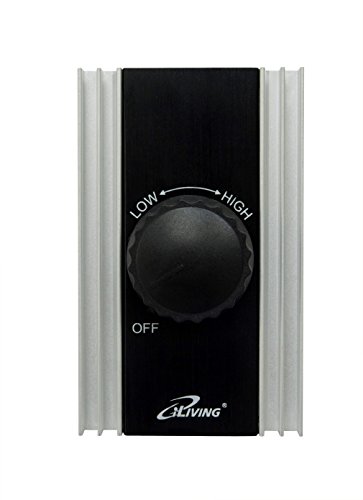
Expressly a precision fan speed controller with a rotary on/off function. It includes a brushed aluminum switch plate and screws. This model suits residential fans where a tactile rotary knob is preferred and precise speed steps are beneficial. Best for: users who want a straightforward, mechanical feel with solid-state reliability. Limitation: information on maximum amperage is not specified here; verify compatibility with your fan’s motor rating.
iLiving ILG8SFRC Exhaust Fan Smart Remote Kit

This kit converts a hardwired exhaust fan to a smart-enabled system with programmable thermostat and humidistat control. It features a long-range remote, dual temperature sensors, and a 24-hour timer for precise scheduling. Best for: bathrooms or kitchens where automated climate-responsive fan control improves comfort and energy efficiency. Caution: installation involves receiver placement and remote pairing; follow kit instructions for accurate setup.
Tjernlund SCP Plug-in Speed Controller
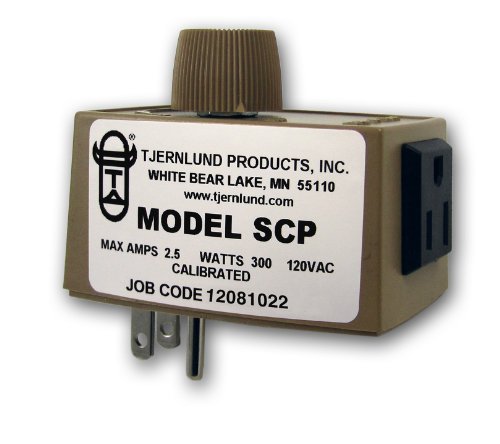
Plug-in speed control designed for fans with power cords. The SCP model plugs into a standard 120 VAC outlet and the fan plugs into it. Suitable for fans up to 300 watts or 3 amps. Best for portable or plug-in fans where non-permanent installation is desired. Limitation: not a wall-mount solution; less integrated than in-wall controllers.
Buying Guide
- Motor type compatibility: Most controllers specify suitability for shaded pole, PSC, or capacitor-start motors. Verify your fan’s motor type before selecting a controller.
- Amperage and voltage: Match the device’s max amps to your fan’s current draw and ensure the unit supports your supply voltage (commonly 115–120V in the U.S.).
- Installation style: Wall-mount controllers fit standard 2″ x 4″ boxes; plug-in units offer flexible, portable options. Choose based on permanence and space.
- Controls and features: Rotary knobs provide tactile control; smart remotes and thermostats add automation and energy savings. Consider if you need on/off with speed control or programmable comfort features.
- Safety and approvals: UL and CSA approvals indicate compliance with electrical safety standards. Ensure the product carries appropriate certifications for your locale.
- Limitations and cautions: Some models explicitly avoid capacitor-start/run motors. For such setups, choose a compatible controller to prevent motor damage.
Frequently Asked Questions
- What is a solid-state fan control? It’s an electronic device that adjusts fan speed without mechanical relays, using solid-state electronics for smoother operation.
- Can I use these controllers with ceiling fans? Yes, if the motor type and amperage are compatible, and wiring is appropriate for a wall-mount or inline setup.
- Do these controllers require professional installation? Some are plug-in or wall-box types that are straightforward for DIYers; others may benefit from electrical experience for safe wiring.
- What does UL or CSA approval signify? It indicates the product meets recognized safety standards for electrical equipment.
- Are smart remote kits worth it for exhaust fans? If you want automated control based on temperature, humidity, or a schedule, they offer meaningful energy savings and convenience.
- What should I check before buying? Verify motor type compatibility, maximum amperage, voltage, installation method, and any required accessories or remotes.