The best thermostat for heat and cool depends on how you use your HVAC system, your desire for programmable schedules, and whether you want smart Wi‑Fi control. This guide highlights five well‑rounded options ideal for American homes, from simple non‑programmables to advanced smart thermostats. Each product is categorized for who it’s best for, with clear pros and a practical caution. Use the comparison details to decide which model fits your heating and cooling needs without overhauling your setup.
Quick guide table of the five chosen products:
| Product | Best For | Key Benefit | Limitations |
|---|---|---|---|
| Honeywell Home RTH20B | Budget upgrades, replacement for aging 5‑2 schedules | Clear display with 5‑2 programming | Limited to single stage, basic features |
| Suuwer Non‑Programmable | Simple installations, basic control | Reliable single‑stage control | Not compatible with multi‑stage systems |
| Garystat Upgraded Digital Non‑Programmable | Easy DIY install, single stage | Large blue LCD display | Non‑programmable |
| Honeywell Home RTH9585WF1004 | Smart home, energy rebates | Wi‑Fi, color display, energy programs | Requires network setup |
| Sensi Lite ST25 | DIY friendly, Wi‑Fi with energy savings | Easy installation, flexible scheduling | Requires C‑wire for some setups |
Honeywell Home RTH20B Programmable Thermostat

Best for replacement of older programmable models with a simple 5‑2 day schedule. The RTH20B offers a straightforward interface and is designed to be a direct replacement for certain Honeywell models, providing a clear display and option to customize display and reminders. Best for buyers who want a familiar, no‑frills upgrade that preserves a 5‑2 programming pattern. The primary limitation is its single‑stage capability, which may not suit homes with multi‑stage heating or cooling.
Why it’s selected: It emphasizes ease of use with a large screen and legible font, making daily adjustments quick. The 5‑2 schedule works well for weekday vs. weekend routines, and it can remind you to replace air filters in some configurations. Use this if you’re replacing an aging thermostat and don’t need smart Wi‑Fi features.
Caution: Verify compatibility with your current base and wiring before purchase. Some installations may require a dedicated common wire or base compatibility checks that aren’t visible in product listings.
Suuwer Non‑Programmable Thermostat (Blue Backlight)

Best for homeowners who want a simple, budget‑friendly control for a conventional single‑stage system. This model supports up to 1 heat/1 cool but does not work with multi‑stage or heat pump setups. Its blue backlit display helps visibility in dim rooms. The main caution is its lack of programming options, which may be limiting for people who want automatic schedules or remote control.
Why it’s selected: It provides a straightforward, reliable option for basic heating and cooling without the complexity of smart features. It’s suitable for single‑stage homes, rentals, or rooms where simple control is sufficient.
Caution: Check your existing wiring and base compatibility before purchasing. It’s not suitable for multi‑stage or heat pump systems, and installation may require careful wiring to avoid compatibility issues.
Garystat Upgraded Digital Non‑Programmable Thermostat
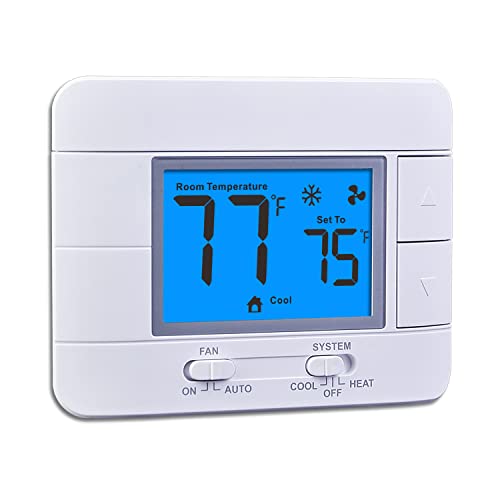
Best for quick, easy installs on single‑stage systems with a clear display. This non‑programmable thermostat focuses on essential temperature control with a large blue LCD, making daily viewing simple. It’s well suited for homeowners who want a visually accessible thermostat without programming features. A limitation is the absence of scheduling or automation capabilities.
Why it’s selected: The emphasis on easy DIY installation and a prominent display makes it a strong choice for non‑tech users or those replacing an old dial thermostat with a digital interface.
Caution: Ensure your system is single‑stage and compatible with the base configuration. Systems with more than one heating/cooling stage will not be supported.
Honeywell Home RTH9585WF1004 Wi‑Fi Color Thermostat
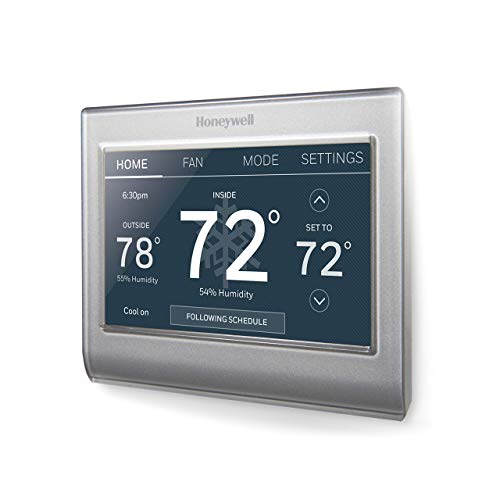
Best for smart homes seeking color display, remote control, and energy‑savvy programming. The RTH9585WF1004 adds Wi‑Fi connectivity, seven‑day programming, and compatibility with Alexa. It also offers energy rebates through providers and potential participation in demand response programs. The main caveat is that setup and ongoing network configuration are required for full functionality.
Why it’s selected: It blends aesthetics with advanced scheduling and energy optimization. The color touch display can improve usability and help integrate with home automation routines, making it ideal for users wanting a scalable smart thermostat solution.
Caution: Requires reliable Wi‑Fi and ongoing app management. Some utility programs vary by region, so check availability with your energy provider.
Sensi Lite Smart Thermostat ST25

Best for DIY enthusiasts who want a budget‑friendly smart thermostat with reliable Wi‑Fi control. The ST25 supports flexible scheduling and usage reports, with energy‑saving features and easy installation. A key consideration is the need for a common wire on more complex heat pump or multi‑stage setups, which isn’t required for basic configurations.
Why it’s selected: The Sensi Lite offers a practical middle ground between basic thermostats and premium smart models, delivering remote control and energy insights without overly complex setup.
Caution: For heat pumps or multi‑stage systems, confirm compatibility or consider a more capable model.
Buying Guide: Key Purchase Considerations
- System compatibility: Ensure the thermostat supports your heating/cooling configuration (single‑stage vs. multi‑stage, heat pump vs. conventional). Some models explicitly prohibit multi‑stage systems.
- Programmability vs. smart features: Decide between basic programmable models and Wi‑Fi smart thermostats with remote control, energy reports, and utility programs.
- Wiring requirements: Many non‑programmable models require a standard 2‑5 wire setup and may need a C‑wire for smart features.
- Display and usability: Larger LCDs and color displays improve readability and usability, especially for daily adjustments.
- Energy savings: Look for ENERGY STAR certification and programs offered by utilities for rebates or demand response incentives.
- Installation approach: DIY installation is common for many models, but verify whether your wiring and base are compatible and consider professional help if uncertain.
FAQ
- Do I need a smart thermostat to save energy? A: Not necessarily. Programmable thermostats save energy by automating schedules, while smart models add remote control and energy reports that can help optimize usage.
- Is a C‑wire required for Wi‑Fi thermostats? A: Many Wi‑Fi models require a C‑wire for reliable power, but some work with alternatives or add‑a‑wire solutions. Check your system wiring before buying.
- Can I install these thermostats myself? A: Most non‑programmable and some programmable models are designed for DIY installation. If wiring or base compatibility is uncertain, consult a professional.
- Will a smart thermostat work with any HVAC system? A: Compatibility depends on features like heat pump, cooling type, and wiring. Verify the product page for supported configurations.
- Do energy rebates apply to all smart thermostats? A: Rebates are region‑ and program‑dependent. Check with your local energy provider to determine eligibility.
- What happens if my home has multi‑stage heating? A: For multi‑stage systems, choose thermostats explicitly supporting 2H/2C or higher configurations, as many single‑stage models won’t meet requirements.