Answering the question: which thermostat supports separate sensors to balance rooms and save energy? This guide highlights five top models that offer independent sensors and smart features. It’s ideal for homeowners who want room-specific comfort, energy savings, and easy DIY installation. The buyer profiles range from busy households needing reliable schedules to tech-savvy homes seeking seamless smart-home integration. Below is a quick product snapshot to compare at a glance.
| Product | Best For | Sensor Support |
|---|---|---|
| ecobee Smart Thermostat Premium | Homes wanting built-in sensors and voice assistant integration | Smart Sensor (included) |
| Google Nest Learning Thermostat (4th gen) | Hands-off energy savings with Temperature Sensor support | Nest Temperature Sensor (2nd gen) included |
| Honeywell Home T9 | Rooms-focused comfort with smart room sensors | Smart Room Sensors |
| ecobee Smart Thermostat Enhanced | Budget-friendly ecobee option with room-sensing | Smart Sensor compatibility |
| Sensi Touch 2 Smart Thermostat | Simple, privacy-conscious setup with room sensors | Room Sensors compatible |
ecobee Smart Thermostat Premium With Sensor

The ecobee Smart Thermostat Premium combines a stylish touchscreen with built-in voice assistants and an included Smart Sensor. This model aims to optimize comfort by sensing occupancy and adjusting temperatures across rooms. It is ENERGY STAR certified and designed to work with most 24V heating and cooling systems. The Smart Sensor helps prioritize comfort in frequently used rooms, while the Power Extender Kit and trim kit streamline DIY installation. Best for: homes that value centralized control plus dedicated room sensors, especially where doorbell or other smart integrations are desired. Caution: verify compatibility before purchase using ecobee’s checker.
Google Nest Learning Thermostat With Sensor

The Nest Learning Thermostat (4th generation) learns your schedule and energy habits, and includes the Nest Temperature Sensor to balance temperature across rooms. It supports a broad range of 24V systems and typically does not require a C-wire for installation. Its strength lies in hands-off optimization, remote control via the Google Home app, and compatibility with voice assistants. Best for: homes seeking automatic learning behavior and cross-brand smart home compatibility. Caution: some advanced features may require ongoing app setup and Wi‑Fi reliability.
Honeywell Home T9 With Smart Room Sensor

The Honeywell Home T9 emphasizes room-focused comfort using Smart Room Sensors that detect occupancy and temperature across multiple rooms. It supports energy savings through Auto Home/Away Scheduling and can participate in demand-response programs in some regions. Best for: users who want precise temperature control in specific rooms and straightforward energy savings. Caution: sensor range and wireless performance can vary depending on home layout and walls.
Sensi Touch 2 Smart Thermostat

The Sensi Touch 2 Smart Thermostat combines ENERGY STAR certification with remote access and flexible scheduling. It supports Sensi Room Sensors for balanced temperatures across home zones while emphasizing privacy and straightforward installation. Best for: budget-conscious buyers who want solid energy savings without heavy automation, plus room-sensor compatibility. Caution: some users may prefer broader ecosystem integrations beyond Sensi’s own platform.
ecobee Smart Thermostat Enhanced
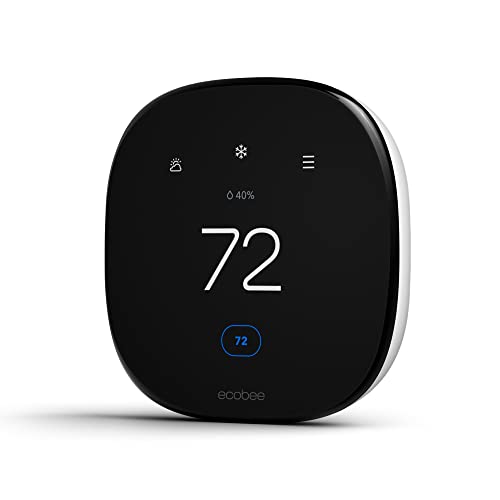
The ecobee Smart Thermostat Enhanced offers robust energy savings and compatible system support for a broad range of setups. It includes scheduling that adapts when you’re away and provides an occupancy-aware mode to preheat or precool before you arrive. This model is a practical choice for households seeking a strong blend of room-sensor support and flexible DIY installation. Best for: users needing reliable energy savings with easy setup. Caution: verify system compatibility with ecobee’s checker before buying.
ecobee Smart Thermostat Essential

The ecobee Smart Thermostat Essential focuses on essential energy savings with a user-friendly interface and reliable compatibility. It automatically adjusts when you’re away and offers a color touchscreen for quick changes. Best for: buyers who want a straightforward, energy-saving option with core ecobee features. Caution: while compatible with many systems, some setups may require compatibility checking before installation.
Buying Guide: Key Considerations For A Thermostat With Separate Sensors
- Sensor strategy: Look for models that provide dedicated room sensors or smart sensors to balance comfort across spaces. Assess how many sensors come in the box and whether additional sensors are sold separately.
- Home integration: Consider whether the thermostat supports your existing smart home ecosystem (Google Home, Alexa, Siri, Matter compatibility) and whether it can control other devices (doorbells, cameras, etc.).
- Energy savings features: Prioritize models with occupancy sensing, scheduling, auto away, and learning capabilities that optimize heating and cooling.
- Installability: Check if a Power Extender Kit (PEK) or other accessories are included, which can simplify DIY installation on older systems.
- System compatibility: Verify the thermostat works with your furnace, heat pump, boiler, or electric system. Use the official compatibility checker when available.
- Display and usability: Evaluate touchscreen clarity, app control, and responsive behavior across rooms for comfortable day-to-day use.
FAQ
- What is a separate sensor in a thermostat? Answer: It refers to sensors located in other rooms or zones that feed temperature data to the thermostat to optimize comfort across multiple spaces.
- Do these thermostats require a C-wire? Answer: Many can operate without a C-wire, but some models benefit from it for power; check compatibility for your wiring.
- Can I control these thermostats with voice assistants? Answer: Yes, most support Google Assistant, Amazon Alexa, or Apple Siri, and some offer Matter compatibility for broader control.
- Are room sensors only for cooling or both heating and cooling? Answer: Room sensors help balance temperatures in both heating and cooling modes by detecting occupancy and temperature.
- Is installation DIY-friendly? Answer: Most listed models are designed for DIY installation, but certain homes may require professional setup, especially when wiring is involved.
- Which thermostat is best for energy savings? Answer: Models with occupancy sensing, learning schedules, and room sensors tend to deliver the strongest year-long energy savings.