Looking to improve comfort and cut energy costs with a new thermostat for your air conditioner? This guide highlights five top options that suit a range of homes and budgets. Each product is chosen for simple installation, clear displays, and reliable control of cooling and heating. Ideal buyers include DIY homeowners, renters seeking straightforward upgrades, and those who want smart features without complex setups.
Summary table of selected products:
- Honeywell Home RTH20B — Best for 5-2 day schedules and reliable replacement
- Suuwer Non-Programmable — Best for basic, low-cost installs
- Amazon Smart Thermostat — Best for Alexa integration and easy setup
- Miuputake Non-Programmable — Best for versatile compatibility and simple controls
- Sensi Smart Thermostat — Best for energy insights and DIY install
Honeywell Home RTH20B Programmable Thermostat

The RTH20B offers 5-2 day scheduling and a large display for easy daily use. It is positioned as a direct replacement for older Honeywell models, making it a practical upgrade for existing Honeywell setups. Best for homeowners who want a straightforward programmable option without smart home features.
Who it’s best for: DIYers replacing an aging Honeywell unit; users who value a familiar interface and predictable 5-2 programming. Why selected: reliable compatibility with 1 heat/1 cool conventional systems and accessible display.
Limitations: Does not include advanced smart features or Wi‑Fi control; best used where internet-enabled control is not required.
Suuwer Non-Programmable Thermostat (Blue Backlight)

This model is a non-programmable single-stage thermostat designed for conventional heating and cooling. It supports up to 1 heat/1 cool and has a blue backlit display for easy viewing in dim rooms. Best for those who want a simple, budget-friendly upgrade without scheduling complexity.
Who it’s best for: Renters or homeowners who prefer a direct, no-frills thermostat. Why selected: straightforward operation and compatibility with standard 1H/1C systems.
Limitations: Not suitable for multi-stage systems or heat pumps; lacks remote or smart features.
Amazon Smart Thermostat

Amazon’s Smart Thermostat emphasizes energy savings and Alexa compatibility. It supports multi-device control through select Alexa devices and Ring integration, making it a strong choice for smart home enthusiasts. Best for homes already using Amazon devices or those seeking voice control and simple remote adjustments.
Who it’s best for: Smart home users who want convenient voice and app control. Why selected: strong ecosystem integration and energy-saving potential via remote features.
Limitations: C-wire may be required in some installations; advanced automation relies on compatible devices and services.
Riseem Non-Programmable Thermostat (White Backlight)

The Riseem model is a non-programmable, single-stage thermostat designed for easy DIY installation. It emphasizes compatibility with standard single-stage systems and features a white backlight display for visibility. Best for quick installs and budget-conscious buyers.
Who it’s best for: Homeowners who want a quick, uncomplicated upgrade without complex programming. Why selected: broad compatibility with common heating and cooling configurations in single-stage setups.
Limitations: Lacks multistage support or smart features; not suitable for heat pumps or advanced HVAC configurations.
Honeywell Home RTH9585WF1004 Wi-Fi Smart Color Thermostat
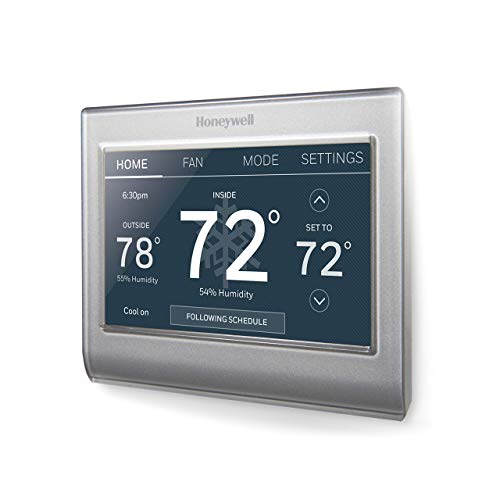
The RTH9585WF1004 is a Wi-Fi smart color thermostat with 7-day programming and energy-saving options. It supports Alexa integration and can be tailored to fit decor with color personalization. Best for energy-conscious users who want flexible schedules and remote access.
Who it’s best for: Households seeking advanced scheduling, smart features, and integration with voice assistants. Why selected: comprehensive programmable options and energy-reward potential through rebates and demand response programs.
Limitations: More complex setup than basic models; requires reliable Wi‑Fi for full functionality.
Honeywell Home RTH7600D 7-Day Programmable Thermostat

The RTH7600D features a large touchscreen and 7-day programming with four periods per day. It enables home and away temperature settings and offers temporary and permanent hold options. Best for users who want a detailed, week-long schedule without smart features.
Who it’s best for: Those who value precise weekly programming and a clear interface. Why selected: strong scheduling capabilities in a user-friendly touchscreen device.
Limitations: Does not offer built-in Wi‑Fi or smart home connectivity; control is on-device and local.
Buying Guide: How To Choose The Right Thermostat For Your Air Conditioner
- Identify your system type: Single-stage, multi-stage, heat pump, or conventional. Choose a thermostat that explicitly matches your system to ensure compatibility and proper control.
- Smart features vs. simplicity: If you want remote access, energy reports, and voice control, consider Wi-Fi models. For straightforward upgrades, non-programmable units are often sufficient.
- Installation considerations: Check wiring requirements (C-wire presence), backlit displays for easy reading, and mounting compatibility with your current wall plate.
- Energy savings potential: Look for models offering programmable scheduling, energy-star certification, and features like occupancy sensing or utility-rebate options where available.
- Ecosystem and compatibility: If you use voice assistants or smart home hubs, pick a thermostat that integrates with your preferred ecosystem (Alexa, Ring, etc.).
- Budget and ease of use: Basic models minimize upfront cost and setup time, while pricier smart thermostats deliver more automation and insights.
FAQ
- What is a C-wire and why do I need it?
A C-wire provides continuous power to the thermostat. Some smart thermostats require it for reliable performance, while many basic models can operate without it.
- Can I install a thermostat myself?
Yes, most single-zone, non-smart thermostats are designed for DIY installation. Review wiring diagrams carefully and switch off power before starting.
- Do smart thermostats save money?
Yes, by optimizing heating and cooling schedules and enabling remote control, many users experience energy savings over time. Savings vary by home and usage patterns.
- Will a smart thermostat work with my existing HVAC system?
Most will work with standard single-stage systems, but multi-stage heating/cooling or heat pumps may require a model specified for those configurations.
- Are rebates or energy programs available with smart thermostats?
Some models participate in utility rebate programs or demand-response programs that can reduce energy costs during peak periods. Check with your local provider.