Answering the need for efficient, independent climate control across two rooms, these top two-zone air conditioning systems are designed for multi-room comfort. They suit homes with separate living areas, apartments with clearly defined spaces, or small offices needing adjustable temperatures in different zones. The selections below are best for buyers who want reliable inverter efficiency, independent room control, and WiFi-enabled convenience. The quick-reference table highlights core capabilities to compare at a glance.
| Product | BTU (Outdoor) | Zone Count | Key Benefit | Best For |
|---|---|---|---|---|
| Albott Mini Split AC/Heating System | 20,000 | 2 | Up to 25 SEER2, pre-charged, WiFi | Medium-sized homes needing strong efficiency |
| YITAHOME 2 Zone 24,000 BTU | 24,000 | 2 | Many modes, quiet operation | Bedrooms and living areas with flexible modes |
| Senville 28,000 BTU Dual Zone | 28,000 | 2 | Alexa compatibility, multi-room control | Higher coverage with smart control |
| EXNOS 20,000 BTU Dual Zone | 20,000 | 2 | 23 SEER2, independent room control, Wi‑Fi | Smart, app-driven control across rooms |
| COSTWAY 20K Dual Zone | 20,000 | 2 | 4D swing, energy-smart inverter | Better airflow balance in two spaces |
Albott Mini Split AC/Heating System

Best for energy-conscious buyers needing strong efficiency and independent room control. The 20,000 BTU outdoor unit supports two zones with 9K and 12K indoor options, delivering up to 25 SEER2 with inverter technology for stable comfort. It includes a pre-charged condenser and a 16.4 ft line set. Cools and heats across a broad range, performing in extreme conditions. Caution: ensure proper line-set length and indoor unit sizing for optimal performance in larger spaces.
YITAHOME 2 Zone 24000 BTU Mini Split

Better for year‑round comfort with flexible multi-room modes. This system includes two indoor air handlers and two outdoor condensers, enabling independent cooling/heating per room. It operates within a wide ambient range and offers smart control features like WiFi and Alexa integration. Caution: noise levels in some modes can be noticeable in quiet bedrooms; verify placement to minimize disruption.
Senville 28000 BTU Dual Zone Mini Split

Best for higher overall capacity with smart home compatibility. The two indoor units share a single outdoor condenser, allowing independent room temperature control. Energy efficiency and compatibility with Alexa make it suitable for tech-forward homes. Caution: larger 28,000 BTU system may be overkill for smaller rooms; ensure zone sizing aligns with each space’s square footage.
EXNOS 20000 BTU Dual Zone WIFI Mini Split
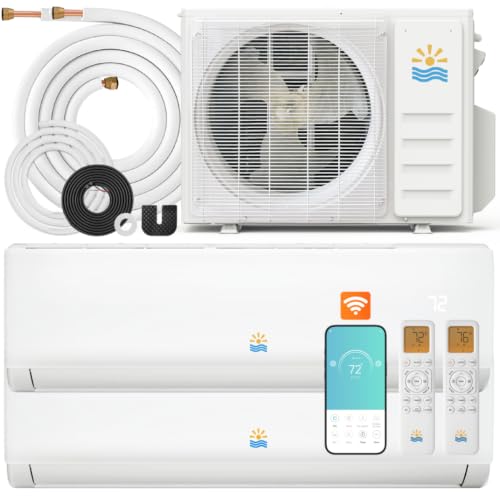
Choose this for strong Wi‑Fi control and balanced two-zone operation. The 23 SEER2 inverter system powers two 12K BTU zones, with independent room controls and a pre-charged system. It supports smart scheduling and voice control for hands-free management. Caution: self-contained features can be limited by app compatibility with certain ecosystems; check device support before purchase.
COSTWAY 20K Dual Zone Mini Split

Best for steady two-zone comfort with strong energy savings. This 20K unit uses a 23 SEER2 inverter and provides four-direction air swing for even distribution. It handles outdoor temperatures well and is designed for rooms where two independent zones are needed. Caution: installation requires accurate line-set routing; improper setup can affect performance.
Buying Guide: Key Purchase Considerations
What should you check before buying a two-zone mini split system? First, confirm zone sizing: each indoor unit should align with the room’s square footage and ceilings. Look at SEER2 ratings and inverter technology for long-term energy savings. Consider outdoor unit weather tolerance and outdoor temperature performance for your climate. WiFi and voice control add convenience, especially for busy households. Also verify installation requirements, line-set lengths, and whether pre-charged kits are included. Finally, assess noise levels in living spaces to ensure a comfortable environment during night and work hours.
How many zones do I need?
Two zones are common for two-room layouts such as a living room and a bedroom. For larger homes, three or more zones may improve comfort and efficiency, but installation costs rise accordingly.
Which features add real value?
Inverter efficiency, AHRI certification, and WiFi control provide practical benefits. Auto defrost, wide operating temperature ranges, and smart scheduling improve reliability in extreme climates and reduce energy waste.
What are typical installation considerations?
Ensure appropriate mounting space for indoor units, clear line-of-sight for piping, and compliant electrical supply. Pre-charged systems simplify setup, but correct refrigerant charge remains essential for efficiency.
Frequently Asked Questions
- What does SEER2 indicate? SEER2 measures cooling efficiency; higher numbers mean lower operating costs over time.
- Can I control two zones with one remote? Most systems provide independent controllers per zone; some support a shared remote with zone selection.
- Are these systems suitable for very cold climates? Many models offer operation down to single-digit temperatures, but performance varies by unit.
- Is WiFi control necessary? It adds convenience for remote monitoring and scheduling but isn’t required for operation.
- Do these units require professional installation? Yes; proper sealing, refrigerant handling, and electrical connections are essential for safety and efficiency.
- What is the typical lifespan? With proper maintenance, outdoor and indoor units in these systems commonly last many years, though exact longevity varies by usage and environment.